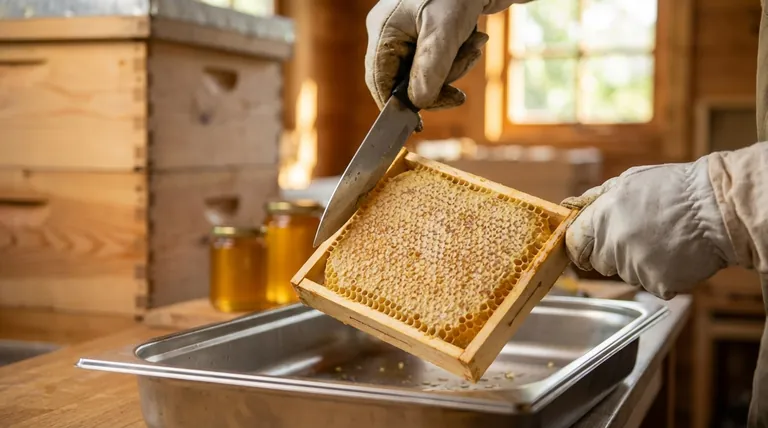
The Price on the Shelf That Makes You Pause
You’ve seen it at a farmers' market, a gourmet food store, or even a high-end grocer: a small, perfect square of golden honeycomb, suspended in a clear box, selling for a price that makes you do a double-take. It often commands a higher price per ounce than an entire jar of your finest liquid honey. For commercial apiaries and distributors focused on volume, the question is immediate and frustrating: "Why aren't we capturing that value?"
You produce tons of high-quality honey, but you're competing in a market that often treats it like a commodity. The dream of tapping into that premium, artisanal space feels tantalizingly close, yet somehow, out of reach.
The "It's Too Much Hassle" Trap
Many forward-thinking apiaries have tried to bridge this gap. The logic seems simple enough: take a beautiful, fully-capped frame, cut out a section, and package it. But the reality quickly turns into a sticky, inefficient mess.
The process usually goes something like this:
- You select a perfect frame, heavy with ripe, capped honey.
- You take a sharp knife to slice out a clean, uniform block.
- Clink. The knife hits a wire. You try to cut around it, but the comb crumbles. The clean edges are gone, replaced by a mangled chunk leaking honey everywhere.
- After a few failed attempts, producing nothing close to the pristine blocks you see in stores, the conclusion is drawn: "It's not worth the effort."
This experience leads to a costly business decision: abandoning a high-margin product line. The negative consequences stack up. You remain stuck competing on price for liquid honey, you miss the chance to meet growing consumer demand for raw, unprocessed foods, and your brand stays firmly in the bulk-producer category, unable to build a more valuable, premium identity.
It’s Not Your Technique, It’s Your Foundation
Here is the turning point: The problem isn't your knife, your steady hand, or your harvesting technique. The problem is that your equipment is designed to make cut comb production impossible.
Standard beehive frames, the workhorses of most commercial operations, contain vertical wires running through the wax foundation. Their sole purpose is to provide rigidity and support so the comb can withstand the immense force of a centrifugal extractor during high-speed honey harvesting.
This feature, which is essential for maximizing liquid honey yield, is a complete showstopper for producing cut comb.
The "common solutions" fail because they try to work around a fundamental, physical barrier:
- Cutting around the wires? It’s like trying to slice a cake that has rebar running through it. You will never get a clean, professional result.
- Hoping for a "lucky" section? It's a gamble that wastes time, labor, and perfectly good honey.
You haven't failed at producing comb honey. Your equipment, optimized for one process (extraction), has failed you for another.
The Right Tool for a Premium Product
To create a premium product, you need a process that is deliberate, repeatable, and clean. To produce perfect cut comb honey, you must be able to slice through the entire frame of honeycomb without hitting a single obstruction.
This requires a system built from the ground up for this exact purpose. It requires frames with wireless foundation.
This is not just a minor variation of a standard frame; it is the enabling technology for this entire business model. Wireless foundation provides the bees with a guide to build their perfect comb, but it does so without the wires that block your path. It is designed with the explicit understanding that the end product is the comb itself.
HONESTBEE’s wholesale wireless frames and foundations are engineered to solve this core problem. They are the key that unlocks the door to the premium market, allowing you to:
- Slice with precision: A simple knife can pass cleanly from top to bottom, producing flawless, retail-ready blocks of honeycomb every time.
- Eliminate waste: No more mangled sections or lost product due to wire obstructions.
- Create an efficient workflow: Turn a frustrating, messy task into a streamlined, profitable part of your operation.
Our equipment isn't just an alternative; it's the professional-grade solution for apiaries serious about entering the high-margin comb honey market.
Beyond Bulk: Building a Premium Honey Brand
Once you remove the barrier of wired frames, you don't just solve a harvesting problem—you open up entirely new business possibilities. With an efficient way to produce cut comb, your operation can now:
- Launch a New, High-Margin Product Line: Service gourmet retailers, restaurants, and direct-to-consumer channels that pay a premium for artisanal quality.
- Diversify Your Revenue: Reduce your reliance on the fluctuating commodity price of liquid honey.
- Elevate Your Brand: Position your apiary as a producer of fine, natural foods, enhancing the value of your entire product range.
- Empower Your Customers (For Distributors): Equip your beekeeping clients with the complete system they need to enter this market, making you an indispensable strategic partner, not just a supplier.
The choice is no longer between yield and value. With the right foundation, you can build a more resilient, profitable, and respected brand.
Stop letting the wrong equipment dictate the limits of your business. It's time to move beyond the commodity trap and claim your share of the premium market. Let's discuss how a strategic shift in your equipment can unlock new revenue for your operation. Our experts are ready to help you map out a plan for integrating comb honey production seamlessly into your apiary. Contact Our Experts.
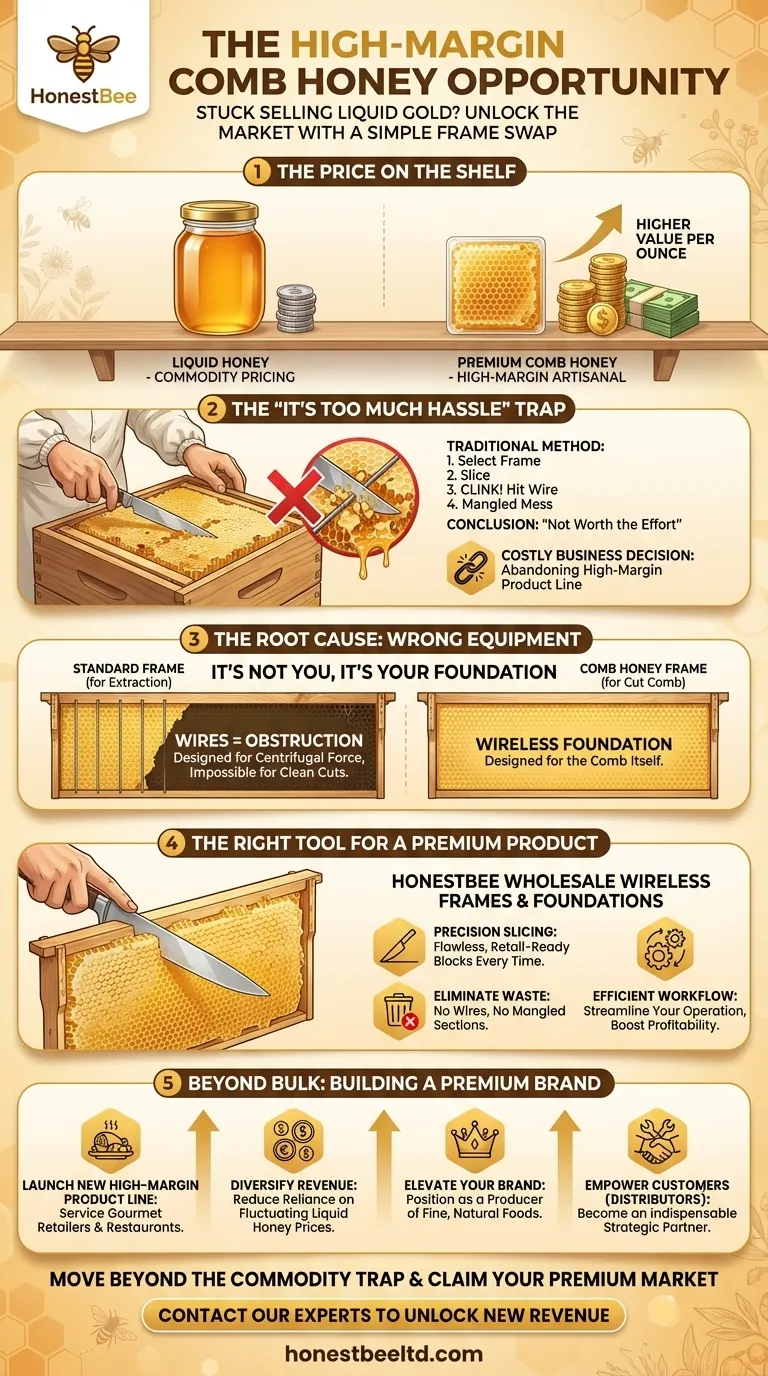
Visual Guide
Related Products
- Stainless Steel Jack Type Honey Comb Press Machine Wax and Honey Separator
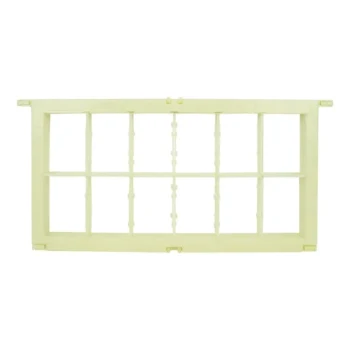
- Professional Sectional Comb Honey Frame with 250g Cassette System for Beekeeping
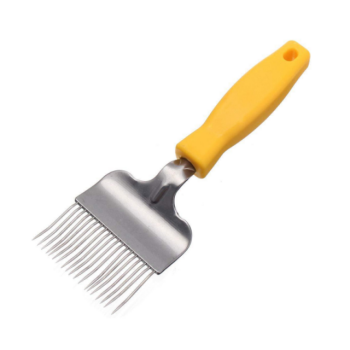
- Professional Bent Tine Honey Uncapping Fork with Ergonomic Grip
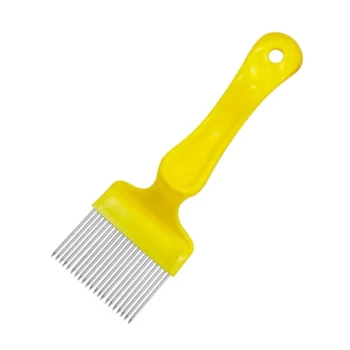
- Professional Honey Uncapping Fork Tool with Customizable Tine Options
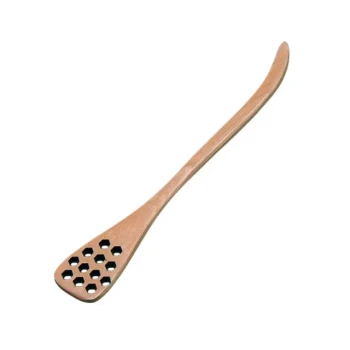
- Modern Honeycomb Pattern Wooden Honey Dipper for Stirring and Drizzling
Related Articles
- More Than Heat: The Physics of Preserving Honey's Soul
- The Last Drop: Maximizing Yield and Purity with a Stainless Steel Honey Press
- The Unseen System: Why a Honey Press is More Than Just a Tool
- Why a Honey Press is the Smart Choice for Small-Scale Beekeepers
- Beyond the Harvest: The Critical Discipline of Cleaning Your Honey Extractor