The short answer is no. Relying on nine-frame spacing in honey supers to function as a "natural" queen excluder is not a reliable management strategy. While a common beekeeping myth suggests that queens prefer the tighter spacing of ten frames to lay eggs, experience proves that queens are highly adaptable. They will readily lay eggs in various spatial configurations, including widely spaced combs and odd-sized section boxes.
Core Takeaway Altering frame spacing is insufficient to physically or behaviorally restrict a queen's movement or laying patterns. To guarantee brood-free honey supers, you must rely on colony strength management and mechanical exclusion rather than spacing tricks.
The Reality of Queen Behavior
The Myth of Preference
The theory behind using nine-frame spacing as an excluder relies on the assumption that a queen will refuse to cross a wider gap or lay in deep cells.
However, beekeeping experience contradicts this. Queens are not deterred by spacing nuances and will utilize available space to expand the brood nest if the colony demands it.
Evidence of Adaptability
Queens have been observed laying eggs in a wide variety of environments that do not resemble standard ten-frame spacing.
This includes section boxes and other irregular comb structures. If the queen can access the comb and the colony requires space, she will lay there regardless of the gap between frames.
The Advantages of Physical Exclusion
Guaranteed Isolation
Because "natural" methods like spacing are fallible, physical queen excluders remain the only way to confine the queen to a specific area with certainty.
This confinement allows you to inspect for disease or locate the queen for re-queening significantly faster. You eliminate the variable of having to search through multiple boxes of honey supers.
Higher Quality Harvests
Using a physical excluder results in cleaner end products. Honey extracted from frames that have never contained brood generally holds fewer impurities and less pollen.
Furthermore, the wax recovered from these brood-free combs is of higher quality, as it does not contain the cocoons and residues left behind by developing larvae.
Common Pitfalls to Avoid
Misdiagnosing Super Avoidance
A common reason beekeepers seek alternatives to physical excluders is the observation that bees sometimes refuse to enter a super that sits above one.
However, this is rarely the fault of the excluder itself. Weak colony population or the lack of a significant nectar flow are the actual culprits. If the brood box is not overflowing with bees, the colony will not expand upward, regardless of the equipment used.
Improper Foundation Management
Bees are naturally reluctant to draw new comb on bare foundation through an excluder. Forcing them to do so can create a barrier to vertical expansion.
To mitigate this, ensure the super contains drawn comb or move a frame of brood up into the super to "bait" nurse bees through the excluder.
Timing the Exclusion
If you only have new frames of foundation, a common mistake is installing the excluder immediately.
Instead, add the box of foundation without the excluder first. Once the bees have begun to draw out the comb, you can then insert the excluder underneath the box to prevent the queen from moving up.
Making the Right Choice for Your Goal
To manage your hives effectively, choose your method based on your specific production priorities.
- If your primary focus is guaranteed honey purity: Use a physical queen excluder to ensure zero brood contamination and higher quality wax recovery.
- If your primary focus is encouraging vertical expansion: Ensure your brood box is completely full of bees and consider "baiting" the super with a frame of brood to draw nurse bees upward.
- If your primary focus is drawing new comb: Remove the excluder temporarily until the bees have established the comb, then reinstall it to isolate the queen.
Success in beekeeping comes from understanding biological triggers, not relying on spacing myths that the bees will eventually ignore.
Summary Table:
| Feature | Nine-Frame Spacing | Physical Queen Excluder |
|---|---|---|
| Effectiveness | Unreliable; queens adapt easily | 100% Physical Barrier |
| Honey Purity | Risk of brood/pollen contamination | Guaranteed brood-free honey |
| Wax Quality | Potential for dark, cocoon-stained wax | High-quality, clean virgin wax |
| Management | Minimal equipment needed | Requires proper timing & colony strength |
| Inspection Speed | Slow (must check all boxes) | Fast (queen confined to brood nest) |
Maximize Your Apiary Productivity with HONESTBEE
Don't let beekeeping myths hinder your honey production. HONESTBEE empowers commercial apiaries and distributors with professional-grade tools designed for efficiency and purity. From durable physical queen excluders to advanced honey-filling machines and hive-making equipment, we provide the full spectrum of wholesale hardware and consumables needed to scale your operations.
Ready to upgrade your equipment and boost your harvest quality? Contact us today to explore our comprehensive wholesale offerings and discover how our industry expertise can drive your business forward.
Related Products
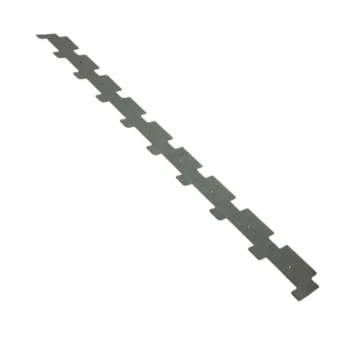
- Heavy Duty Castellated Iron Frame Spacer for Honey Supers
- Durable 16 Way Circular Bee Escape for Efficient Honey Harvesting
- Digital Honey Refractometer for Precision Measurement of Optimal Honey Quality
- Precision Honey Refractometer Instrument for Quality Assessment
- Professional Plastic Honey Dipper for Easy Honey Drizzling
People Also Ask
- What are honey super frames and what foundation options are available? Choose the Best Support for Your Bees
- What are the reasons and drawbacks of using nine frames in a ten-frame honey super? Boost Extraction Speed Today
- What are honey super frames and how many are needed per box? A Beekeeper's Essential Guide
- What are honey super frames and their foundation options? Choose the Best Support for Your Hive's Honey Production
- Why might a beekeeper use fewer than the standard number of frames in a honey super? Boost Extraction Efficiency