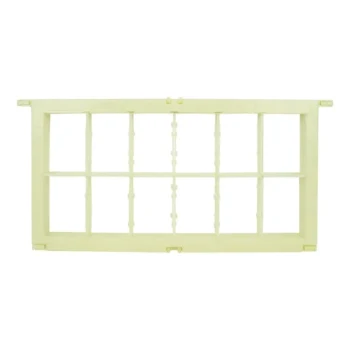
Precision molds and specialized cuvette frames act as the critical control mechanism in honey color analysis. They are utilized to hold diluted honey samples within a fixed geometry, ensuring that the optical path length remains consistent while a spectrophotometer measures absorbance at 635nm.
By standardizing the physical dimensions of the sample, these tools allow for the accurate conversion of light absorbance into Pfund values, which serves as the global standard for classifying honey into market grades ranging from Extra White to Amber.
The Role of Standardization in Optical Analysis
Establishing Consistent Path Length
In optical analysis, the distance light travels through a substance changes how much light is absorbed. Precision molds and cuvette frames fix this distance, known as the optical path length.
By keeping this dimension identical across all tests, these containers ensure that differences in readings are due solely to the honey's color density, not the container's shape.
Enabling Spectrophotometric Measurement
The primary method for determining Pfund grades involves using a spectrophotometer.
This instrument directs light at a specific wavelength—635nm—through the honey sample held in the frame. The frame positions the sample perfectly in the instrument's light path to capture precise absorbance data.
From Absorbance to Market Classification
Calculating the Pfund Value
The data collected from the cuvette or mold is not just a visual match; it is used to calculate a specific numerical value.
Using the absorbance recorded at 635nm, analysts derive the Pfund value, which is measured in millimeters. This metric converts complex visual perceptions into a standardized data point.
Determining Commercial Grades
Once the Pfund millimeter value is established, the honey is categorized into specific market grades.
These grades, such as Extra White, Light Amber, or Amber, dictate the commercial value and application of the honey. This classification helps distributors and researchers identify the honey's quality and potential botanical sources, such as eucalyptus or natural pasture.
Understanding the Trade-offs
Sensitivity to Sample Preparation
While cuvette frames ensure optical consistency, the system relies heavily on correct sample preparation.
The primary reference notes that samples are diluted before analysis. If the dilution ratio is inaccurate, the resulting absorbance at 635nm will yield an incorrect Pfund grade, regardless of the mold's precision.
Instrumental Dependence
This method moves away from simple visual estimation to instrumental analysis.
It requires calibrated spectrophotometers capable of measuring specific wavelengths (635nm). Reliance on this hardware provides higher accuracy but requires rigorous equipment maintenance compared to visual comparators.
Making the Right Choice for Your Goal
To effectively utilize precision molds in honey grading, align your process with your specific objective:
- If your primary focus is Commercial Grading: Ensure your cuvette frames are compatible with standard spectrophotometers to reliably classify inventory into high-value grades like Extra White.
- If your primary focus is Scientific Research: Use the precise millimeter Pfund output to correlate color data with specific botanical origins or floral sources.
Consistent hardware implementation is the bridge between raw biological samples and standardized market value.
Summary Table:
| Component | Role in Color Grading | Impact on Pfund Measurement |
|---|---|---|
| Precision Mold | Fixes sample geometry | Eliminates variables in light absorption |
| Cuvette Frame | Positions sample in light path | Ensures precise spectrophotometric readings at 635nm |
| Path Length | Standardizes travel distance | Ensures data reflects honey density, not container shape |
| Pfund Value | Numerical output (mm) | Classifies honey into grades (e.g., Extra White, Amber) |
Elevate Your Honey Processing with HONESTBEE
Precision is the key to unlocking the true market value of your honey harvest. At HONESTBEE, we specialize in supporting commercial apiaries and global distributors with a comprehensive range of professional-grade tools. From precision-engineered hardware and honey-filling machinery to essential beekeeping consumables, our solutions are designed to ensure your products meet the highest industry standards.
Whether you are scaling your extraction line or refining your grading process, our team is ready to provide the specialized equipment and cultural merchandise you need to thrive.
Ready to optimize your apiary’s efficiency? Contact us today to explore our wholesale offerings!
References
- Ewa Majewska, Paulina Pakosz. Comparison of Antioxidant Properties and Color of Selected Polish Honeys and Manuka Honey. DOI: 10.3390/foods13172666
This article is also based on technical information from HonestBee Knowledge Base .
Related Products
- Professional Sectional Comb Honey Frame with 250g Cassette System for Beekeeping
- Heart-Shaped Comb Honey Frame and Honeycomb Cassette
- Plastic Honey Comb Frames Cassette Box for Honey
- Assembled Wooden Bee Frames with Beeswax Foundation Ready to Use by HONESTBEE
People Also Ask
- How are honeybee combs utilized for non-destructive colony monitoring? Master Population Density Tracking
- What is the technical purpose of exchanging honeycomb frames? Master Apiary Equalization for Growth
- What frame to use for honeycomb? Choose the Right System for Pure, Edible Comb
- What is a honeycomb frame? The Key to Modern, Sustainable Beekeeping
- What are the recommended temperature and duration settings for freezing honey frames? Ensure Pest-Free Comb Storage