Professional microscopes function as the definitive verification tool for diagnosing Nosema infections in honeybees. By pairing high-quality optics with counting plates, technicians examine homogenized bee tissue to physically locate and count parasitic spores. This process converts qualitative observations into quantitative data, measuring the exact intensity of an infection.
The Core Insight While molecular methods identify the genetic presence of a pathogen, microscopy provides the necessary physical proof of infection load. It serves as the "ground truth" for determining the severity of a Nosema outbreak and differentiating actual pathology from environmental stressors.
The Process of Microscopic Detection
Targeted Sampling
The detection process begins before the microscope is even touched. Technicians use observation chambers to identify individual bees displaying specific clinical symptoms.
Crawling behavior and abdominal swelling are primary indicators used to select candidates for testing.
Tissue Preparation
Once affected bees are captured, their tissue must be processed to make the spores visible. This involves creating tissue homogenates.
The relevant tissue is mashed or blended into a liquid suspension, releasing any internal spores so they can be viewed on a slide.
Quantification with Counting Plates
The homogenized sample is placed onto a specific tool called a counting plate.
Using the professional microscope, the technician visually scans the grid on the plate to count the number of spores present.
Why Microscopy Remains Essential
Determining Infection Intensity
A simple "positive" or "negative" result is often insufficient for effective colony management.
Microscopy allows for the direct determination of infection intensity, telling the beekeeper not just if the colony is sick, but how heavy the parasitic load is.
Validating Molecular Data
Modern molecular detection methods are highly sensitive, but they benefit from physical cross-referencing.
Microscopy serves as a vital supplementary tool, used to validate molecular results and ensure that genetic signals correspond to actual physical spores.
Ruling Out Environmental Factors
Not all sick bees have Nosema. Visual inspection helps distinguish between true parasitic infection and non-pathological issues.
By seeing the spores directly, technicians can rule out environmental factors that might mimic clinical symptoms like crawling.
Understanding the Trade-offs
Manual Labor Requirement
Unlike automated molecular scans, microscopic analysis is a manual, physical observation method.
It requires a trained technician to visually inspect samples and manually count spores, which can be time-consuming for large sample sizes.
Destructive Testing
The process relies on tissue homogenates or sectioning.
This means the sample bees must be sacrificed and their tissue destroyed to perform the diagnosis, unlike some non-invasive observation methods.
Making the Right Choice for Your Goal
To effectively manage honeybee health, you must select the right diagnostic approach for your specific objective.
- If your primary focus is initial screening: Prioritize the visual identification of clinical symptoms like crawling or swelling to select the right sample group.
- If your primary focus is assessing severity: Use professional microscopes with counting plates to determine the exact infection intensity within the tissue homogenates.
- If your primary focus is data accuracy: Utilize microscopy as a validation step to confirm findings from molecular detection methods.
Microscopy bridges the gap between suspecting a problem and understanding its magnitude, providing the visual evidence required for accurate diagnosis.
Summary Table:
| Detection Stage | Methodology | Key Outcome |
|---|---|---|
| Sampling | Selection of bees with clinical symptoms | Identification of potential candidates |
| Preparation | Tissue homogenization into liquid suspension | Release of internal parasitic spores |
| Analysis | Counting plate observation under high optics | Precise measurement of infection intensity |
| Validation | Cross-referencing with molecular data | Confirmation of physical pathology vs. environmental stress |
Elevate Your Bee Health Management with HONESTBEE
Accurate diagnosis is the cornerstone of a thriving apiary. At HONESTBEE, we empower commercial apiaries and distributors with the professional-grade tools needed to monitor and maintain honeybee vitality. From high-precision laboratory equipment for Nosema detection to specialized honey-filling machinery and hive-making tools, our comprehensive wholesale portfolio covers every industry essential.
Whether you are scaling your commercial operations or supplying the next generation of beekeepers, our expert team is ready to provide you with the hardware and consumables that drive results.
Ready to upgrade your apiary’s capabilities? Contact us today to explore our full range of solutions!
References
- Coby van Dooremalen, Dirk C. de Graaf. Bridging the Gap between Field Experiments and Machine Learning: The EC H2020 B-GOOD Project as a Case Study towards Automated Predictive Health Monitoring of Honey Bee Colonies. DOI: 10.3390/insects15010076
This article is also based on technical information from HonestBee Knowledge Base .
Related Products
- Styrofoam Mini Mating Nuc Box with Frames Feeder Styrofoam Bee Hives 3 Frame Nuc Box
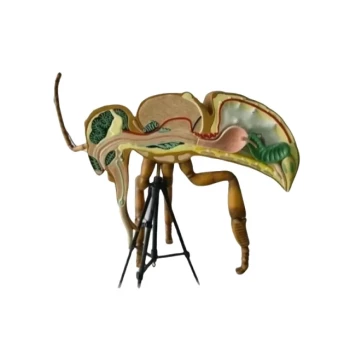
- HONESTBEE Anatomy Bee Model Detailed Anatomical Display for Education and Study
- Precision Stainless Steel Frame Cleaner for Hive Grooves and Corners
- HONESTBEE Professional Telescopic Pole Bee Swarm Catcher
- HONESTBEE Adjustable Voltage Wire Embedder with Digital Display
People Also Ask
- How are nuc boxes used in queen rearing? The Essential Tool for Reliable Queen Mating
- What is the primary advantage of mini mating nucs? Maximize Queen Production with Minimal Bee Resources
- How should a beekeeper relocate a new colony in a nuc box? Master the 5-5 Rule for Success
- How long can bees be kept in a nuc box? Expert Timeline for Hive Transfer
- What is the process for managing a new bee colony started in a nuc box? Expert Tips for Hive Success