Proper post-harvest storage is the critical first step. To maximize honey flow in subsequent seasons, beekeepers must store honey supers and frames in a dry location that is completely inaccessible to pests after the bees have cleaned them. Ensuring this equipment remains in pristine condition allows the colony to immediately utilize it when the next nectar flow begins.
Maximizing future honey flow is an exercise in energy conservation and asset management; by preserving drawn comb and utilizing data to monitor health, you allow bees to focus their energy on nectar collection rather than hive reconstruction.
Preserving Infrastructure for the Next Cycle
The Importance of Dry Storage
Moisture is a significant threat to stored beekeeping equipment. You must store supers and frames in a dry environment to prevent mold and degradation during the off-season.
Preventing Pest Damage
Your storage location must be secure against pests such as wax moths or mice. Protecting the frames from physical damage ensures the bees do not waste time repairing equipment when the new season starts.
Reducing Bee Energy Expenditure
The Value of Drawn Comb
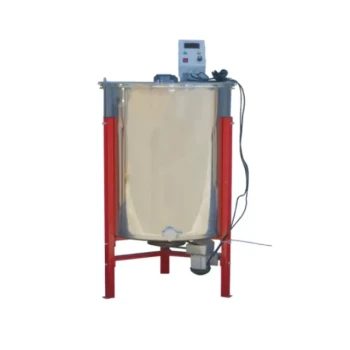
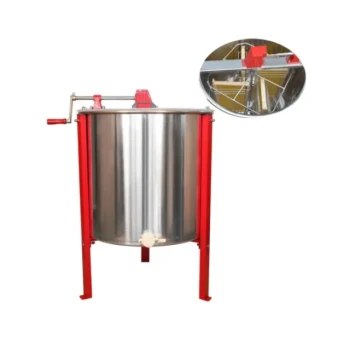
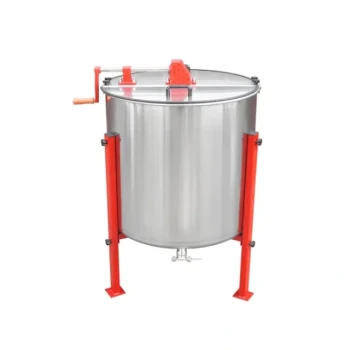
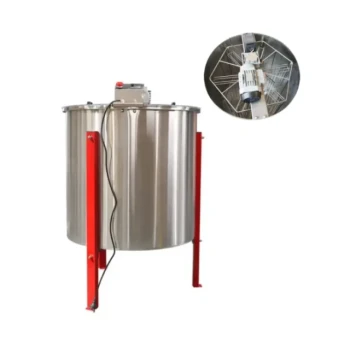
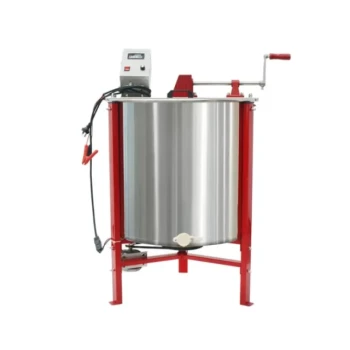
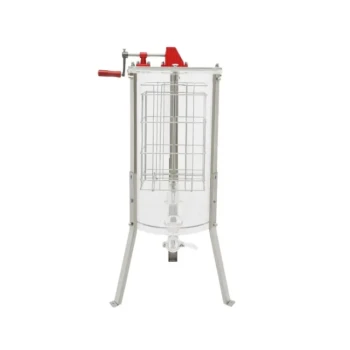
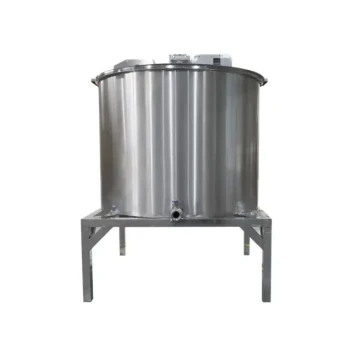
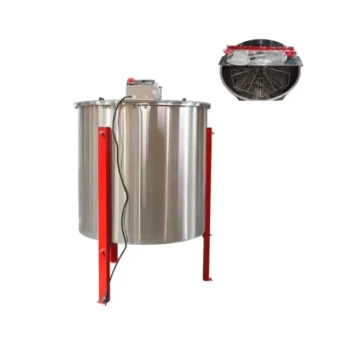
To maximize future yields, you should use a centrifugal honey extractor during harvest. This device uses high-speed rotation to remove honey while preserving the structural integrity of the wax comb.
Shortening the Production Cycle
When bees are provided with intact, reused combs, they save the substantial energy required to secrete new wax. This allows them to bypass the building phase and immediately begin storing nectar, significantly shortening the production cycle.
Leveraging Precision Beekeeping
Real-Time Health Monitoring
Implementing sensors and electronic monitoring devices allows for the remote tracking of colony health and swarming behavior. In difficult terrains, this hardware reduces labor intensity and provides crucial alerts regarding the hive's status.
Utilizing Technical Data
Reliable technical service centers offer data on disease early-warning systems and ecological conditions. Leveraging this professional information helps optimize breeding processes and reduces non-productive losses due to environmental fluctuations.
Managing Resource Gaps
Supplementing with Syrup
If the current honey flow is weak, you should intervene by providing a generous supply of syrup. This acts as a supplement to natural nectar shortages.
Turbocharging Foundation Building
This supplemental feeding energizes the bees to "turbocharge" wax production. It encourages them to build out the foundation, ensuring the hive has the necessary capacity ready for when the flow improves.
Understanding the Trade-offs
Equipment Integrity vs. Extraction Speed
While centrifugal extractors preserve the comb, they require careful operation to avoid "blowing out" the frame. The trade-off for preserving the wax for future seasons is the need for more expensive equipment and careful handling during the current harvest.
Technology Costs vs. Labor Reduction
Precision sensors offer excellent data and reduce the need for manual mountain inspections. However, this introduces an upfront hardware cost and requires a level of technical literacy that traditional inspection methods do not.
Making the Right Choice for Your Goal
To maximize your success based on your specific resources, consider the following:
- If your primary focus is increasing yield per unit: Prioritize the use of centrifugal extractors to preserve drawn comb, allowing bees to focus entirely on honey production rather than wax secretion.
- If your primary focus is risk management: Invest in precision monitoring systems and utilize technical service data to prevent colony losses from disease or swarming.
True hive productivity is not just about the harvest, but about how effectively you preserve the colony's energy for the next season.
Summary Table:
| Strategy Category | Key Action | Benefit to Future Yield |
|---|---|---|
| Equipment Care | Dry, pest-proof storage | Prevents mold/damage; ensures immediate reuse |
| Infrastructure | Use centrifugal extractors | Preserves drawn comb; saves bee energy for honey |
| Technology | Install health sensors | Remote monitoring; reduces losses from disease/swarming |
| Feeding | Supplemental syrup | Accelerates foundation building during weak flows |
| Data Usage | Technical service alerts | Early warning for environmental & disease risks |
Scale Your Commercial Success with HONESTBEE
To truly maximize honey flow across hundreds or thousands of hives, you need more than just techniques—you need the right infrastructure. HONESTBEE specializes in empowering commercial apiaries and distributors with professional-grade solutions that turn seasonal challenges into consistent growth.
From high-efficiency centrifugal honey extractors that preserve your valuable wax comb to automated honey-filling machines and precision hive-making equipment, we provide the full spectrum of hardware required for large-scale operations. Our comprehensive wholesale catalog also includes essential industry consumables and honey-themed merchandise to diversify your revenue streams.
Ready to optimize your production cycle and reduce labor costs? Contact our expert team today to discuss wholesale pricing and how our specialized beekeeping machinery can elevate your operation's efficiency.
Related Products
- electric honey extractor honey centrifuge 3 frame honey extractor stainless steel honey frame extractor
- Manual Hand Crank 4 Frame Honey Extractor Centrifuge for Beekeeping
- Professional 4 Frame Self Reversing Electric Honey Extractor for Beekeeping
- Commercial 48-Frame Stainless Steel Honey Extractor
- Electric 4 Frame Tangential Honey Extractor
People Also Ask
- What are the characteristics of electric honey extractors? Boost Your Apiary Efficiency with Automated Technology
- What are the disadvantages of using an electric honey extractor? Weighing Cost, Power, and Comb Safety
- What are the advantages of an electric honey extractor? Boost Efficiency and Scale Your Honey Production
- What are the technical advantages of electric honey extractors? Maximize Yield and Protect Your Bee Colony
- How does an electric honey extractor affect the quality of honey? Preserve Flavor & Purity with Precision Extraction