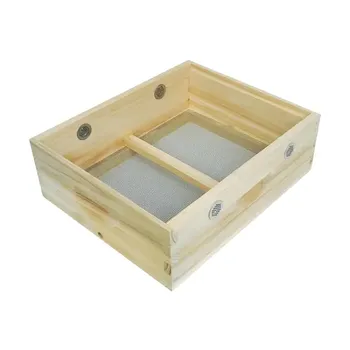
Commercial apiaries can support greenhouse pollination with stingless bees by pairing species-appropriate wooden hive boxes with standardized management, transport, and monitoring equipment. These systems allow operators to house colonies safely, control colony density, move nests into protected cropping environments, preserve nest architecture, and scale pollination services for crops such as sweet peppers, cucumbers, and melons.
The central principle is biological compatibility: the hive must match the stingless bee’s nesting behavior, while the equipment and management process must protect the colony during transfer, greenhouse deployment, maintenance, and return.
Why Stingless Bees Require Specialized Management
Their nesting biology differs from honeybees
Stingless bees are social pollinators, but they do not use standard honeybee equipment in the same way. Their nest structure, colony organization, and housing preferences require dedicated boxes designed around the biology of the selected species.
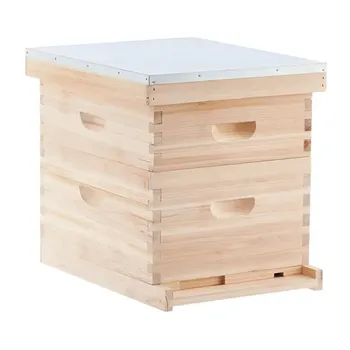
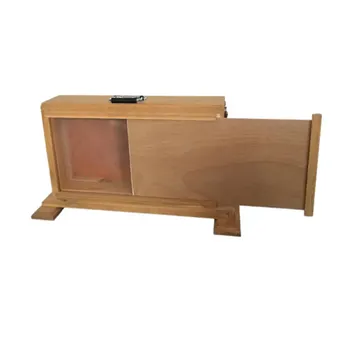
Species that naturally nest in tree cavities may perform best in horizontal wooden hive boxes with suitable dimensions. Other species may require different housing approaches, including specially designed clay pot hives for ground-associated nesting habits.
Greenhouse crops create a controlled pollination opportunity
Stingless bees can support pollination in high-value greenhouse crops, including sweet peppers, cucumbers, and melons. Their deployment allows commercial growers to introduce a managed pollinator population directly into the crop environment during flowering.
This is particularly valuable when natural pollinator activity is unreliable or when standard honeybees are not the most effective option for a specific crop.
Colony health determines pollination reliability
A hive is not merely a container. It must protect the nest architecture and provide a stable environment that supports colony health, reproduction, and sustained foraging.
Reliable greenhouse pollination therefore depends on more than placing boxes near plants. Colonies must be selected, housed, transported, and maintained as biological production assets.
How Specialized Wooden Hive Boxes Support Commercial Operations
Standardize colony housing
Specialized wooden boxes give apiaries a repeatable format for colony management. Standardization simplifies inspection, transport planning, inventory control, and deployment across multiple greenhouse sites.
For distributors and commercial buyers, a coordinated range of box sizes and configurations is more useful than a single universal model. Products should be matched to the species, colony size, nesting behavior, and intended deployment environment.
Preserve nest architecture during transfer
Stingless bee colonies contain delicate nest structures that can be damaged by careless handling. Purpose-built boxes help operators transfer colonies while maintaining the integrity of the nest and reducing unnecessary disruption.
This supports more consistent colony establishment after relocation into a greenhouse and reduces the operational risk associated with moving colonies between production sites.
Enable practical colony-density management
Commercial apiaries need to adjust pollinator availability to the scale and flowering intensity of a crop. Multiple standardized boxes make it easier to organize colonies, distribute them across greenhouse areas, and increase or reduce pollinator density as operational conditions change.
Density should be managed deliberately rather than by simply adding as many colonies as possible. The objective is a stable, measurable pollination service that supports crop performance without compromising colony health.
The Equipment System Behind Greenhouse Deployment
Use transport equipment that protects colonies
Transport tools and secure hive fittings are essential when moving stingless bee colonies from apiary facilities to greenhouse locations. The equipment should reduce vibration, exposure, accidental opening, and physical damage to the box or nest.
Efficient transport also allows commercial operators to serve multiple growers and respond quickly to seasonal pollination demand.
Combine hive boxes with maintenance tools
Commercial management requires more than wooden boxes. Apiaries also need appropriate hive tools and maintenance equipment for inspection, repair, colony handling, and routine servicing.
The objective is non-disruptive management. Tools should allow operators to assess colony condition and perform necessary work without repeatedly damaging nest structures or destabilizing the colony.
Include equipment for responsible honey handling
Stingless bees can produce harvestable honey, but extraction must not undermine the colony’s pollination role. Specialized, non-disruptive extraction equipment helps operators separate honey production from colony damage.
For commercial suppliers, this creates an opportunity to provide a complete product system: hive boxes, colony-transfer equipment, transport hardware, inspection tools, and extraction accessories.
A Practical Deployment Model for Apiaries
Select the pollinator before selecting the box
The first decision is the species and its nesting requirement. A box designed for a tree-cavity-nesting species should not automatically be presented as suitable for every stingless bee.
Product specifications should clearly state the intended bee type, housing orientation, dimensions, materials, access features, and recommended use conditions.
Establish colonies before greenhouse placement
Colonies should be healthy and sufficiently established before being moved into a commercial greenhouse. A stable colony is more likely to tolerate transport and begin useful foraging after deployment.
Apiaries should record colony identity, housing type, condition, and destination. This makes performance comparisons possible and supports more reliable service for growers.
Position colonies for access and protection
Hive placement should allow bees to reach the crop while keeping the boxes protected from accidental contact, excessive disturbance, and unsuitable environmental conditions. The arrangement should also permit inspection and removal when the flowering period ends.
Placement plans should be designed with the greenhouse operator, especially where crop work, irrigation, climate controls, and pest-management activities may affect the colonies.
Monitor pollination and colony condition
Commercial pollination should be treated as a managed service rather than an informal release of insects. Operators should track colony activity, crop flowering, fruit or seed set, and any signs of colony stress.
This information helps determine whether the issue is colony density, housing suitability, greenhouse conditions, crop compatibility, or another management factor.
How Distributors Can Build a Complete Product Offering
Offer species-specific product portfolios
A credible supplier should avoid treating all pollinators as interchangeable. Stingless bees, bumblebees, mason bees, and other managed pollinators have different nesting and handling requirements.
A full-spectrum portfolio can include horizontal wooden stingless-bee hives, alternative housing formats, modular nesting materials for solitary bees, protective shelters, transport equipment, and professional maintenance tools.
Package equipment around the customer’s workflow
B2B buyers benefit from kits organized around specific commercial tasks, such as:
- Colony housing and transfer
- Greenhouse transport and deployment
- Inspection and routine maintenance
- Non-disruptive honey handling
- Replacement parts and hive-making materials
This approach reduces sourcing complexity and helps apiaries obtain compatible equipment from one supplier.
Support rapid fulfillment and technical selection
Commercial pollination schedules are time-sensitive. Distributors should provide rapid response, clear product specifications, dependable order fulfillment, and practical guidance on selecting equipment for different species and operating environments.
Technical customer service is especially important when buyers are expanding from conventional honeybee management into meliponiculture.
Understanding the Trade-offs
Stingless bees are not a universal replacement for honeybees
Stingless bees can be valuable greenhouse pollinators, but their suitability depends on the crop, bee species, colony condition, and production environment. They should be selected for a defined pollination requirement rather than marketed as a direct replacement for every honeybee application.
Other pollinators may be more appropriate for different crops. Bumblebees, for example, can be suited to crops with large flowers or deep corolla tubes, while mason bees require modular nesting systems rather than social-colony hive boxes.
Standardization must not ignore species differences
Standardized equipment improves efficiency, but excessive standardization can create biological mismatches. A single box design may be convenient for purchasing and logistics while being unsuitable for a species with different nesting habits.
The best commercial system combines standardized manufacturing and procurement with species-specific configurations.
Pollination performance depends on management conditions
Hive boxes alone do not guarantee successful pollination. Colony density, greenhouse conditions, transport stress, crop flowering, and maintenance practices all influence results.
Apiaries should avoid promising uniform outcomes without first assessing the crop and operating environment. Performance should be evaluated through field records rather than assumptions.
Honey extraction can conflict with pollination objectives
Harvesting honey from stingless bee colonies can provide an additional revenue stream, but excessive or poorly designed extraction can weaken the colony. Pollination capacity must remain the primary operational objective when colonies are deployed for greenhouse production.
How to Apply This to Your Project
The most effective approach is to build a pollination equipment program around the bee species, crop, greenhouse, and service model.
- If your primary focus is greenhouse pollination: Select species-appropriate wooden hive boxes, protect nest architecture during transfer, and use transport and monitoring equipment to maintain reliable colony deployment.
- If your primary focus is commercial apiary expansion: Standardize compatible hive formats, maintenance tools, colony records, and logistics procedures so colonies can be managed across multiple grower sites.
- If your primary focus is distribution or wholesale supply: Offer a complete, species-specific portfolio with clear specifications, replacement components, rapid response, and dependable fulfillment.
- If your primary focus is additional apiary revenue: Include non-disruptive extraction equipment, but ensure honey handling does not compromise colony health or greenhouse pollination performance.
With the right biological fit and professional equipment system, commercial apiaries can turn stingless-bee colonies into a reliable, scalable greenhouse pollination service.
Summary Table:
| Equipment Type | Purpose | Key Features |
|---|---|---|
| Wooden Hive Boxes | House stingless bee colonies | Species-specific design, horizontal orientation, protects nest architecture |
| Transport Equipment | Move colonies safely | Reduces vibration, secures boxes, prevents damage |
| Maintenance Tools | Inspect and service colonies | Non-disruptive, easy handling, durable |
| Honey Extraction Equipment | Harvest honey without harm | Non-disruptive, protects colony health |
Ready to enhance your greenhouse pollination services with a complete, species-specific stingless bee management system? HONESTBEE offers a full spectrum of beekeeping equipment and tools tailored for commercial apiaries and distributors. Our portfolio includes specialized wooden hive boxes, transport hardware, and maintenance tools designed to support reliable pollination and colony health. With rapid response times, dedicated customer service, and ultra-fast delivery, we ensure you have the right equipment when you need it. Whether you're expanding into meliponiculture or optimizing existing operations, our expertise helps you scale effectively. Contact us today to discuss your needs and discover how HONESTBEE can be your trusted partner in commercial pollination. Contact us now.
Related Products
- 5 Frame Wooden Nuc Box for Beekeeping
- Wholesales Dadant Size Wooden Bee Hives for Beekeeping
- Wooden Bee Hive Frames for Beekeeping and Wholesale
- Assembled Wooden Bee Frames with Plastic Foundation for Durability and Convenience by HONESTBEE
- Australian Langstroth Beehive Boxes for Beekeeping Wholesales
People Also Ask
- What are the options for adding frames to a nuc after taking two frames from the parent colony?
- What frames should be moved into the queenless hive when requeening with a nuc? Ensure a Successful Queen Introduction
- What roles do five-frame nucleus boxes and ten-frame Langstroth hive boxes play in colony standardization?
- What is the primary function of five-frame nuclei boxes? Master Early Colony Establishment for Stronger Hives
- What is the typical composition of frames in a nuc? A 5-Frame Blueprint for a Thriving Hive