To effectively neutralize microorganisms in honey without degrading its quality, you must utilize a precise high-temperature, short-duration heating protocol. Specifically, heating the honey to 80°C for a total active processing time of roughly 90 seconds (60 seconds during the temperature ramp-up and 30 seconds at the peak temperature) eliminates spoilage organisms while keeping chemical changes within acceptable limits.
The key to preserving honey quality while ensuring stability lies in the balance between temperature intensity and exposure time. By reaching 80°C for less than two minutes, you destroy harmful microbes before the heat has time to spike Hydroxymethylfurfural (HMF) levels, the primary marker of thermal damage.
The Specifics of the Heating Protocol
The Two-Stage Process
To achieve sterilization without spoilage, the heating process involves two distinct phases. First, the transient stage, which lasts for 60 seconds, brings the honey up to temperature.
Second, the isothermal stage, which lasts for 30 seconds, maintains the honey at the target temperature of 80°C.
The Biological Outcome
Adhering to this specific timeframe is critical. This 90-second window is sufficient to destroy the microorganisms responsible for fermentation and quality damage.
Exceeding this timeframe offers no additional biological benefit but significantly increases the risk of chemical degradation.
Monitoring Quality and Damage
The HMF Indicator
Honey quality is not a matter of guesswork; it is measurable. The level of Hydroxymethylfurfural (HMF) is the industry-standard indicator used to assess thermal damage.
Fresh honey naturally has very low HMF. Excessive heat causes the breakdown of fructose, leading to a spike in HMF levels.
Preventing Spoilage
The protocol described above (80°C for ~90 seconds) has been proven to keep HMF levels low. This ensures the honey retains its classification as "unspoiled" while still being biologically stable.
Understanding the Trade-offs
High Heat vs. Even Distribution
While a short burst of high heat (80°C) is effective for sterilization, the method of heat application matters.
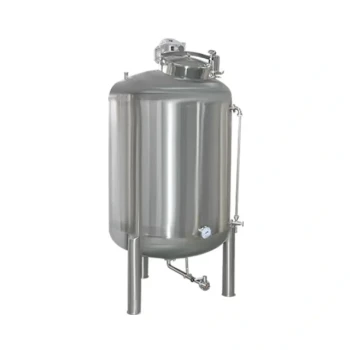
As noted in supplementary contexts, heating honey requires equipment that ensures even heat distribution, such as a drum heater or heat exchanger.
The Danger of Hot Spots
If the heat is applied unevenly, specific pockets of honey may overheat while others remain cool.
This results in a worst-case scenario: parts of the batch are chemically damaged (high HMF) while other parts remain contaminated with active microorganisms.
Speed vs. Nutrient Retention
There is an inherent tension between sterilization and nutrient preservation. Slower heating over a longer period is sometimes advocated to preserve nutrients during liquefaction.
However, for the specific goal of destroying microorganisms, the high-temperature, short-time approach is superior because it minimizes the total duration the honey spends in a reactive state.
Making the Right Choice for Your Goal
When processing honey, your method must align with your ultimate objective.
- If your primary focus is Microbial Stability (Shelf Life): strictly adhere to the 80°C protocol (60s ramp-up, 30s hold) to eliminate spoilage organisms immediately.
- If your primary focus is Nutrient Preservation: Ensure your heating equipment provides uniform distribution to prevent localized overheating, and cool the honey rapidly after the 30-second hold time.
Precision in temperature and timing is the only way to ensure your honey remains biologically stable without sacrificing its chemical integrity.
Summary Table:
| Process Parameter | Target Value | Objective |
|---|---|---|
| Peak Temperature | 80°C | Microbe Neutralization |
| Ramp-up Time | 60 Seconds | Gradual Heating Stage |
| Isothermal Hold | 30 Seconds | Pathogen Destruction |
| Total Heat Exposure | ~90 Seconds | Quality Preservation |
| Quality Marker | HMF Level | Monitor Thermal Damage |
Elevate Your Honey Processing with HONESTBEE
At HONESTBEE, we understand that precision is the difference between premium honey and a damaged batch. We cater to commercial apiaries and distributors by providing the professional-grade tools and machinery required to execute precise heating protocols like the 80°C/90s standard.
Our comprehensive wholesale offering includes:
- Advanced Machinery: Hive-making and honey-filling machines designed for efficiency.
- Specialized Equipment: Beekeeping tools and drum heaters that ensure even heat distribution to prevent high HMF levels.
- Industry Consumables: A full spectrum of essentials to keep your operation running smoothly.
Whether you are looking to scale your production or ensure the highest microbial stability for your shelf-stable products, our team is ready to support your growth. Contact us today to learn how our hardware and machinery can optimize your honey quality and business performance.
Related Products
- Stainless Steel Heated Honey Tank Warming Heating Tank
- Silicone Rubber Honey Drum Heating Belt
- Honey Tank Heater Drum Heating Blanket for Honey Barrel
- Professional Thermostatic Conical Honey Melter
- Honey Concentrating Vacuum Heating Thickening Machine Dehumidifier for Honey
People Also Ask
- What are the benefits of precise temperature control in honey heating tanks? Preserve Quality and Efficiency
- How do honey heating tanks offer scalability for growing beekeeping operations? Strategic Equipment Growth Solutions
- What features of a honey heating tank contribute to hygiene? Ensure Purity with Stainless Steel & Sanitary Design
- What is the primary role of a honey heating tank? Enhance Your Honey Processing Flow and Quality
- What is the purpose of using heating tanks or constant temperature water baths in honey dehydration? Optimize Purity & Flow