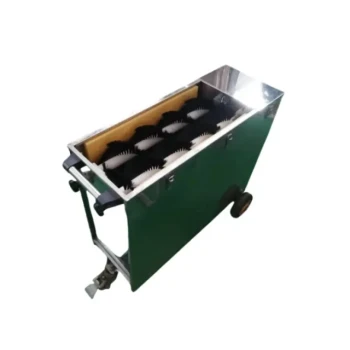
In regions lacking official agricultural statistics, the commercial flow of beekeeping equipment acts as a critical proxy for estimating honey bee population density. By tracking the geographical distribution and sales of beehives, machinery, and consumables, researchers can construct accurate models of regional beekeeping intensity.
Distribution data serves as a vital alternative data source when government records are unavailable. By analyzing where beekeeping infrastructure is sold and deployed, you can correlate human activity with biological outcomes, identifying areas of high population density and genetic variation.
Bridging the Information Gap
The Limitations of Official Data
In many territories, official censuses of bee colonies are incomplete or non-existent. Relying solely on government reports often leads to a significant underestimation of the actual pollinator population.
Equipment as a Proxy for Presence
Sales records of beekeeping equipment—specifically beehives, machinery, and consumables—provide a tangible footprint of apiary activity. A high volume of equipment flow into a specific geographic area strongly indicates active colony management.
Modeling Regional Intensity
By mapping these sales, researchers and distributors can build spatial models of beekeeping intensity. This allows for the correlation of human management practices with broader ecological factors, such as genetic variations in local honey bee colonies.
The Biological Link: Infrastructure and Density
Optimized Survival Environments
Commercial beehives and rational beekeeping infrastructure do more than house bees; they provide an optimized environment for survival. This equipment mitigates natural risks, significantly boosting the reproductive success rate compared to wild colonies.
Accelerating Population Growth
The use of specialized infrastructure leads to a rapid increase in population density. Facilitated by this equipment, colonies produce a significantly higher number of natural swarms annually, artificially inflating the local bee population.
Resilience and Resource Dominance
This infrastructure-supported density allows honey bees to maintain high adaptability. Even after severe environmental disturbances, such as forest fires or logging, equipped colonies can recover quickly and dominate local floral resources.
Understanding the Trade-offs
Equipment vs. Active Colonies
While distribution data is a powerful indicator, it is not a direct headcount. The purchase of equipment does not guarantee it is currently in use; storage, breakage, or abandonment can lead to discrepancies between sales data and actual live colony counts.
Human Activity and Genetic Impact
It is crucial to recognize that density derived from commercial equipment is an anthropogenic influence. High density driven by "rational beekeeping" creates artificial population spikes that may impact the natural genetic variation of the species in that region.
Making the Right Choice for Your Goal
To effectively utilize distribution data for density assessment, align your analysis with your specific objectives:
- If your primary focus is ecological research: Use distribution data to identify "hotspots" of human-managed bees to study their impact on wild pollinators and local genetic diversity.
- If your primary focus is agricultural planning: Utilize equipment flow models to predict pollination capacity in regions where official livestock statistics are unreliable or outdated.
Leveraging commercial supply chain data transforms simple sales figures into a sophisticated tool for mapping ecological impact.
Summary Table:
| Metric Category | Data Source | Impact on Density Assessment |
|---|---|---|
| Infrastructure | Beehive & Machinery Sales | Indicates capacity for managed colonies and survival optimization. |
| Maintenance | Consumables Flow | Serves as an active indicator of ongoing apiary management. |
| Spatial Mapping | Geographical Sales Data | Identifies beekeeping 'hotspots' and regional pollination capacity. |
| Ecological Link | Equipment Density | Correlates human management with natural swarm rates and resilience. |
Scale Your Apiary Operations with HONESTBEE
At HONESTBEE, we understand that high-quality equipment is the backbone of thriving bee populations. As a leading provider for commercial apiaries and distributors, we offer a comprehensive wholesale portfolio designed to enhance productivity and colony resilience.
Our expertise covers the full spectrum of industry needs, including:
- Precision Machinery: Advanced hive-making and honey-filling machines to streamline your production.
- Professional Tools: A complete range of hardware and specialized beekeeping equipment.
- Essential Consumables: Reliable supplies to ensure the year-round health of your colonies.
- Cultural Merchandise: Unique honey-themed products to diversify your market reach.
Whether you are scaling an industrial beekeeping operation or supplying a regional market, HONESTBEE delivers the tools you need to dominate floral resources and maximize yields.
Ready to optimize your supply chain? Contact us today to explore our wholesale solutions!
References
- Randall Hepburn, SarahE. Radloff. Genetic variation in natural honeybee populations, Apis mellifera capensis. DOI: 10.1007/s00114-004-0556-2
This article is also based on technical information from HonestBee Knowledge Base .
Related Products
- Stainless Steel J Hook Hive Tool for Beekeeping
- Stainless Steel Honey Bee Smoker Hive and Honeycomb Smoker for Beekeeping
- Professional Bee Smoker with Elongated Spout and Durable Bellows for Beekeeping
- Durable Galvanized Steel Frame Grip
- Stainless Steel Queen Grafting Tool for Beekeeping and Bee Queen Grafting
People Also Ask
- What specific challenges do beekeeping hive tools address during hive maintenance? Essential Solutions for Apiaries
- What are the features of a J-hook hive tool? Effortlessly Lift Frames with Superior Leverage
- What is a J-hook hive tool and why is it favored by some beekeepers? Master Gentle Frame Handling
- What is the purpose of the J-hook hive tool? Effortlessly Lift Frames with Superior Leverage
- How is a J-hook hive tool designed and what is its primary use? Master Effortless Hive Inspections