The evolution of the comb guide on frame top bars followed a clear trajectory aimed at improving how bees anchor their comb. Historically, this progression moved from a simple 'V' edge carved directly into the wood, to the insertion of a thin wood strip, and finally to the use of a wax "starter strip" secured within a groove.
The fundamental goal throughout this evolution was to provide bees with a distinct, graspable edge to ensure straight and stable comb construction.
The Stages of Design Evolution
The Integrated 'V' Edge
The earliest iteration of the comb guide was a 'V' edge carved directly into the bottom of the top bar.
This design utilized the wood of the bar itself, shaped to a sharp point.
It provided a rudimentary but effective ridge for bees to hold onto and begin their work.
The Inserted Wood Strip
Over time, the integrated carving was replaced by the insertion of a thin wood strip.
This method likely simplified the manufacturing of the top bar itself, allowing the guide to be added separately.
It maintained the principle of a solid, wooden anchor point for the colony.
The Wax Starter Strip
Eventually, the design evolved to utilize foundation wax, known as a "starter strip" or "starter foundation."
To accommodate this, top bars were fashioned with a groove—often created by a slotting machine.
The wax strip was then waxed directly into this groove, offering bees a guide that mimicked the texture and scent of the comb they were about to build.
Understanding the Mechanisms
The Necessity of a Guide
Regardless of the material used, the primary function of these guides is to give bees a clear starting point.
Without a sharp edge or guide, bees may build comb across multiple bars, making hive management difficult.
The guide encourages the bees to build along the long axis of the bar.
Manufacturing Variations
Beekeepers and manufacturers have utilized various methods to create these guides.
Some use table saws to cut closely spaced slots (kerfs) or to shape the V-bottom mentioned in early designs.
Industrial processes eventually incorporated chain-fed slotting machines to standardize the grooves needed for wax insertion.
Making the Right Choice for Your Goal
While the history shows a trend toward wax, modern beekeepers still use variations of these methods based on their resources.
- If your primary focus is durability and low maintenance: Utilize a V-shaped wooden guide or inserted wood strip, as these are permanent and do not require resetting like wax.
- If your primary focus is rapid comb acceptance: Choose the wax starter strip, as the presence of foundation wax can encourage bees to begin building faster.
Ultimately, the success of the top bar depends on providing a consistent, sharp edge that the bees perceive as the definitive place to start.
Summary Table:
| Evolution Stage | Design Mechanism | Primary Benefit |
|---|---|---|
| Integrated 'V' Edge | Carved directly into top bar | Durable, permanent wooden ridge |
| Inserted Wood Strip | Separate thin strip added to bar | Simplified manufacturing process |
| Wax Starter Strip | Foundation wax in a slotted groove | High bee acceptance & fast building |
| Modern Slotted Bar | Machine-cut kerfs/slots | Standardization for industrial use |
Elevate Your Apiary's Productivity with HONESTBEE
At HONESTBEE, we understand that the foundation of a successful harvest starts with the quality of your equipment. As a premier provider for commercial apiaries and distributors, we offer a comprehensive wholesale range designed to meet the demands of modern beekeeping.
Whether you need precision-engineered hive-making machinery, high-efficiency honey-filling machines, or standard-setting beekeeping tools and consumables, our portfolio is built to scale your operations. From historical wisdom to modern innovation, we supply the hardware and expertise necessary to ensure your colony's success.
Ready to upgrade your equipment or restock your inventory?
Contact us today to explore our wholesale catalog!
Related Products
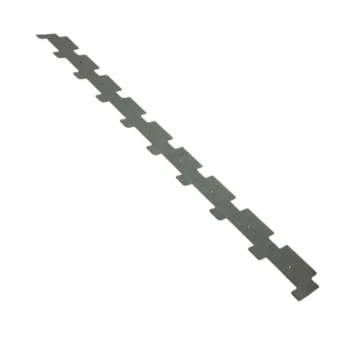
- Heavy Duty Castellated Iron Frame Spacer for Honey Supers
- Professional Wide Blade Honey Scraper for Beekeeping and Honey Processing
People Also Ask
- What are honey super frames and what foundation options are available? Choose the Best Support for Your Bees
- What are the reasons and drawbacks of using nine frames in a ten-frame honey super? Boost Extraction Speed Today
- What are honey super frames and how many are needed per box? A Beekeeper's Essential Guide
- What are honey super frames and their foundation options? Choose the Best Support for Your Hive's Honey Production
- Why might a beekeeper use fewer than the standard number of frames in a honey super? Boost Extraction Efficiency