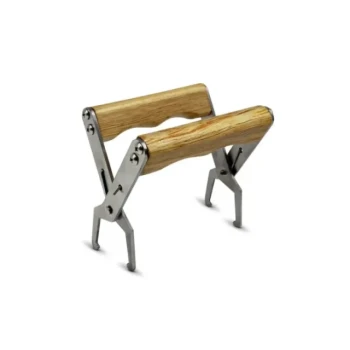
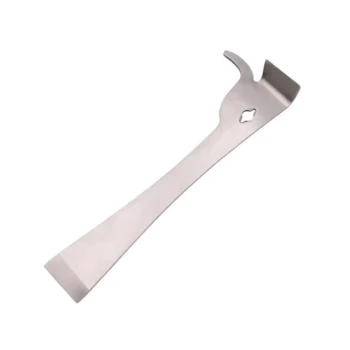
Precision-manufactured hive components control American Foulbrood (AFB) by maintaining the exact "bee space" required for natural hygienic behavior and providing the sterile hardware necessary for physical pathogen removal. These accurately sized frames and foundations allow worker bees to identify, reach, and remove infected larvae before Paenibacillus larvae spores can reach a critical mass, effectively breaking the cycle of infection.
Core Takeaway: High-precision beekeeping hardware acts as a primary biosecurity tool. By eliminating physical hiding spots for pathogens and enabling the "shook swarm" method, standardized components transform a hive from a potential disease reservoir into a manageable, hygienic environment.
The Role of Precision Engineering in Disease Management
Maintaining the Critical "Bee Space"
Accurately manufactured components ensure that every internal dimension respects the natural "bee space" (roughly 8mm). When dimensions are off, bees fill the gaps with propolis or burr comb, creating irregular pockets where diseased larvae can remain hidden from the colony's cleaning efforts.
Precision-made frames provide a standardized comb structure that allows for uniform airflow and accessibility. This structural consistency is the foundation of a colony's ability to maintain high sanitary standards across the entire brood nest.
Facilitating Natural Hygienic Behavior
Standardized comb structures enable worker bees to perform their cleaning duties more effectively. When larvae are killed by Paenibacillus larvae, they must be detected and removed immediately to prevent the spread of resistant spores.
If hive components are warped or inaccurately sized, bees cannot easily access certain cells to remove the "scale" left behind by AFB. Accurate manufacturing ensures there are no physical barriers to the bees' natural instinct to purge the hive of infected material.
Hardware Intervention and the "Shaking Method"
Removing the Pathogen Reservoir
AFB spores are notoriously resilient and can remain viable in contaminated wooden equipment and wax for decades. The most effective way to control an outbreak is the "shaking method," which involves transferring adult bees onto entirely new, sterile frames and foundation.
By replacing old, spore-laden materials with precision-manufactured new consumables, beekeepers physically remove the environmental reservoir of the disease. This hardware-first approach minimizes the need for chemical interventions and antibiotics, which can contaminate honey.
Accelerating Recovery with Sterile Foundations
Using new, high-quality wax or plastic foundation forces the colony to build a fresh brood nest from scratch in a clean environment. This "reset" leverages the self-cleaning behavior of worker bees by ensuring they are not re-exposed to old pathogen residues during the comb-building process.
For distributors, providing a complete kit of sterile, ready-to-use frames and foundations is essential. Rapid deployment of these materials during an outbreak is the difference between saving a commercial apiary and losing the entire operation to horizontal transmission.
Understanding the Trade-offs
Precision vs. Price Point
Low-cost, non-standardized hive components often suffer from dimensional inaccuracies that compromise hive biosecurity. While cheaper materials may lower initial costs, they increase the long-term risk of disease outbreaks and colony loss due to poor "bee space" management.
The Risk of Mismatched Components
Sourcing frames and hive bodies from different manufacturers can lead to tolerance stacking issues. Even a few millimeters of deviation can result in excessive propolis buildup, making inspections difficult and creating refuges for Paenibacillus larvae spores that escape disinfection.
Maximizing Business Value through Full-Spectrum Sourcing
The Advantage of One-Stop Hardware Solutions
For wholesalers and distributors, offering a comprehensive portfolio of standardized, precision-manufactured components is a key competitive advantage. Providing a "full-spectrum" solution ensures that all hive parts fit perfectly, maintaining the biosecurity of the end-user's apiary.
Efficiency and Order Fulfillment
In the event of an AFB outbreak, response time is critical for beekeepers. Partnering with a supplier that offers ultra-fast delivery and efficient fulfillment of sterile hardware allows distributors to serve as essential frontline support for disease management.
Making the Right Choice for Your Goal
- If your primary focus is disease prevention and biosecurity: Prioritize manufacturers who guarantee strict adherence to standardized bee space dimensions to facilitate natural hygienic behavior.
- If your primary focus is rapid outbreak response: Ensure your supply chain can provide immediate delivery of large quantities of new, sterile frames and foundations for the "shaking method."
- If your primary focus is long-term customer trust: Market precision-engineered components as a technical tool for colony health rather than just a commodity, highlighting their role in breaking the AFB transmission chain.
Reliable disease control begins with the physical integrity of the hive, making precision manufacturing the most critical line of defense against American Foulbrood.
Summary Table:
| Component Feature | Mechanism for AFB Control | Impact on Colony Health |
|---|---|---|
| Precise Bee Space | Eliminates gaps where pathogens hide from cleaning bees. | Enhances natural hygienic behavior. |
| Standardized Frames | Ensures uniform airflow and accessibility for larva removal. | Reduces disease reservoir buildup. |
| Sterile Hardware | Provides clean surfaces for the "shook swarm" method. | Breaks the cycle of infection immediately. |
| High-Quality Foundation | Prevents re-exposure to old pathogen residues in wax. | Accelerates colony recovery and health. |
Partner with HONESTBEE for High-Precision Beekeeping Solutions
Protect your clients' apiaries and grow your business with HONESTBEE, your premier wholesale partner for professional beekeeping hardware. We specialize in catering to commercial apiaries and B2B distributors with a comprehensive, one-stop sourcing portfolio—from precision-manufactured frames and hives to honey-filling machinery and specialized consumables.
Why Distributors Choose HONESTBEE:
- Full-Spectrum Portfolio: Access everything from hardware to cultural merchandise in one place.
- Rapid Response & Delivery: Ultra-fast fulfillment ensures you can support beekeepers during critical disease outbreaks.
- Premium Quality & Reliability: Our standardized components guarantee the precise 'bee space' needed for colony biosecurity.
- B2B Support: Benefit from competitive wholesale margins, OEM/ODM capabilities, and deep industry expertise.
Contact our expert team today to streamline your supply chain and provide your customers with the industry's most reliable beekeeping equipment.
References
- Amit Layek, Rayanoothala Pravallika Sree. Major pests and diseases of honey bees (Apis spp.) and their management: current status and future challenges. DOI: 10.65525/jaar.v1i4.20
This article is also based on technical information from HonestBee Knowledge Base .
Related Products
- Wooden Bee Hive Frames for Beekeeping and Wholesale
- Plastic Bee Frame Beekeeping Hive Frames for Wholesale
- Professional Galvanized Steel Frame Rest for Beehives
- Professional 3-Bar Frame Grip with Integrated Hive Tool
- Heavy-Duty Lever-Action Frame Grip with Hive Tool
People Also Ask
- How do wooden and plastic hive frames compare in terms of durability? Wood vs. Plastic Longevity & Repairability
- How does balancing the number of frames impact hive productivity? Optimize Your Apiary's Biological Output
- What are the main considerations when choosing between wooden and plastic bee hive frames? Optimize Your Apiary's Efficiency
- How should beehive frames be maintained to prolong their lifespan? 5 Pro Tips for Durable Beekeeping Equipment
- Can I reuse old beehive frames? Save Money and Boost Hive Productivity