The synergy between artificial queen cells and industrial refrigeration creates a scalable production line that transforms sporadic natural biological secretion into a stable commercial output. Artificial queen cells function as the "production engine," stimulating bees to mass-produce royal jelly, while industrial refrigeration acts as the "preservation engine," locking in bioactivity immediately upon harvest.
The success of royal jelly collection hinges on a seamless transition from biological manipulation to thermal control: artificial cells trick the colony into maximizing yield, and immediate freezing ensures that yield retains its chemical value.
The Production Engine: Artificial Queen Cells
Artificial queen cells are not merely containers; they are biological triggers designed to exploit the natural instincts of the hive for industrial-scale production.
Simulating the Queen-Rearing Environment
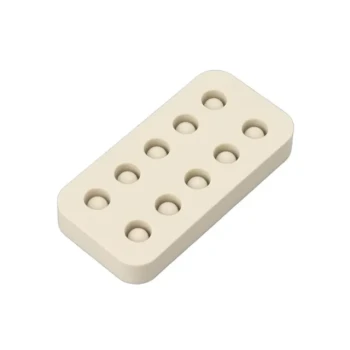
In nature, bees rear queens only sporadically. Artificial queen cells simulate natural queen cups, deceiving the colony into believing it needs to rear many new queens simultaneously.
By transferring (grafting) 1-2 day old larvae into these standardized cups, beekeepers induce nurse bees to exhibit a strong feeding instinct. The bees respond by secreting and filling these cups with massive quantities of royal jelly.
Standardizing the Harvest Cycle
Artificial cells convert an unpredictable natural process into a regimented industrial workflow.
Because the cells are standardized consumables, often made of or coated in beeswax, they allow for precise scheduling. Beekeepers can systematically harvest high-purity jelly every 48 to 72 hours, ensuring a consistent supply chain rather than relying on the hive's natural swarming impulses.
Enabling High-Density Output
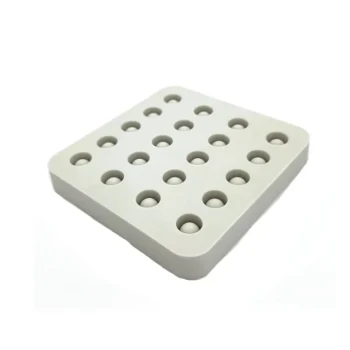
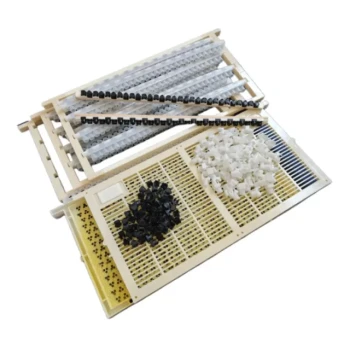
The physical design of artificial cells allows them to be arranged at high density on a hive frame.
This density alters the natural regulation of the colony. Instead of producing jelly for a single queen, the colony is forced to distribute resources across dozens of artificial cups. This is the hardware foundation that makes large-scale royal jelly production physically possible.
The Preservation Engine: Industrial Refrigeration
Royal jelly is chemically fragile. Once harvested from the artificial cells, the focus shifts entirely from quantity to stability.
Combating Chemical Instability
Royal jelly contains unstable proteins and unique fatty acids like 10-hydroxy-2-decenoic acid (10-HDA). It has a naturally acidic pH of approximately 3.5.
These components are highly susceptible to rapid deterioration when exposed to heat or air. Without intervention, the jelly's viscosity increases and its chemical components decompose, rendering the product commercially worthless.
The Immediate Cold Chain
The primary reference emphasizes that the "cold chain" must begin immediately at the point of collection.
Harvested material cannot sit at ambient temperatures. It must be transferred instantly to industrial-grade freezing equipment. This ultra-low temperature storage halts biological degradation, preserving the bioactive components that define the jelly's quality.
Understanding the Trade-offs
While this system is efficient, it introduces specific risks that must be managed to maintain product integrity.
The "Grafting" Vulnerability
The process of moving larvae into artificial cells is delicate. Larvae are prone to dehydration and physical damage during this transfer.
To mitigate this, a small amount of royal jelly is often used as a "biological lubricant" at the base of the artificial cell. This improves larval survival rates and ensures the nurse bees accept the graft, but it requires sacrificing a portion of the harvest to seed the next batch.
The Time-Temperature Criticality
There is zero margin for error regarding temperature. The efficiency of the artificial cells in generating yield is irrelevant if the refrigeration step is delayed.
Even short exposure to ambient temperatures after removal from the hive can degrade the bioactive profile. The system requires that the refrigeration equipment be accessible and functional exactly when the harvest cycle concludes.
Making the Right Choice for Your Operation
To optimize your royal jelly production, you must balance biological inputs with mechanical preservation.
- If your primary focus is Maximizing Yield: Prioritize the acceptance rate of your artificial cells by ensuring they are beeswax-coated and arranged at a density that challenges but does not overwhelm the colony's nursing capacity.
- If your primary focus is Bioactive Quality: Prioritize the speed of the cold chain, ensuring that the time between extraction from the artificial cell and entry into industrial freezing is minimized to absolute zero.
Ultimately, the quality of commercial royal jelly is defined by how quickly you can move the product from the biological warmth of the artificial cell to the stasis of the industrial freezer.
Summary Table:
| Component | Role in Production | Key Benefit |
|---|---|---|
| Artificial Queen Cells | Biological Trigger | Stimulates mass secretion of jelly by simulating queen-rearing conditions. |
| Grafting Process | Induction Mechanism | Standardizes the harvest cycle every 48-72 hours for consistent output. |
| High-Density Frames | Hardware Foundation | Enables large-scale collection by maximizing cup count per hive. |
| Industrial Refrigeration | Preservation Engine | Halts chemical degradation of proteins and 10-HDA immediately post-harvest. |
| Cold Chain Stasis | Quality Control | Maintains acidic pH and prevents viscosity changes for commercial grade. |
Elevate Your Apiary’s Commercial Potential with HONESTBEE
To transform your royal jelly production from a seasonal hobby into a high-yield commercial operation, you need the right synergy of biological tools and industrial machinery. HONESTBEE specializes in supporting commercial apiaries and distributors by providing the high-quality infrastructure required for success.
Our value to your business includes:
- Comprehensive Wholesale Offering: A full spectrum of beekeeping tools and essential consumables.
- Industrial-Grade Machinery: Specialized hardware including honey-filling and hive-making machines designed for scalability.
- Standardized Equipment: Precision-engineered artificial queen cells to maximize your colony's output.
Ready to optimize your supply chain and protect your product's bioactivity? Contact us today to explore our wholesale solutions and see how we can help you scale your operations efficiently.
References
- Raivo Kalle, Renata Söukand. Beekeepers as guardians of apitherapeutic knowledge in Estonia, SW Ukraine, and NE Italy. DOI: 10.1186/s13002-025-00764-6
This article is also based on technical information from HonestBee Knowledge Base .
Related Products
- 10-Cell Silicone Beeswax Bee Queen Cups Forming Mold
- JZBZ Type Wide Base Plastic Queen Cell Cups for Base Mounting and Queen Rearing
- Clear Black Plain Polystyrene Queen Bee Grafting Cell Cups No Lug for Bee Queen Cup
- Premium Nicot Style Cell Bar Holder and Queen Cell Cup Holder System
- Brown Nicot Queen Cell Cups for Breeding Queen Bees Beekeeping
People Also Ask
- How do beeswax queen cell cups function? Optimize Queen Rearing with Biological Mimicry
- What is the biological function of beeswax queen cell cups? Boost Acceptance in Artificial Queen Rearing
- What role do specialized queen rearing tools play in developing mite-resistant honeybee stock? Master Genetic Selection
- What materials are used to make artificial queen cell cups for grafting? Beeswax vs. Plastic Guide
- What roles do specialized queen cell cups play in royal jelly production? Optimize Your Hive's Secretion and Yield