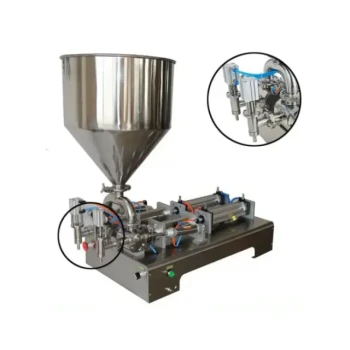
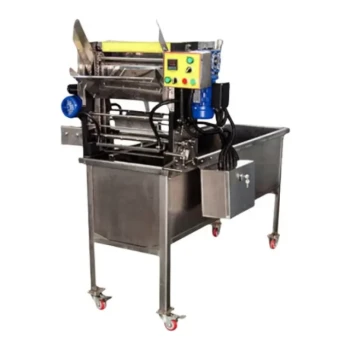
Automated labeling and filling systems function as the technical backbone of regulatory compliance for honey exports. These machines mechanically guarantee that every product unit is filled to the exact volume and printed with all mandatory legal data, including the sales name, net weight, manufacturer address, and geographical origin. Furthermore, they provide the necessary flexibility to adjust critical markers, such as the Best Before Date, to suit specific environmental conditions—like tropical climates—ensuring the product meets the stringent safety guidelines of destination markets.
By standardizing the application of legal data and volume control, automated equipment bridges the gap between local production and international standards, transforming compliance from a manual variable into a guaranteed constant.
The Role of Precision in Labeling Compliance
Ensuring Mandatory Data Accuracy
International food safety regulations demand that specific information appears legibly on every container. Automated labeling machines ensure that essential data—sales name, net weight, and manufacturer details—are applied without the errors common in manual labeling.
Adapting to Environmental Regulations
Different export markets have unique requirements regarding shelf life based on their climate. In tropical conditions, for example, automated coders allow producers to precisely adjust the Best Before Date to one year or less. This capability is essential for passing regulatory inspections that assess product stability in specific storage environments.
Combating Fraud with Traceability
A robust labeling system is a key defense against food fraud, a major concern in the global honey trade. By accurately applying origin identification and nutritional information tables, automation provides the traceability data regulatory agencies require to distinguish legally produced honey from adulterated or unauthorized products.
Physical Compliance and Hygiene Standards
Guaranteeing Net Weight Consistency
Export markets have strict laws regarding "short-filling" (under-filling) products. High-precision filling equipment ensures that the net weight declared on the label matches the actual content volume. This prevents legal penalties while simultaneously minimizing product overflow and waste.
Reducing Contamination Risks
Manual handling is a primary vector for microbial contamination. Automated filling lines create a closed-loop process, significantly reducing human contact during the packaging phase. This aligns production with international hygiene standards required for food safety certification.
Meeting Chemical Residue Standards
Advanced processing lines facilitate strict batch management. This allows processors to isolate and screen honey to ensure it meets Maximum Residue Limit (MRL) standards. Precise control over blending helps prevent cross-contamination between batches, ensuring the final product complies with chemical safety regulations.
Understanding the Trade-offs
The Requirement for Standardization
Automation requires uniformity to function efficiently. To utilize high-speed labeling and filling, producers must use standardized consumables, such as specific glass jars and label sizes. While this improves airtightness and storage, it limits a producer's ability to switch packaging formats quickly without retooling the line.
Operational Rigidity
While automation reduces manual error, it introduces technical dependency. A failure in the coding or filling module can halt the entire production line. Maintaining compliance requires not just the machinery, but a rigorous maintenance schedule to ensure the calibration of volume sensors and printers never drifts outside of legal tolerances.
Making the Right Choice for Your Export Goals
To leverage automation effectively for regulatory success, align your equipment choice with your specific market challenges:
- If your primary focus is entering markets with strict purity laws (e.g., EU): Prioritize equipment that offers advanced batch management and closed-loop filling to ensure MRL compliance and hygiene.
- If your primary focus is exporting to tropical or variable climates: Select labeling systems with flexible, easily adjustable coding features to modify Best Before Dates and storage instructions rapidly.
Automated equipment is not merely a tool for speed; it is a mechanism for legitimacy that verifies the quality and safety of your honey on the global stage.
Summary Table:
| Compliance Category | Automated Solution | Regulatory Benefit |
|---|---|---|
| Data Accuracy | Precision Labeling & Coding | Ensures mandatory sales name, origin, and manufacturer data are error-free. |
| Shelf Life | Flexible Date Coding | Allows adjustment of Best Before Dates for specific climates (e.g., tropical). |
| Volume Control | High-Precision Filling | Prevents "short-filling" penalties by guaranteeing net weight consistency. |
| Hygiene | Closed-Loop Systems | Reduces human contact and microbial contamination to meet safety standards. |
| Traceability | Batch Management Modules | Simplifies tracking for origin identification and MRL (residue) screening. |
Scale Your Honey Export Business with HONESTBEE
Navigating the complexities of international honey regulations requires precision and reliability. HONESTBEE empowers commercial apiaries and distributors with the high-performance machinery needed to meet global standards.
From high-precision honey-filling machines that eliminate product waste to automated labeling systems that ensure total traceability, our comprehensive wholesale offering covers your entire production line. We provide specialized beekeeping tools, hive-making machinery, and essential industry consumables designed to transform your compliance into a competitive advantage.
Ready to optimize your honey production for the global market?
Contact our export specialists today to find the perfect equipment solution for your facility.
References
- Paul Schweitzer, Boussim Issaka Joseph. Physico-Chemical and Labeling Control of Imported Honeys in Burkina Faso. DOI: 10.4236/fns.2013.412162
This article is also based on technical information from HonestBee Knowledge Base .
Related Products
- Fully Automatic Honey Filling Packaging Machine for Processing Line
- Automatic Honey Filling and Filtering Machine for Beekeeping Bottle Filling
- Precision Automated Packaging Turntable Honey Spoon Filling Sealing Packing Machine
- Manual Honey Filling Machine Bottling Machine for Honey
- Precision Durable Efficient HONESTBEE Rotary Honey Filling Machine
People Also Ask
- Why are fully automatic honey filling and packaging lines essential? Boost Your Honey's Market Value and Quality
- What is a fully-automatic honey filler? Streamline Your Production with High-Precision Automation
- How do automated honey filling and packaging machines affect profitability? Boost Margins with HONESTBEE Technology
- How do automated honey filling and packaging machines contribute to the market value of honey products? Maximize Your ROI
- How do industrial-grade automated honey filling and packaging machines mitigate the risk of physical contamination?