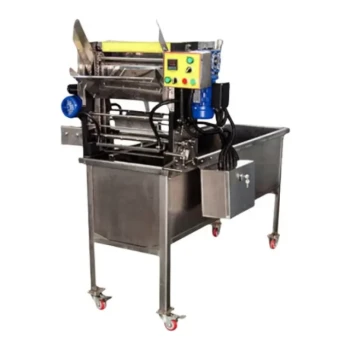
Automated honey filling equipment protects physicochemical integrity by processing the product in a closed, controlled environment that significantly reduces exposure to atmospheric moisture and oxygen. This isolation is critical for stabilizing moisture content, maintaining precise electrical conductivity, and preventing the oxidation that leads to unwanted increases in acidity.
By eliminating environmental variables during packaging, automated systems ensure that the chemical profile of the honey in the jar matches the honey in the tank, guaranteeing compliance with international safety and quality standards.
Controlling Moisture and Oxidation
The greatest threats to honey quality during packaging are hygroscopicity (the tendency to absorb water) and oxidation.
The Closed-Loop Advantage
Automated equipment operates as a closed system, creating a physical barrier between the honey and the ambient environment.
This minimizes the time the product is exposed to humid air, preventing the absorption of atmospheric moisture.
Maintaining low water content is essential to prevent fermentation and spoilage during storage.
Preventing Acidification
Exposure to air can trigger oxidation, which alters the chemical makeup of honey.
The primary reference indicates that precise sealing prevents the oxidation processes that cause acidity levels to rise.
By controlling this variable, producers ensure the honey retains the specific pH profile required for high-quality certification.
Preserving Chemical and Sensory Indicators
Beyond basic spoilage, automation protects the subtle indicators that define premium honey varieties.
Stabilizing Electrical Conductivity
Electrical conductivity is a key physicochemical indicator used to classify honey types and origins.
Automated filling maintains the stability of this metric by ensuring the honey matrix is not altered by external contaminants or moisture fluctuations.
Retaining Volatile Aromas
Manual filling often leaves honey open to the air, allowing delicate volatile compounds to escape.
Automated machines use hermetic sealing technologies to lock in these aromas immediately after filling.
This preserves the sensory experience—specifically the smell and taste—that distinguishes specific varietals like Acacia or Chestnut honey.
Ensuring Hygiene and Consistency
Automation transforms packaging from a variable manual process into a standardized industrial operation.
Eliminating Secondary Contamination
Manual handling introduces the risk of "secondary contamination" from human contact or tools.
Automated systems utilize food-grade stainless steel pipelines and pump bodies to maintain a sterile flow.
This is particularly vital for organic honey, where maintaining a trace-free, hygienic chain is a regulatory requirement.
Precision Dosing and HMF Control
Modern equipment often includes constant temperature controls tailored to the honey's viscosity.
This ensures the honey flows efficiently without overheating, which helps keep Hydroxymethylfurfural (HMF) levels low—a primary marker of freshness.
Understanding the Trade-offs
While automation offers clear quality advantages, it introduces new variables that must be managed.
Thermal Risks
To facilitate the flow of viscous honey, some automated systems heat the product.
If this temperature is not strictly monitored, it can artificially spike HMF levels and degrade enzymes, negating the quality benefits of the machine.
Maintenance Dependencies
The hygiene benefits of automation rely entirely on the cleanliness of the machine's internal components.
If the "closed loop" is not rigorously cleaned, it becomes a hidden source of systemic contamination that affects every jar in a batch.
Making the Right Choice for Your Goal
Selecting the right equipment depends on which quality metrics are most critical to your market positioning.
- If your primary focus is Shelf Life and Stability: Prioritize machines with rapid, hermetic sealing capabilities to lock out moisture and prevent fermentation.
- If your primary focus is Organic Certification: Ensure the equipment uses food-grade stainless steel components and certified no-drip nozzles to eliminate secondary contamination risks.
- If your primary focus is Premium Varietals: Look for systems with advanced temperature controls to handle specific viscosities without spiking HMF levels or losing volatile aromas.
Automation is not merely a tool for speed; it is a preservation technology that bridges the gap between the apiary and the consumer.
Summary Table:
| Key Benefit | Impact on Honey Quality | Technical Mechanism |
|---|---|---|
| Moisture Control | Prevents fermentation & spoilage | Closed-loop system limits atmospheric exposure |
| Oxidation Prevention | Maintains pH & prevents acidification | Rapid hermetic sealing technology |
| HMF Level Control | Preserves freshness & enzymes | Advanced constant temperature management |
| Purity Assurance | Eliminates secondary contamination | Food-grade stainless steel & automated flow |
| Aroma Retention | Preserves delicate volatile compounds | Immediate sealing locks in honey's natural scent |
Elevate Your Honey Production with HONESTBEE
At HONESTBEE, we understand that maintaining the delicate physicochemical balance of honey is the key to market success. Whether you are a commercial apiary looking to scale production or a distributor seeking consistent quality, our comprehensive wholesale solutions are designed for you.
From advanced honey-filling machines that protect volatile aromas and control HMF levels to a full spectrum of beekeeping tools and machinery, we provide the industrial-grade equipment needed to ensure your honey meets international safety standards. Our portfolio extends to specialized hardware, hive-making equipment, and even honey-themed cultural merchandise to support every facet of your business.
Ready to optimize your packaging process and preserve your honey's premium profile?
Contact HONESTBEE Today for a Professional Consultation
References
- Gül Banu Çiçek Bideci, Sibel KARASALİHOĞLU. A retrospective study: physicochemical properties of the flower honey from the Black Sea region of Turkey in different years. DOI: 10.1590/fst.58120
This article is also based on technical information from HonestBee Knowledge Base .
Related Products
- Fully Automatic Honey Filling Packaging Machine for Processing Line
- Automatic Honey Filling and Filtering Machine for Beekeeping Bottle Filling
- Precision Durable Efficient HONESTBEE Rotary Honey Filling Machine
- Semi Automatic Small Honey Bottle Filling Machine Honey Filler
- Precision Automated Packaging Turntable Honey Spoon Filling Sealing Packing Machine
People Also Ask
- Why are fully automatic honey filling and packaging lines essential? Boost Your Honey's Market Value and Quality
- What is a fully-automatic honey filler? Streamline Your Production with High-Precision Automation
- How do automated honey filling and packaging machines affect profitability? Boost Margins with HONESTBEE Technology
- How do automated honey filling and packaging machines contribute to the market value of honey products? Maximize Your ROI
- How do industrial-grade automated honey filling and packaging machines mitigate the risk of physical contamination?