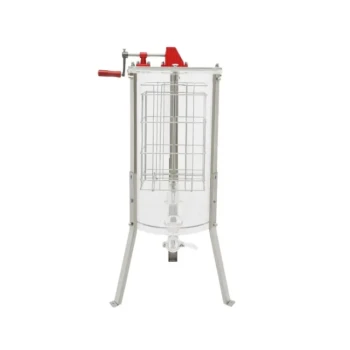
Beehive placement and industrial processing act as the fundamental drivers of honey quality, determining everything from its sensory profile to its long-term stability. While the location of the hive dictates the initial concentration and flavor of the nectar, specialized processing equipment is essential for preserving those aromatic compounds and ensuring the product remains chemically stable during storage.
Core Takeaway: The quality of honey is a product of both environment and engineering. Strategic placement in nectar-dense vegetation establishes the honey’s flavor potential, while precise industrial processing secures that potential by removing impurities and stabilizing moisture content without sacrificing volatile aromatics.
The Strategic Role of Beehive Placement
The environment surrounding the hive is the primary variable in honey production. It establishes the baseline quality before human intervention occurs.
Dictating Sensory Characteristics
The density of nectar-producing vegetation in the immediate vicinity of the hive is the sole determinant of the honey's sensory profile.
The specific combination of local flora creates the unique taste, aroma, and color of the final product. Without a rich floral source, the honey lacks distinct character regardless of how well it is processed.
Ensuring Nectar Concentration
Scientific placement of beehives is not random; it is calculated to maximize access to nectar sources.
Positioning hives in areas with high nectar density ensures the bees can collect highly concentrated nectar efficiently. This results in a raw product that is naturally richer and more robust before it ever reaches the extraction facility.
The Function of Industrial Processing Equipment
Once the honey is harvested, the focus shifts from creation to preservation. Industrial equipment is designed to stabilize the product for the commercial market.
Preserving Volatile Aromatics
According to the primary technical standards, specialized machinery for extraction and bottling is critical for retaining the honey's "nose."
Advanced equipment prevents the loss of volatile aromatic compounds during the transfer from comb to bottle. If the processing system is sealed and precise, the distinct floral notes derived from the hive's location are locked into the final product.
Achieving Physical and Chemical Stability
Raw honey is inherently variable. Processing equipment standardizes the product to ensure physicochemical stability.
By utilizing settling tanks and moisture-control systems, producers can ensure the specific moisture content meets safety standards. This prevents common defects such as fermentation (caused by excess water) or secondary contamination, ensuring the honey remains shelf-stable.
Enhancing Purity and Clarity
Filtration devices are employed to mechanically remove physical impurities introduced during harvesting.
These systems clarify the honey by eliminating beeswax residue, larval fragments, and other debris. This process increases transparency, which is a key factor in grading evaluations and directly influences the final selling price in retail markets.
Understanding the Trade-offs
While industrial processing is necessary for standardization, it introduces a critical tension between commercial viability and biological integrity.
Standardization vs. Biological Activity
There is a distinct trade-off between achieving a "perfect" visual product and maintaining maximum health benefits.
While filtration improves clarity and shelf appeal, aggressive processing methods—specifically heating (pasteurization) and ultra-filtration—can have negative effects. These processes may destroy heat-sensitive enzymes, remove beneficial pollen, and lower the honey's antibacterial properties.
Commercial Consistency vs. Complexity
High-grade filtration creates a uniform product that appeals to mass-market expectations for clear, liquid honey.
However, this uniformity can come at the cost of richness. Extensive filtering may result in a flavor profile that is less complex and "flatter" than raw honey, as it removes some of the microscopic elements that contribute to a robust mouthfeel and aroma.
Making the Right Choice for Your Goal
To optimize your honey production, you must balance the benefits of location against the intensity of processing based on your end-market.
- If your primary focus is High-End/Artisanal Markets: Prioritize "scientific placement" in unique floral regions and use minimal filtration equipment to preserve enzymes, pollen, and complex aromatics.
- If your primary focus is Mass Retail Distribution: Invest in standardized filtration and moisture-control machinery to ensure high transparency, prevent fermentation, and meet strict physical consistency requirements.
Success lies in aligning your processing technology with the natural potential of your hive locations.
Summary Table:
| Factor | Key Influence on Honey | Impact on Final Product |
|---|---|---|
| Hive Placement | Floral Source & Nectar Density | Determines sensory profile, aroma, and initial concentration. |
| Processing Equipment | Volatile Preservation | Locks in floral notes and prevents loss of aromatic compounds. |
| Moisture Control | Physicochemical Stability | Prevents fermentation and ensures long-term shelf stability. |
| Filtration Systems | Purity & Clarity | Removes debris and beeswax to meet commercial grading standards. |
| Thermal Regulation | Biological Integrity | Balancing enzyme preservation with mass-market consistency. |
Elevate Your Apiary Operations with HONESTBEE
At HONESTBEE, we understand that premium honey is a result of both nature and precision engineering. Whether you are a commercial apiary or a large-scale distributor, our mission is to provide you with the tools necessary to preserve the biological integrity and commercial value of your harvest.
Our comprehensive wholesale solutions include:
- Advanced Machinery: Hive-making equipment and precision honey-filling machines.
- Beekeeping Tools: A full spectrum of professional hardware for efficient harvesting.
- Industrial Consumables: Essential supplies to keep your production line running smoothly.
- Cultural Merchandise: Honey-themed goods to diversify your brand's reach.
From maintaining volatile aromatics to achieving perfect clarity, let us help you find the right balance between artisanal quality and industrial efficiency.
Contact HONESTBEE Today for Custom Equipment Solutions
References
- Ömer Kılıç, Mehmet Ali Kutlu. CONTRIBUTIONS TO BINGOL FLORA AND BEEPKEEPING. DOI: 10.23884/mejs/2017.2.02
This article is also based on technical information from HonestBee Knowledge Base .
Related Products
- Electric Double Wall Honey Filtering Machine Purifier Equipment for Honey Processing Plant
- 0.5T Capacity Honey Dehumidifier Dryer with Vacuum Heating and Thickening Filtering Machine
- Double Wall Honey Heating Stirring Homogenizer Mixing Machine with Various Capacity
- Heavy Duty Stainless Steel Honey Processing Machine Decrystallizing Tank
- Double Nozzle Small Honey Filling Machine Honey Sachet Packing Packaging Equipment
People Also Ask
- What types of equipment are used in honey filtering? Build an Efficient System for Pure, Marketable Honey
- What is the process of filtering honey? A Guide to Clean, Pure, and Market-Ready Honey
- What is the overall importance of using the right equipment in honey filtering? Boost Quality & Marketability
- Why is filtering important in honey processing, and what equipment is used? A Guide to Quality & Efficiency
- What steps are involved in maintaining honey filtering equipment? A Guide to Protecting Your Honey Quality