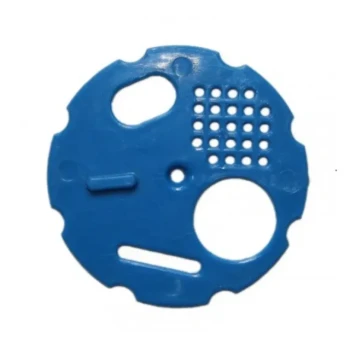
Entrance reducers act as a critical climate control valve, allowing honey bees to efficiently maintain the internal temperature and airflow of the hive. By restricting the size of the opening, these devices prevent excessive drafts and heat loss, enabling the colony to regulate their environment without expending unnecessary energy.
Bees are biological experts at thermoregulation, capable of generating heat or cooling the hive as needed. An entrance reducer supports this natural process by limiting uncontrolled air exchange, ensuring the colony does not have to fight against a "leaky" environment to maintain stability.
The Mechanics of Hive Thermoregulation
Bees Are Active Regulators
It is essential to understand that bees do not passively accept the ambient temperature. They are adept at maintaining their nest environment by adding or removing heat depending on the season.
Supporting Natural Climate Control
An entrance reducer helps the colony achieve a stable internal environment. By limiting the opening, you allow the bees to dictate the airflow rather than subjecting them to the whims of the wind.
Efficiency in Energy Expenditure
When the entrance is appropriately sized, bees spend less energy fighting external conditions. This conservation of energy is vital for the colony's overall health and productivity.
The Myth of Maximum Ventilation
More Air Is Not Always Better
There is a common misconception that a fully open entrance provides the "best" ventilation. However, maximum ventilation often leads to rapid heat loss, forcing the bees to work harder to keep the brood warm.
Disruption of Air Circulation
Proper air circulation relies on controlled intake and exhaust. A fully open entrance can create turbulence or excessive drafts that disrupt the sophisticated airflow patterns bees establish within the hive.
Manageability for the Colony
Bees are fully capable of managing their colony's internal climate with a reduced entrance size. In fact, a smaller opening often gives them greater control over humidity and temperature regulation.
Understanding the Trade-offs
The "Open Window" Effect
Beekeepers often use screened bottom boards for ventilation, but this can be counterproductive. Surveyed beekeepers compare using an open screened bottom to running central air conditioning with the windows open.
Hindering the Cooling Process
Counterintuitively, too much opening can hinder cooling rather than help it. Without a solid bottom (or an IPM insert) and a controlled entrance, the bees cannot generate the negative pressure required to effectively draw air through the hive.
Risk of Over-Exposure
While ventilation is necessary to remove moisture, an entrance that is too wide exposes the hive to temperature spikes and drops. The goal is ventilation without drafts, which the reducer facilitates.
Making the Right Choice for Your Hive
To support your bees effectively, you must balance their need for fresh air with their need for environmental control.
- If your primary focus is Heat Conservation (Winter/Spring): Keep the entrance reduced to the smallest setting to minimize heat loss and prevent chilling drafts.
- If your primary focus is Heat Management (Summer): Use a moderate opening but avoid fully opening both the entrance and bottom board, as this destroys the internal airflow currents bees use for cooling.
- If your primary focus is Colony Stability: Trust that a reduced entrance generally allows bees to manage their own climate more effectively than a wide-open hive.
By restricting the entrance, you stop managing the temperature for the bees and start empowering them to manage it themselves.
Summary Table:
| Feature | Small Entrance (Reduced) | Large Entrance (Open) | Impact on Colony |
|---|---|---|---|
| Heat Retention | High - Prevents drafts | Low - Rapid heat loss | Critical for winter survival and brood rearing. |
| Airflow Control | Managed by bees | Dictated by external wind | Allows bees to create efficient cooling currents. |
| Energy Cost | Low - Conservation | High - Constant regulation | Reduced stress leads to higher productivity. |
| Best Use Case | Winter, Spring, & Small Swarms | Peak Summer Honey Flow | Balances security with necessary ventilation. |
Maximize Your Colony Productivity with Professional Beekeeping Gear
At HONESTBEE, we understand that precision in hive management is the key to a thriving apiary. Whether you are a commercial beekeeper or a large-scale distributor, we provide the industrial-grade tools you need to empower your bees. From high-quality entrance reducers and specialized hive-making machinery to honey-filling systems and cultural merchandise, our wholesale portfolio is designed for efficiency and durability.
Partner with HONESTBEE to scale your operations. Our team is ready to supply your business with the full spectrum of beekeeping hardware and essential industry consumables.
Contact Us Today to Get a Quote
Related Products
- Steel Round Disc Entrance Reducer for Flexzion Bee Hive Nuc Box Gate
- Beehive Entrance Reducer Guardian Metal Hive Entrance for Bees
- Professional Hive Front Entrance Bee Feeder
- HONESTBEE Entrance Bee Feeder Efficient Hive Front Liquid Feeding Solution for Beekeeping
- HONESTBEE Entrance Bee Feeder Professional Hive Nutrition Solution for Beekeeping
People Also Ask
- What is the purpose of an entrance reducer for a beehive? Strengthen Colony Defense and Prevent Robbery
- Why are entrance reducers used to counter hornet infestations? Protect Your Hive with Strategic Choke Points
- Why is it critical to maintain a smaller entrance for a newly established bee hive? Boost Colony Growth and Security
- Under what conditions should a beekeeper adjust the size of a beehive entrance? Seasonal & Defense Management Tips
- What is the function of an entrance reducer on a beehive? Strengthen Colony Defense and Climate Control