Forest coverage and vegetation diversity provide the raw potential for honey quality, while specialized equipment serves as the critical mechanism to capture, refine, and preserve that potential.
High forest coverage and diverse plant communities determine the nutritional balance, medicinal properties, and distinct flavor profile of the honey. However, the final quality depends heavily on the integration of advanced beekeeping equipment—such as therapeutic wood hives, specific smoker fuels, and precision extractors—to maintain purity, enhance sensory appeal, and extend shelf life.
The synergy is precise: Ecological diversity dictates the biological value of the honey, while the choice of equipment dictates the structural integrity and purity of the final product delivered to the consumer.
The Ecological Foundation of Quality
The environment serves as the primary determinant of honey's chemical and sensory composition. Without this biological foundation, even the most advanced equipment cannot produce a premium product.
Nutritional and Medicinal Variance
High forest coverage provides a complex array of pollen and nectar sources. This biodiversity ensures colony nutritional balance and directly influences the medicinal value of the honey produced.
Defining Regional Characteristics
The specific combination of plant communities creates unique flavor profiles and regional characteristics. These ecological inputs form the material basis for product differentiation in the market.
Targeted Monofloral Production
Mobile platforms allow beekeepers to leverage this ecological diversity by moving hives to different altitudes. By chasing peak flowering periods of specific plants like thyme, citrus, or heather, producers can create consistent, high-value monofloral honeys.
The Role of Equipment in Quality Preservation
While nature provides the raw ingredients, the equipment acts as a filter and preservative. It determines how much of the original quality makes it into the jar.
Enhancing Sensory Appeal with Hive Materials
The construction material of the hive directly impacts flavor. Honey produced in hives made from therapeutic plant woods consistently receives higher sensory ratings compared to standard modern or metal sheet beehives.
Ensuring Purity During Harvest
The method of calming bees is a critical contamination point. Using smokers fueled by specific plants, such as Guioa diplopetala, ensures that no chemical odors or toxic residues are transferred to the honey, maintaining its organic status.
Optimizing Hygiene and Texture
Professional extraction equipment uses centrifugal force to separate honey without destroying the wax structure. This mechanical process controls moisture content and ensures hygiene, replacing destructive traditional harvesting methods.
Refining for Clarity and Shelf Life
Post-processing filtration is essential for commercial competitiveness. By removing wax particles and larval remains, high-precision filters produce a clear, transparent product and effectively delay crystallization, extending the product's viable shelf life.
Critical Operational Factors
Even with high biodiversity, failure to manage the interaction between environment and equipment can lead to quality degradation.
The Impact of Storage Environment
Harvested honey is vulnerable to environmental fluctuations. Specialized infrastructure must be moisture-proof and temperature-controlled to prevent fermentation or premature crystallization, ensuring the purity of the stored material is maintained.
The Necessity of Mobility
Relying solely on a static location poses a risk of total crop loss due to localized weather. Utilizing industrial-grade transport vehicles mitigates this risk, ensuring a consistent supply of high-quality honey regardless of local climate variations.
Making the Right Choice for Your Goal
To maximize honey quality, align your equipment choices with your specific production targets:
- If your primary focus is Sensory Excellence: Prioritize constructing hives from therapeutic plant woods to maximize taste scores and sensory ratings.
- If your primary focus is Commercial Scalability: Invest in high-precision filtration and centrifugal extraction equipment to ensure high clarity and delay crystallization.
- If your primary focus is Organic Purity: strictly utilize natural smoker fuels like Guioa diplopetala to eliminate the risk of chemical residue contamination.
Success lies in utilizing technology not just to harvest, but to actively protect the complex properties derived from the forest ecosystem.
Summary Table:
| Factor | Ecological Contribution (Raw Potential) | Equipment & Operational Role (Refinement) |
|---|---|---|
| Flavor & Aroma | Diverse nectar sources define regional profiles. | Therapeutic wood hives & natural smoker fuels preserve sensory notes. |
| Purity & Safety | Forest coverage provides organic forage. | Precision extractors and natural smokers prevent contamination. |
| Shelf Life | Natural moisture content of specific flora. | High-precision filtration delays crystallization and controls moisture. |
| Nutritional Value | Pollen diversity ensures medicinal properties. | Temperature-controlled storage maintains chemical & enzyme integrity. |
| Production Yield | Flowering periods of forest vegetation. | Mobile platforms allow for targeted monofloral honey harvesting. |
Elevate Your Apiary’s Excellence with HONESTBEE
To transform the raw potential of forest biodiversity into premium, market-ready honey, you need equipment that mirrors the quality of your environment. HONESTBEE specializes in supporting commercial apiaries and distributors with a comprehensive range of professional solutions.
Our value to your business includes:
- Industrial Machinery: From high-precision honey-filling machines to hive-making hardware for therapeutic wood construction.
- Full Spectrum Supply: A complete inventory of beekeeping tools, machinery, and essential consumables designed for durability and hygiene.
- Commercial Scalability: We provide the infrastructure needed to ensure high clarity, delayed crystallization, and organic purity.
Whether you are expanding a commercial honey brand or distributing world-class equipment, our wholesale offerings are tailored to your success.
Contact HONESTBEE Today for Custom Wholesale Solutions
References
- Department of Entomology, Agriculture and Forestry University, Chitwan, (44209) Rampur, Chitwan, Bharatpur municipality, Nepal., Prava Dawadi. OPPORTUNITIES OF BEEKEEPING IN KANCHANPUR DISTRICT OF NEPAL. DOI: 10.26480/mahj.01.2025.33.35
This article is also based on technical information from HonestBee Knowledge Base .
Related Products
- HONESTBEE 15-in-1 Beekeeper Multi-Tool with Hammer and Pliers for Beekeeping
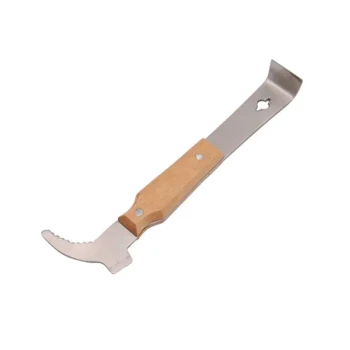
- Stainless Steel J Hook Hive Tool for Beekeeping
- Stainless Steel Queen Grafting Tool for Beekeeping and Bee Queen Grafting
- Multi-Function Plier-Style Frame Grip Hive Tool
- HONESTBEE Professional Mini J-Hook Hive Tool for Beekeeping
People Also Ask
- What is the recommended method for storing beekeeping tools? Expert Vertical Storage Solutions for Your Apiary
- Why is the treatment of beekeeping tools with high-concentration chemical disinfectants necessary for preventing AFB?
- How does a favorable microclimate interact with beekeeping tools? Boost Overwintering Success and Equipment Longevity
- What role do specialized beekeeping tools play in pest management? Enhance Apiary Health with Precision Tech
- Why are specialized beekeeping tools and consumables essential? Enhance Colony Management and Honey Yield Today