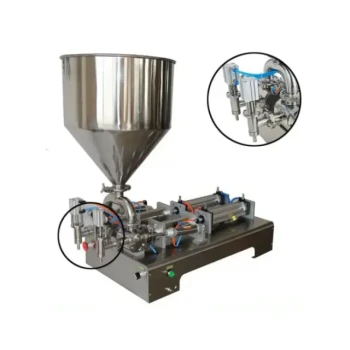
High-standard honey filling and sealing machines serve as the critical guardian of product integrity between laboratory analysis and final delivery. They primarily contribute to quality characterization by creating a hermetic environment that prevents the intrusion of environmental moisture, odors, and impurities, thereby ensuring the physical and chemical stability of the honey matches its certified botanical profile.
By maintaining the exact state of the honey after it has been analyzed, these machines ensure the final packaged product remains consistent with its specific analysis reports. This consistency is the foundation of product credibility in international trade.
Preserving Botanical and Chemical Identity
Protecting the Analyzed Profile
High-value honey is traded based on specific botanical characteristics defined in laboratory analysis reports.
Once this analysis is complete, the honey must remain chemically unchanged. High-standard machines ensure the physical and chemical stability of the product, guaranteeing that the honey in the jar matches the honey on the certificate.
Preventing Environmental Intrusion
Honey is highly susceptible to external factors that can alter its chemistry.
Advanced sealing equipment prevents the intrusion of environmental moisture, which can cause fermentation or spoilage. It also blocks external odors that could mask or alter the honey's unique botanical aroma.
Maintaining Biological Activity
Industrial-grade machines often utilize closed systems to maintain the biological activity and flavor integrity of natural honey.
By preventing secondary contamination during the filling process, these systems preserve the enzymes and nutrients that classify the honey as a premium product.
Ensuring Purity and Regulatory Compliance
Managing GMO Risks
For export markets with strict regulations regarding Genetically Modified Organisms (GMOs), preventing cross-contamination is vital.
High-precision machines facilitate strict physical isolation and batch tracking. This ensures that unauthorized transgenic pollen does not contaminate a clean batch before shipment, mitigating the risk of trade rejection.
Eliminating Secondary Contamination
To meet strict hygiene standards, modern machines frequently employ non-contact filling technology.
This approach ensures the honey does not touch external machinery surfaces unnecessarily. It significantly reduces the bacterial load and prevents the introduction of foreign particulates.
Standardization and Physical Consistency
Handling Viscosity Variations
Honey viscosity changes depending on temperature and botanical source, creating challenges for consistent filling.
High-efficiency machines utilize automated flow control systems to manage these variations. This ensures consistent dosage and weight for every unit, regardless of the honey's thickness.
Guarantees of Net Weight
International trade relies on strict adherence to weight and measure standards.
Precision metering systems guarantee that the net weight of each container meets these international standards. This prevents legal disputes and financial losses due to under-filling or product giveaway due to over-filling.
Understanding the Trade-offs
Complexity vs. Flexibility
While high-standard automation ensures consistency, it often reduces flexibility on the production line.
Switching between different bottle shapes or honey types may require significant downtime for calibration and cleaning. Producers must balance the need for speed with the need to package diverse SKUs.
Preservation, Not Improvement
It is critical to remember that these machines are preservation tools, not refinement tools.
They "lock in" the quality of the honey at the time of filling. If the raw material quality is low or the initial filtration was insufficient, the filling machine cannot improve the product grade; it simply packages the existing defects efficiently.
Making the Right Choice for Your Export Strategy
To maximize the value of your honey in the global market, align your equipment choice with your specific market position:
- If your primary focus is Premium Botanical Honey: Prioritize machines with closed-loop systems and non-contact filling to protect the specific chemical profile and prevent moisture absorption.
- If your primary focus is High-Volume Commercial Export: Prioritize automation with advanced flow control to manage viscosity changes and guarantee strict weight compliance at speed.
- If your primary focus is GMO-Sensitive Markets: Prioritize equipment that offers easy disassembly for cleaning and strict batch isolation capabilities to prevent pollen cross-contamination.
Investing in high-standard filling technology is not just about packaging speed; it is the final step in validating your product's scientific analysis.
Summary Table:
| Key Contribution Area | Technical Mechanism | Strategic Benefit for Export |
|---|---|---|
| Identity Preservation | Hermetic sealing & closed-loop systems | Maintains certified botanical and chemical profiles |
| Purity & Safety | Non-contact filling & batch isolation | Eliminates secondary contamination and GMO cross-risk |
| Physical Consistency | Automated flow control & precision metering | Ensures net weight compliance despite viscosity changes |
| Biological Integrity | Environmental intrusion blocking | Preserves enzymes, nutrients, and natural aromas |
Elevate Your Honey Export Business with HONESTBEE
Maintaining the laboratory-certified quality of your honey from the vat to the jar is essential for international credibility. HONESTBEE specializes in supporting commercial apiaries and distributors with high-performance beekeeping tools and industrial machinery designed for precision and purity.
From honey-filling and honey-making machines to high-efficiency production lines and essential industry consumables, we provide the full spectrum of equipment needed to safeguard your product’s value. Partner with us to ensure your honey meets the strictest global standards for weight, hygiene, and botanical integrity.
Ready to scale your production? Contact us today to explore our wholesale solutions!
References
- Elia Ramírez‐Arriaga, Eloína Díaz-Carbajal. Botanical characterisation of Mexican honeys from a subtropical region (Oaxaca) based on pollen analysis. DOI: 10.1080/00173134.2010.537767
This article is also based on technical information from HonestBee Knowledge Base .
Related Products
- Precision Automated Packaging Turntable Honey Spoon Filling Sealing Packing Machine
- Precision Durable Efficient HONESTBEE Rotary Honey Filling Machine
- Automatic Honey Filling and Filtering Machine for Beekeeping Bottle Filling
- Fully Automatic Honey Filling Packaging Machine for Processing Line
- Commercial Rotary Honey Filling Machine for Production
People Also Ask
- Why is the use of professional filling and sealing packaging machinery necessary for the production of high-value honey?
- What role do automated filling and packaging machines play in the honey supply chain? Scale Your Retail Distribution
- What are the benefits of automated honey filling and packaging? Scale Your Apiary with Industrial Precision
- What role do professional automated filling and packaging machines play in honey processing? Boost Efficiency & Value
- How do automated honey filling and packaging machines contribute to the market value of honey products? Maximize Your ROI