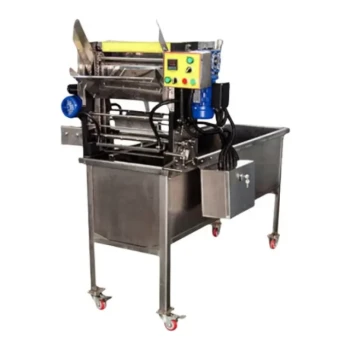
Automatic honey-filling machines fundamentally transform honey processing by delivering precise volumetric control and drastically increasing packaging efficiency. Beyond simple speed, these systems are essential for maintaining industrial hygiene standards, as they minimize the risk of secondary contamination inherent in manual handling. Ultimately, this equipment bridges the gap between bulk agricultural production and competitive, standardized retail commodities.
The true value of automation extends beyond speed; it lies in standardization and brand protection. By ensuring consistent weight and sterile conditions, these machines secure access to formal retail markets that demand rigorous food safety compliance.
Elevating Operational Precision
To compete in commercial markets, apiaries must move beyond "filling jars" to "manufacturing a product." Automation introduces the controls necessary to achieve this transition.
Achieving Absolute Weight Accuracy
Manual filling often leads to overfilling (loss of profit) or underfilling (regulatory violation).
Industrial-grade machines utilize high-precision weighing sensors and metering pumps to ensure every unit meets exact specifications. This consistency is non-negotiable for entering global supply chains or supermarket distribution.
Mastering Viscosity and Flow
Honey is a challenging fluid due to its high viscosity and sensitivity to temperature.
Advanced filling systems employ temperature-regulated anti-drip designs and precision pumping. This overcomes the physical challenges of sticky fluids, preventing waste and ensuring the final package is clean and professional.
Ensuring Product Integrity and Safety
For distributors, the safety profile of the product is just as important as the volume produced.
Eliminating Secondary Contamination
The most significant risk in manual bottling is human contact.
Automated systems function within closed or controlled environments, utilizing vacuum suction technology to move honey from storage to bottle. This sterile packaging process drastically reduces the potential for bacterial or particulate contamination.
Preserving Chemical Quality
Honey contains sensitive chemical indicators, such as Hydroxymethylfurfural (HMF) levels, which determine its freshness and quality.
By using precision pumping systems rather than aggressive manual heating or pouring, these machines ensure the physical and chemical integrity of the honey remains stable. This preserves the product's classification as high-quality or raw honey.
Strategic Resource Allocation
Adopting automation allows a commercial operation to restructure its labor force for higher-value tasks.
Focusing on Core Technical Activities
When packaging is automated, skilled labor does not need to be wasted on repetitive bottling tasks.
Researchers and apiarists can redirect their focus toward population genetic improvement and honeybee health monitoring. This shift is critical for facilities focused on increasing long-term yield rather than just short-term processing.
Facilitating Brand Standardization
To transition from a bulk agricultural product to a branded commodity, the product must look identical every time.
Automation ensures uniform fill levels and clean packaging, which are prerequisites for building a professional brand image. This standardization allows producers to meet the strict requirements of modern food retail sectors.
Understanding the Trade-offs
While the benefits are clear, automation introduces new complexities that must be managed.
Maintenance and Calibration Requirements
Unlike manual tools, automatic fillers are complex electromechanical systems.
They require regular calibration of sensors and rigorous cleaning protocols to prevent crystallization within the pumps. Operators must be trained not just in use, but in maintenance to avoid costly downtime.
The Cost of Standardization
High-precision equipment represents a significant capital expenditure.
For smaller operations, the initial investment may outweigh the efficiency gains. The value is realized only when production volume is high enough that the cost of manual labor exceeds the cost of machine amortization and maintenance.
Making the Right Choice for Your Scale
The decision to automate should depend on your specific market goals and production volume.
- If your primary focus is Retail and Export Expansion: Prioritize machines with high-precision sensors and sterile filling capabilities to ensure your product meets strict food safety and weight regulations.
- If your primary focus is Operational Efficiency and Research: Select high-speed automation to free up your skilled workforce for critical tasks like colony health management and breeding programs.
Automation is the pivot point where honey production shifts from a manual craft to a scalable, professional industry.
Summary Table:
| Feature | Manual Filling | Automated Filling System |
|---|---|---|
| Accuracy | Variable (Risk of over/underfill) | High-precision volumetric/weight sensors |
| Hygiene | Higher risk of human contact | Closed-system sterile packaging |
| Speed | Slow, labor-intensive | High-speed industrial throughput |
| Product Integrity | Risk of heat/flow damage | Gentle, anti-drip precision pumping |
| Market Readiness | Local/Small-scale | Global retail & export compliant |
Elevate Your Honey Brand with HONESTBEE
Transition from manual labor to industrial scale with HONESTBEE. We specialize in empowering commercial apiaries and distributors by providing the industry's most reliable beekeeping machinery and tools.
Our Value to You:
- Complete Equipment Solutions: From high-precision honey-filling and hive-making machines to essential consumables.
- Enhanced Profitability: Minimize product waste and maximize packaging efficiency with our advanced hardware.
- Market Standardization: Ensure your honey meets global food safety and weight standards to secure premium retail placements.
Ready to transform your operation into a scalable, professional brand? Contact HONESTBEE today for wholesale inquiries and expert equipment advice!
References
- Marie‐Pierre Chauzat, Jean‐Paul Faucon. The role of infectious agents and parasites in the health of honey bee colonies in France. DOI: 10.3896/ibra.1.49.1.05
This article is also based on technical information from HonestBee Knowledge Base .
Related Products
- Automatic Honey Filling and Filtering Machine for Beekeeping Bottle Filling
- Fully Automatic Honey Filling Packaging Machine for Processing Line
- Precision Durable Efficient HONESTBEE Rotary Honey Filling Machine
- Automatic Single-Dose Snap & Squeeze Honey Sachets Packing Machine
- Semi Automatic Small Honey Bottle Filling Machine Honey Filler
People Also Ask
- What process advantages do professional honey filtering and filling machines provide? Optimize Your Organic Honey Output
- How do honey filling and filtering machines increase product value? Turn Raw Honey into Premium Export-Grade Goods
- How do honey filtration and filling machinery contribute to industrialization? Scale Your Commercial Honey Production
- What specific issues do industrial filtration and automated filling machinery address? Ensure Honey Quality & Compliance
- How does the use of professional honey filtration and filling machinery facilitate international honey exports?