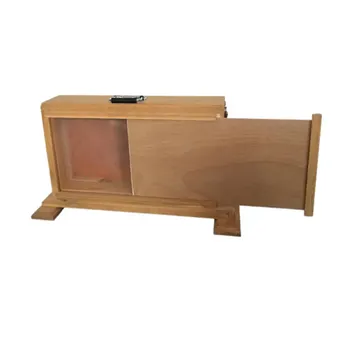
Hive design should match both colony scale and agroecological conditions. Traditional hives can suit small, low-input operations, while transitional and modern Dadant hives provide better frame control, inspection access, and harvesting efficiency. This distinction becomes especially important in highland areas, where beekeepers hold about 4.6 colonies on average, compared with approximately 2.7–2.8 colonies in mid-altitude and lowland zones.
The right hive is a management and scaling decision, not simply a container choice. Traditional systems may meet basic local needs, but standardized movable-frame designs—particularly transitional and Dadant systems—are better suited to higher colony holdings, commercial inspection, disease control, and efficient honey extraction.
Why Agroecology Changes Hive Requirements
Highland areas support larger colony holdings
Field research indicates that highland beekeepers manage more colonies on average than those in mid-altitude and lowland zones. This creates stronger demand for equipment that reduces inspection time, simplifies harvesting, and supports consistent management across multiple colonies.
Modern hive equipment is particularly valuable where favorable conditions allow beekeepers to maintain higher colony densities. Standardized equipment helps transform a larger apiary from a collection of individual hives into a manageable operating system.
Mid-altitude and lowland operations may prioritize flexibility
With average holdings of roughly 2.7–2.8 colonies, mid-altitude and lowland beekeepers may not require the same level of standardization immediately. Traditional hives can remain practical where investment, equipment access, and labor availability are limited.
However, lower colony numbers do not eliminate the need to consider climate, colony growth, honey storage, and future expansion. A small operation can still benefit from movable frames if it expects to commercialize or increase its holdings.
Climate affects internal hive conditions
Hive design influences the available space for brood expansion and honey storage, as well as the colony’s ability to regulate temperature and humidity. The appropriate design therefore depends on whether the local environment is tropical, temperate, cold, dry, or seasonally variable.
In colder conditions, suitable hive volume, insulation performance, and monitoring can help reduce the energy bees spend maintaining their internal microclimate. In warmer or highly productive areas, sufficient space can help accommodate colony expansion and stored reserves.
How the Main Hive Designs Address Different Needs
Traditional hives: accessible and low-input
Traditional hives are generally suited to beekeepers who prioritize affordability, local materials, and simple management. They can work well for small holdings where the production system is based on limited intervention and locally established practices.
Their main limitation is reduced access to the colony’s internal structure. This can make frame-by-frame inspection, disease detection, queen management, and controlled honey removal more difficult than with movable-frame systems.
Transitional hives: a practical bridge
Transitional hives provide a step toward more systematic management without requiring an immediate shift to a fully commercialized setup. They can help beekeepers gain experience with improved colony handling, inspection, and harvesting practices.
For distributors and resellers, transitional equipment is relevant to customers who are upgrading gradually. It can serve small and medium-sized operations that need better control but may not yet require a fully standardized commercial apiary.
Modern Dadant hives: capacity and control
Modern Dadant hives offer standardized internal space and movable-frame management. This supports more precise manipulation of the brood area, easier disease inspection, and more efficient honey harvesting than traditional systems.
Their greater capacity can be useful for stronger colonies or areas with favorable forage conditions. The design also supports more consistent equipment planning, including compatible hive-making tools, replacement components, and honey extraction systems.
Standardization improves operational consistency
Uniform hive dimensions make it easier to inspect, move, repair, and harvest from multiple colonies. They also support interchangeable components and improve compatibility with processing equipment.
This benefit becomes more important as colony holdings increase. A beekeeper managing several colonies in highland conditions can gain substantial efficiency from using the same hive format throughout the apiary.
Matching Hive Capacity to Colony Development
Space must support brood expansion
The internal volume of a hive affects the space available for queen egg-laying and colony growth. A hive that is too restrictive may limit expansion, while a suitably sized hive gives the colony room to develop and store reserves.
Dadant and other standardized models provide different internal capacities. Selection should therefore reflect the expected colony strength, local forage availability, and seasonal growth pattern rather than relying on a single design for every region.
Adequate space can help manage swarming pressure
When colonies expand rapidly, insufficient space may contribute to unwanted swarming pressure. Providing appropriate room for brood and stores is one part of maintaining colony productivity and reducing avoidable management problems.
Hive capacity is not a substitute for timely inspections or sound beekeeping. It must be combined with appropriate seasonal management and regular assessment of colony condition.
Storage capacity supports harvest planning
In productive agroecological zones, colonies may require additional space for honey storage. Standardized supers and compatible equipment allow beekeepers to respond more systematically as nectar flows change.
For commercial users, this also links hive selection to downstream operations. Hive formats should be compatible with the available harvesting, extraction, and handling systems.
Choosing Equipment for Commercial Apiaries
Frame manipulation improves labor efficiency
Movable-frame hives allow beekeepers to examine colonies without destroying the internal comb structure. This supports more efficient disease inspection, brood assessment, queen management, and honey harvesting.
The productivity benefit is greatest when multiple colonies must be managed consistently. This is why modern Dadant or transitional systems are more appropriate for many commercial apiaries than static traditional designs.
Equipment compatibility matters
A hive purchase should be evaluated as part of a broader equipment package. Standardized hive bodies, frames, supers, hive-making equipment, and honey extraction machinery should work together.
For distributors and B2B buyers, a full-spectrum product portfolio is therefore more valuable than isolated hive sales. Customers often need a coordinated supply of complete hives, replacement parts, tools, monitoring equipment, and processing accessories.
Scalability should guide initial purchasing
A beekeeper with two or three colonies may begin with a small quantity of transitional or standardized equipment. A highland operator managing a larger holding may benefit from purchasing uniform Dadant equipment from the outset.
Uniformity reduces training complexity, simplifies stockkeeping, and makes future expansion easier. It also allows suppliers to provide faster replacement and replenishment services.
Understanding the Trade-offs
Traditional systems reduce entry barriers
Traditional hives can lower the initial investment and may align well with local construction skills and customary practices. Their accessibility makes them relevant in regions where standardized equipment or extraction machinery is not readily available.
The trade-off is lower control over internal colony management. Commercial users may face greater labor requirements and less consistent harvesting outcomes.
Larger hives are not automatically better
A higher-capacity hive is not suitable for every colony or climate. Excess space can make thermoregulation more demanding, particularly for smaller colonies or during cold periods.
Hive volume should be matched to colony strength and local conditions. A Dadant system may be highly effective in one operating context but require careful management in another.
Modernization requires supporting infrastructure
Movable-frame equipment delivers its full value when beekeepers have access to compatible tools, replacement components, training, and honey-processing systems. Without these supporting resources, the operational benefits may be reduced.
Suppliers should therefore assess the customer’s complete setup before recommending a hive format. The right solution may be a staged upgrade rather than an immediate conversion of the entire apiary.
Monitoring improves control but adds complexity
Electronic monitoring can provide better information about internal hive conditions, particularly during cold seasons. However, monitoring devices add cost, maintenance requirements, and a need for interpretation.
They should be treated as supporting tools rather than replacements for sound inspection and management practices.
How to Apply This to Your Project
The most reliable purchasing strategy is to match hive design with colony holdings, climate, management capacity, and the customer’s intended growth path.
- If your primary focus is smallholder accessibility: Offer traditional and transitional options that provide an affordable entry point while allowing gradual improvement in inspection and harvesting practices.
- If your primary focus is highland commercial production: Prioritize standardized Dadant or comparable movable-frame systems that support larger colony holdings, efficient inspections, and scalable honey harvesting.
- If your primary focus is climate adaptation: Match hive capacity and insulation characteristics to local temperature conditions, colony strength, and seasonal forage availability.
- If your primary focus is distribution and resale efficiency: Build a coordinated portfolio of hive bodies, frames, supers, tools, hive-making equipment, monitoring products, and extraction-compatible accessories.
- If your primary focus is rapid customer expansion: Recommend uniform equipment platforms with interchangeable components, reliable replacement supply, and clear compatibility across the apiary.
The strongest hive strategy combines the simplicity of appropriate local design with the control, standardization, and scalability required by the beekeeper’s operating environment.
Summary Table:
| Hive Type | Best For | Key Features | Considerations |
|---|---|---|---|
| Traditional | Small-scale, low-input operations | Affordable, local materials, simple management | Limited access to brood, harder disease inspection |
| Transitional | Gradual upgrades, small to medium operations | Improved handling, inspection, harvesting | Not fully standardized for commercial use |
| Modern Dadant | Commercial, highland, larger holdings | Standardized frames, high capacity, efficient harvesting | Requires compatible equipment and training |
Ready to optimize your beekeeping operation? At HONESTBEE, we supply a complete range of hive systems—from traditional to modern Dadant—plus all the tools, machinery, and consumables you need. Our one-stop sourcing, rapid response, and dedicated support ensure you get the right equipment for your agroecological zone. For distributors and commercial apiaries, we offer OEM/ODM support, certifications, and reliable supply. Contact us today to discuss your hive needs and boost your efficiency!
Related Products
- Wholesales Dadant Size Wooden Bee Hives for Beekeeping
- Wooden Bee Hive Frames for Beekeeping and Wholesale
- Professional Insulated Plastic Bee Hives
- High-Performance Langstroth Bee Hives for Global Professional Beekeeping
- Professional Observation Hive: The Ultimate Portable Solution for Beekeeping Education, Exhibitions, and Colony Displays
People Also Ask
- What are the strategic benefits of installing beekeeping hives at an elevation of 1 to 6 meters? Protect Your Assets
- What are the key advantages of modern improved beekeeping hives? Scale Your Honey Yield and Production Efficiency
- What is the proper way to store unused bee hives? Expert Stacking Tips for Equipment Longevity
- What are the 2 types of bee hives? Langstroth vs. Top-Bar for Your Apiary
- How does the design of improved beekeeping hives contribute to maintaining honey quality and purity? Enhancing Purity