Honeybee colonies regulate hive temperature collectively, not individually. In cold conditions, bees cluster tightly and generate heat by vibrating their thoracic muscles while consuming honey; in hot conditions, they collect water, fan their wings, and create airflow for evaporative cooling. Because the brood nest must remain near 33–35°C (91–95°F) with controlled humidity, commercial hive equipment should support insulation, measured airflow, and moisture management rather than simply maximize ventilation.
The best hive system works with the colony’s own thermoregulation. Properly insulated, accurately manufactured components help retain heat in cold weather, while adjustable ventilation and sound airflow paths help remove excess heat and moisture in warm or damp conditions.
How Honeybees Maintain Hive Temperature
The colony acts as a superorganism
Individual bees coordinate their behavior to regulate the hive’s internal microclimate. The colony collectively adjusts clustering, heat generation, airflow, water distribution, and hive access according to external conditions.
This makes the hive more than a box for storing bees. Its walls, joints, entrances, covers, and ventilation components become part of the colony’s thermal environment.
Bees generate heat in cold conditions
When temperatures fall, worker bees form a compact cluster around the brood nest. Bees near the center protect the brood, while bees on the outer layer help limit heat loss.
Workers also generate heat through thoracic muscle vibration and by metabolizing stored honey. This energy is essential for survival, but it consumes food reserves that could otherwise support brood rearing, foraging, and surplus honey production.
Bees cool the hive through evaporation
During hot weather, worker bees collect and distribute water inside the hive. Other workers fan their wings to move air across the water, producing evaporative cooling.
Wing-fanning also helps circulate air and remove heat and excess moisture. Hive equipment should therefore allow this natural airflow without creating uncontrolled drafts or obstructing the bees’ ability to manage the nest.
The brood nest requires narrow conditions
The brood nest is maintained within a relatively narrow temperature range, generally around 32–36°C, with approximately 33–34°C commonly treated as optimal. Humidity is also regulated, broadly around 30–50%, depending on the specific nest location and measurement conditions.
Temperature and humidity are especially important during brood development. Significant or prolonged deviations can delay development, increase stress, and reduce brood survival.
Why Hive Equipment Influences Colony Performance
Insulation reduces unnecessary energy use
Well-insulated hive walls and covers slow heat loss during cold periods and reduce the amount of honey bees must consume to maintain brood temperature. This does not eliminate the need for colony-generated heat; it makes that effort more efficient.
For commercial users, the benefit is both biological and economic. Less energy spent on thermal regulation can leave more resources available for brood care, nectar gathering, and honey storage.
Ventilation must manage heat and moisture
Ventilation provides routes for warm, humid air to leave and fresh air to enter. It can support the colony’s wing-fanning behavior and reduce condensation-related problems inside the hive.
However, ventilation is not a substitute for insulation. Excessive or poorly directed airflow can increase heat loss, create drafts, and force bees to spend more energy maintaining the brood nest.
Construction quality affects thermal stability
Poorly fitted joints, gaps, warped components, and inconsistent dimensions can create uncontrolled air leakage. These defects make the hive harder for bees to regulate, particularly during cold or rapidly changing weather.
Precision-manufactured hive components provide more consistent fit and predictable ventilation performance. For distributors and resellers, dimensional reliability is therefore a functional product benefit, not merely a cosmetic advantage.
Adjustable systems provide operational flexibility
Weather conditions vary by climate, season, apiary location, hive strength, and colony activity. Adjustable entrances and ventilation accessories allow beekeepers to adapt airflow rather than depend on one fixed configuration.
A commercial product portfolio should therefore include compatible components that can be configured for different conditions, rather than treating every hive installation as identical.
Selecting Commercial Hive Equipment
Evaluate the complete hive system
Thermal performance depends on how components work together. Review the compatibility of the hive body, cover, bottom, entrances, insulation elements, and ventilation accessories as a complete system.
A well-designed component can perform poorly if it is paired with a poorly fitting or obstructive part. Product specifications should make compatibility and intended use clear to commercial buyers.
Prioritize controlled airflow over maximum airflow
The objective is stable microclimate control, not the greatest possible air exchange. Ventilation products should help remove heat and moisture while preserving the colony’s ability to retain warmth around the brood nest.
Features that allow airflow to be adjusted are particularly valuable for wholesalers and beekeepers serving multiple climates or seasonal operating conditions.
Match insulation to operating conditions
Insulation requirements differ between cold regions, hot regions, and locations with large day-to-night temperature changes. Equipment should be selected according to local weather exposure, hive placement, colony strength, and management practices.
For B2B buyers, offering multiple insulation and ventilation options creates a more useful product range than relying on a single universal design.
Demand manufacturing consistency
Commercial apiaries need repeatable performance across large numbers of hives. Important purchasing considerations include consistent dimensions, tight-fitting joints, durable materials, stable supply, and compatibility across product batches.
For distributors, dependable manufacturing and fast order fulfillment are part of product value. Replacements, seasonal demand, and large apiary deployments all depend on reliable sourcing.
Understanding the Trade-offs
More ventilation is not always better
Increasing ventilation can help remove heat and moisture, but excessive airflow may increase heat loss and expose the colony to drafts. The correct design balances air exchange with thermal retention.
The practical question is not “How much ventilation can the hive provide?” but “Can the beekeeper control ventilation according to colony and weather conditions?”
Insulation does not replace airflow
A heavily insulated hive can still experience moisture accumulation if humid air cannot escape. Insulation and ventilation address different risks and should be specified together.
Insulation slows heat transfer, while ventilation helps manage air movement and humidity. Effective equipment design must account for both.
Fixed designs can limit field performance
A fixed ventilation configuration may work well in one climate but perform poorly in another. Seasonal changes can also make a previously suitable setting inappropriate.
Adjustable accessories may require more components or management knowledge, but they provide greater control for professional users managing varied apiaries.
Low-cost components can create hidden costs
Inconsistent dimensions or poor fitting can increase drafts, maintenance requirements, and replacement rates. They may also force colonies to consume more honey for temperature regulation.
The lowest purchase price is therefore not always the lowest operating cost. Commercial buyers should evaluate durability, compatibility, fulfillment reliability, and expected field performance together.
Making the Right Choice for Your Goal
A commercially useful sourcing strategy should combine product breadth with technical guidance and dependable fulfillment.
- If your primary focus is colony health: Choose well-insulated hive components with controlled, adjustable ventilation that supports stable brood temperature and humidity.
- If your primary focus is honey yield: Prioritize equipment that reduces unnecessary heat loss and moisture stress so colonies can direct more energy toward brood development and honey storage.
- If your primary focus is distribution or wholesale: Build a compatible product portfolio covering hive bodies, insulation, entrances, and ventilation accessories for different climates and seasonal requirements.
- If your primary focus is operational reliability: Select precision-manufactured components from suppliers that can provide consistent quality, rapid responses, dedicated service, and efficient order fulfillment.
The strongest commercial hive solution is one that helps bees regulate their own environment efficiently while giving beekeepers precise, dependable control.
Summary Table:
| Thermoregulation Need | Honeybee Behavior | Equipment Solution |
|---|---|---|
| Heat generation in cold | Cluster and vibrate thoracic muscles | Insulated walls and covers to reduce heat loss |
| Cooling in heat | Water collection and wing fanning | Ventilation that supports airflow without drafts |
| Stable brood nest (33–35°C) | Precise temperature and humidity control | Adjustable ventilation and precision-fit components |
| Moisture control | Fanning to remove humid air | Proper ventilation to prevent condensation |
Looking for hive equipment that supports natural thermoregulation? HONESTBEE offers a full range of insulated hives, adjustable ventilation, and precision components for commercial apiaries. Our one-stop sourcing, fast delivery, and expert support help you build efficient, reliable hive systems. Contact us today to discuss your wholesale needs!
Related Products
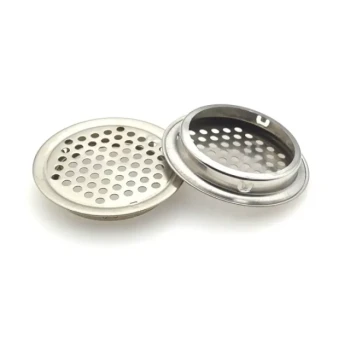
- Stainless Steel Round Beehive Air Vents for Ventilation
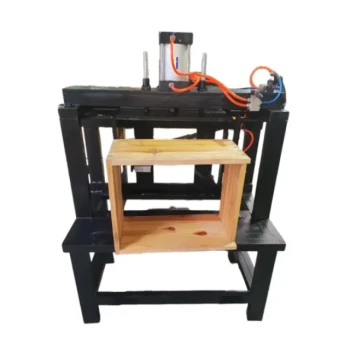
- High-Efficiency Pneumatic Bee Hive Making Machine for Rapid Box Assembly
- Steel Round Disc Entrance Reducer for Flexzion Bee Hive Nuc Box Gate
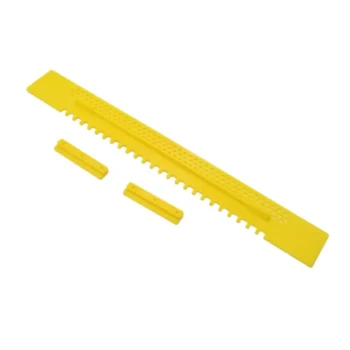
- Professional Reversible Beehive Hive Entrance
- Ergonomic Two Person Foldable Hive Lifter
People Also Ask
- How does ventilation affect colony health, and how should it be managed seasonally? A Guide to Preventing Moisture & Overheating
- Why is proper ventilation important in a beehive? Prevent Mold, Regulate Temperature, and Boost Colony Health
- How can a beekeeper provide proper ventilation for a beehive throughout the year? Seasonal Strategies for Bee Health
- How can ventilation be added to a beehive without using an inner cover? Simple, Effective Solutions for Healthy Hives
- Why is good ventilation crucial when transporting beehives? Protect Your Colony from Lethal Overheating