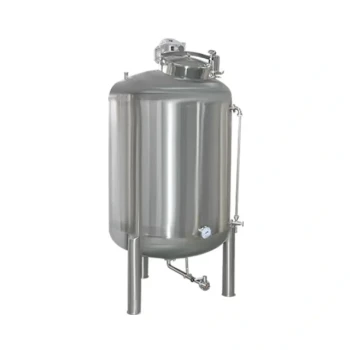
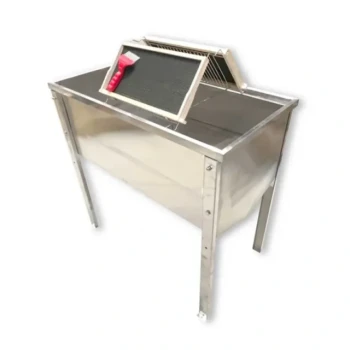
Industrial honey processing relies on a sequential combination of gravity-based separation and physical screening to ensure product purity. Sedimentation tanks allow macroscopic debris to separate naturally, while multi-stage filtration systems—often aided by controlled thermal treatment and high-pressure pumps—actively remove microscopic impurities and wax particles to meet commercial standards.
Effective honey processing is not merely about extraction; it is a precision balance of lowering viscosity through heat, removing solids through filtration, and eliminating air bubbles to stabilize the product for long-term storage.
The Mechanics of Separation
Gravity-Based Sedimentation
The initial stage of purification typically involves a settling tank. Here, the honey remains stationary, allowing gravity to separate the mixture based on density.
Heavier impurities sink to the bottom, while lighter materials, such as wax caps and large debris, float to the top. This passive process clears the bulk of contaminants before the honey enters the more intensive filtration stages.
Multi-Stage Filtration
Following sedimentation, the honey is pumped through a series of fine nylon or metal meshes. This physical screening process is designed to capture insoluble impurities that are too small to settle out naturally.
These filters effectively trap wax particles, bee debris, larval remains, and pollen clusters. By removing these micro-impurities, the equipment ensures the visual clarity and "fluidity" required for premium market entry.
Viscosity Management via Heat
Filtration systems frequently employ mild, controlled heat to manipulate the honey's physical state. Warming the honey lowers its viscosity, transforming it from a thick sludge into a free-flowing liquid.
This thermal treatment is critical for two reasons: it allows the honey to pass through fine filters without clogging, and it helps prevent premature crystallization during storage.
Optimizing for Commercial Standards
Temperature-Controlled Degassing
Beyond solid particles, industrial equipment addresses gaseous impurities through degassing units. These units remove air bubbles that may have been introduced during extraction or pumping.
Eliminating air is vital for sensory consistency. It ensures the honey appears dense and clear in the jar, rather than foamy or cloudy.
High-Pressure Throughput
To maintain efficiency on an industrial scale, high-pressure pumps are often integrated into the filtration loop. These pumps force the honey through the filtration media at a consistent rate.
This allows for a higher volume of production (throughput) compared to gravity-fed systems, ensuring that the purification process does not become a bottleneck in the production line.
Understanding the Trade-offs
Thermal Sensitivity Risks
While heat is necessary for flow and filtration, it presents a significant quality control challenge. Overheating can degrade the natural nutritional components of the honey.
Equipment must offer precise temperature controls to lower viscosity without "cooking" the product, which would compromise its classification as a high-quality natural sweetener.
Clarity vs. Nutrition
There is a functional tension between achieving perfect clarity and maintaining nutritional value. Excessive filtration can strip away beneficial pollen along with the unwanted wax and debris.
Operators must select mesh sizes that balance the commercial demand for clear, shelf-stable honey with the consumer desire for a nutrient-rich product.
Making the Right Choice for Your Goal
To select the correct filtration configuration, you must define your end-product requirements:
- If your primary focus is visual clarity and shelf life: Prioritize systems with multi-stage fine mesh filtration and thermal treatment to maximize clarity and delay crystallization.
- If your primary focus is nutritional integrity: Lean toward systems that rely heavily on sedimentation and use coarser filtration meshes to retain pollen while removing wax.
- If your primary focus is production volume: Ensure your setup includes high-pressure pumps and automated temperature controls to maintain high throughput without bottlenecks.
Ultimately, the function of this equipment is to convert raw, variable hive yields into a standardized, safe, and commercially viable product.
Summary Table:
| Process Stage | Equipment Used | Primary Function | Key Benefit |
|---|---|---|---|
| Sedimentation | Settling Tanks | Gravity-based density separation | Removes bulk debris & wax caps |
| Filtration | Fine Mesh Filters | Physical screening of micro-solids | Ensures visual clarity & fluidity |
| Thermal Treatment | Heating Units | Lowers viscosity for easier flow | Prevents clogging & crystallization |
| Degassing | Degassing Units | Removal of air bubbles | Improves product density & appearance |
| Pumping | High-Pressure Pumps | High-volume throughput | Eliminates production bottlenecks |
Elevate Your Honey Production with HONESTBEE
Transitioning from raw hive yields to premium, shelf-stable honey requires precision-engineered equipment. At HONESTBEE, we specialize in supporting commercial apiaries and distributors with a comprehensive wholesale range designed for industrial excellence.
From advanced honey-filling machines to specialized filtration hardware and essential industry consumables, our portfolio is built to maximize your efficiency while preserving product integrity. Whether you are scaling up your throughput or perfecting your brand's clarity, we provide the tools to help you succeed.
Ready to upgrade your processing line? Contact us today to explore our full spectrum of beekeeping machinery and wholesale solutions!
References
- Yogesh Kumar, Mehrajuddin Sofi. Training Need Perception of Beekeepers with Respect to the Scientific Beekeeping Practices in Jammu Province. DOI: 10.20546/ijcmas.2020.909.392
This article is also based on technical information from HonestBee Knowledge Base .
Related Products
- Stainless Steel Honey Storage and Settling Tank with Double Strainer
- Stainless Steel Honey Storage Tank with Lid for Honey
- Professional Honey Storage Tank with Agitation System
- Heavy Duty Stainless Steel Honey Processing Machine Decrystallizing Tank
- Stainless Steel Uncapping Tank with Stand and Strainer
People Also Ask
- What economic role do honey storage tanks play? Boost Your Revenue Through Strategic Inventory Management
- What roles do industrial honey storage tanks and filtration meshes play in processing? Ensure Purity & Consistency
- What is the purpose of a honey storage tank? Streamline Your Honey Processing for Quality & Efficiency
- What role do settling tanks play in honey production? Achieve Pure, High-Clarity Honey Naturally
- Why are large settling tanks used in the honey clarification process? Achieve Natural Purity & Batch Consistency