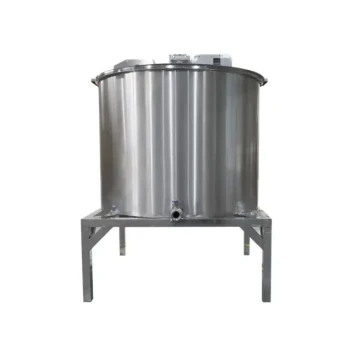
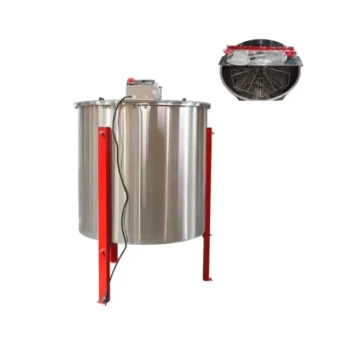
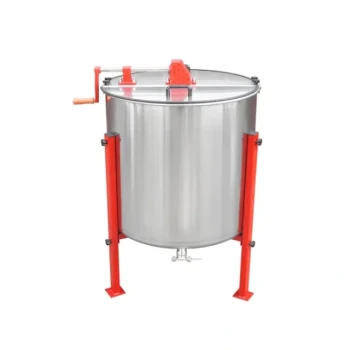
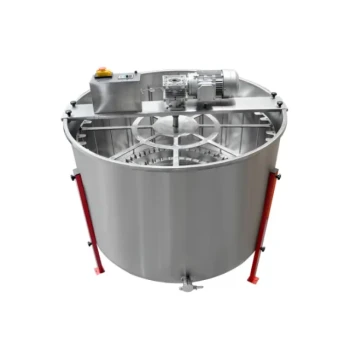
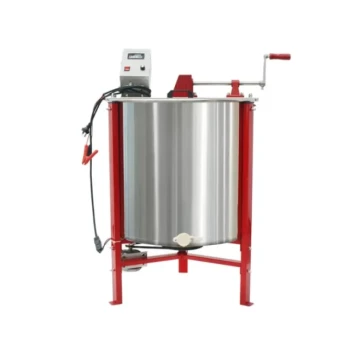
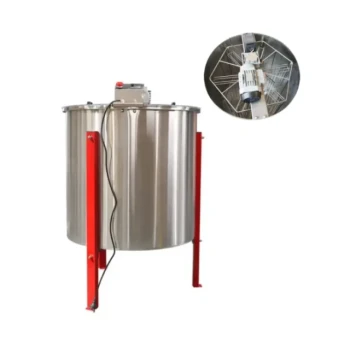
Industrial-grade honey extractors function as precision research tools by utilizing centrifugal force to separate honey from combs without structural damage. When paired with high-precision weighing equipment, they enable the calculation of exact yield per colony by measuring the weight difference before and after extraction. This data provides the quantitative foundation necessary to compare the economic performance of different bee varieties accurately.
While often viewed merely as production machinery, these extractors are critical for scientific evaluation because they standardize the harvesting process. By preserving the honeycomb and isolating the honey weight, they allow breeders to objectively measure economic value and guide genetic improvements based on hard data rather than estimation.
The Mechanics of Accurate Evaluation
To evaluate a biological organism as complex as a honeybee colony, researchers must isolate specific performance variables. Industrial extractors facilitate this through a controlled, non-destructive process.
Nondestructive Centrifugal Separation
The core advantage of industrial-grade extractors is the use of centrifugal force. This mechanism spins the frames to pull honey out from beneath wax cappings.
Crucially, this method leaves the underlying honeycomb structure intact. Because the comb is not crushed or destroyed, it can be returned to the hive for reuse.
Enabling Precise Yield Calculation
The preservation of the comb is what makes accurate data collection possible. By measuring the weight of the supers (hive boxes) before extraction and the weight of the intact combs after extraction, researchers can calculate the exact mass of the honey produced.
This method eliminates variables such as beeswax weight or pollen stores, providing a pure metric of honey productivity.
Standardization of Data
Using standardized industrial equipment ensures that every colony is harvested under identical conditions. This consistency is vital for scientific rigor, ensuring that yield differences are attributed to the bees' genetics rather than variations in the harvesting method.
Identifying and Differentiating Varieties
Beyond simple production numbers, the data derived from these extractors helps identify specific breed characteristics and informs genetic selection.
Economic Valuation of Geographic Populations
Precise yield data allows for the direct comparison of different geographic populations. Researchers use this metric to evaluate the economic potential of various color morphs, such as black, yellow, and brown populations.
By correlating specific physical traits with the yield data provided by the extractor, breeders can identify which morphs offer the highest economic return.
Balancing Resistance with Productivity
Data from these extractors is essential for identifying "fitness costs" in breeding programs. For example, researchers may compare a mite-resistant population against a standard commercial population.
If the extractor data reveals that the resistant colony produces significantly less honey, breeders identify a trade-off. This insight drives targeted breeding programs aimed at maintaining disease resistance while restoring high productivity.
Understanding the Variables and Limitations
While industrial extractors are powerful tools for evaluation, relying on them requires an understanding of their operational context.
Dependence on Auxiliary Equipment
The extractor itself does not measure yield; it prepares the material for measurement. The accuracy of the evaluation is entirely dependent on the high-precision weighing equipment used in conjunction with the extractor. Without calibrated scales, the extractor is merely a production tool, not an evaluative one.
The Role of Morphology
It is important to note that extractors do not measure physical bee characteristics. While yield data helps characterize a variety's performance, physical identification requires separate tools, such as digital vernier calipers, to measure body segments. Extractor data complements these morphological measurements but does not replace them.
Making the Right Choice for Your Goal
When designing a breeding program or research study, how you utilize this equipment defines your results.
- If your primary focus is Commercial Breeding: Prioritize the correlation between yield data and specific physical traits (like color morphs) to maximize economic value.
- If your primary focus is Genetic Research: Use yield data to identify fitness costs, ensuring that traits like mite resistance do not come at the expense of colony viability.
Success in identifying superior honeybee varieties lies in using the extractor not just to harvest a product, but to harvest the data that drives genetic progress.
Summary Table:
| Feature | Research & Evaluation Benefit |
|---|---|
| Centrifugal Separation | Non-destructive extraction preserves comb for accurate pre/post weighing. |
| Standardized Harvesting | Eliminates process variables to ensure yield differences are genetic. |
| Economic Valuation | Provides hard data to compare the productivity of different color morphs. |
| Breeding Insights | Identifies 'fitness costs' by balancing disease resistance with honey yield. |
Maximize Your Apiary's Genetic Potential with HONESTBEE
At HONESTBEE, we understand that for commercial apiaries and distributors, high-quality equipment is the foundation of scientific progress and economic success. We provide a comprehensive wholesale range of beekeeping tools, machinery, and industrial-grade extractors designed to deliver the precision you need for accurate variety evaluation.
From advanced honey-filling machines to specialized hive-making hardware and essential industry consumables, our portfolio supports every aspect of your operation. Partner with us to access the tools that turn honey harvesting into actionable data.
Ready to upgrade your commercial beekeeping equipment?
References
- K. Shailaja, Sandhanasamy Devanesan. Selection of best performing Apis cerana indica Fab. colonies for stock improvement based on comparison of economic characters. DOI: 10.33307/entomon.v40i3.74
This article is also based on technical information from HonestBee Knowledge Base .
Related Products
- HONESTBEE 72 Frame Industrial Electric Honey Extractor for Beekeeping
- 32 Frame Commercial Electric Honey Extractor for Beekeeping and Honey Production
- Commercial Electric 12 Frame Honey Extractor Spinner Motorized Honey Extractor
- 8-Frame Electric Self-Reversing Honey Extractor Spinner for Commercial Honey Extraction Equipment
- Commercial 48-Frame Stainless Steel Honey Extractor
People Also Ask
- What is the importance of balancing honeycomb frames within a honey extractor? Ensure Stability and Protect Machinery
- How is honey separated from the frames after they are uncapped? Efficient Extraction Methods for High Yields
- What are the main benefits of using a honey extractor? Maximize Yields and Protect Your Honeycomb
- What are the recommended methods for removing honey from the honeycomb? Top Extraction Techniques for Maximum Efficiency
- How do manual honey extractors compare to electric honey extractors? Choosing the Right Tool for Your Apiary Growth