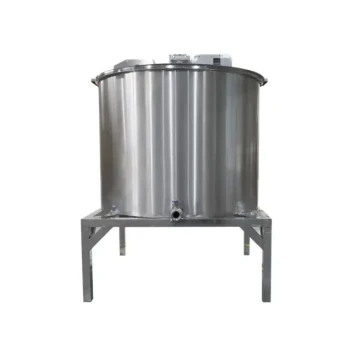
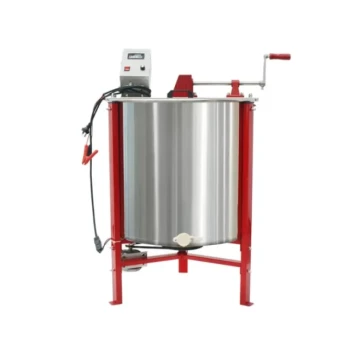
Industrial honey processing equipment improves raw honey primarily through precise mechanical filtration and moisture control. These machines utilize heat and mechanical force to systematically separate physical contaminants—such as wax and debris—while simultaneously dehydrating the product. This dual process stabilizes the honey's physical and chemical properties, ensuring it meets rigorous food safety standards and achieves the clarity required for commercial grading.
By automating impurity removal and regulating moisture content, industrial systems transform variable raw comb honey into a stable, high-clarity commercial product while preserving its essential nutritional profile.
Enhancing Physical Purity and Clarity
Mechanical Impurity Removal
Raw honey naturally contains contaminants introduced during harvesting, including wax debris, larval fragments, and hive particles. Industrial machines use multi-stage filtration and settling tanks to physically clarify the liquid. This removes particulate matter that would otherwise degrade the texture and visual appeal of the final product.
Achieving Commercial Transparency
Through processes like centrifugation and precision filtration, equipment ensures the final output achieves high transparency. This clarity is a direct determinant of the product's grading evaluation, significantly impacting its final selling price in competitive markets.
Superior Hygiene Standards
Unlike manual squeezing methods, which introduce human contact and potential contamination, mechanical processing utilizes closed systems. This maintains strict hygiene standards during extraction, ensuring the honey is safe for consumption and compliant with international food quality regulations.
Ensuring Chemical Stability and Longevity
Moisture Reduction and Dehydration
One of the most critical functions of industrial processing is the reduction of moisture content in both mature and immature honey. High moisture levels lead to fermentation and spoilage. By dehydrating the honey to specific levels, machines effectively eliminate the risk of fermentation, ensuring long-term storage stability.
Standardization of Physicochemical Indicators
Industrial equipment treats honey to create a consistent product profile. By stabilizing chemical properties, the machinery ensures that every batch meets specific regulatory criteria regarding density and water content, which is essential for branding and mass-market entry.
Preserving Sensory Quality
Gentle Extraction via Centrifugal Force
Modern extractors often rely on centrifugal force rather than crushing or manual pressing. This method effectively separates honey from the comb without destroying the honeycomb structure. It minimizes the oxidation and agitation that can occur with manual handling, preserving the honey's integrity.
Retention of Nutrients and Flavor
Advanced processing systems are designed to balance purification with preservation. By using controlled temperatures and precision filtering, these machines remove unwanted debris without stripping away the essential nutrients and natural flavor profiles that define premium honey.
Understanding the Trade-offs
While industrial machines significantly improve stability and clarity, improper calibration can lead to quality degradation.
The Risk of Over-Heating
Machines utilize heat to facilitate filtration and dehydration. However, excessive heat can destroy delicate enzymes and volatile aroma compounds. It is critical to use systems with controlled temperature systems to avoid "cooking" the honey, which lowers its biological value.
Filtration Depth
There is a balance between clarity and authenticity. Ultra-fine filtration improves clarity and prevents crystallization, but it may also remove pollen grains that identify the honey's botanical origin. Producers must choose filtration grades that match their target market's preference for either crystal-clear aesthetics or raw, pollen-rich authenticity.
Making the Right Choice for Your Goal
To maximize the value of your honey, align your processing method with your specific market objectives:
- If your primary focus is Mass Market Retail: Prioritize dehydration and fine filtration to ensure maximum shelf stability, high clarity, and prevention of crystallization during long storage periods.
- If your primary focus is The High-End/Artisanal Market: Prioritize centrifugal extraction and coarse filtration to maximize flavor retention and pollen content, using only minimal heat to preserve enzymatic activity.
Ultimately, the correct application of industrial processing bridges the gap between raw agricultural harvest and a consistent, safe, and marketable consumer product.
Summary Table:
| Feature | Improvement to Raw Honey | Impact on Quality |
|---|---|---|
| Multi-stage Filtration | Removes wax, debris, and larval fragments | Increases clarity and commercial grading |
| Vacuum Dehydration | Reduces moisture content to safe levels | Prevents fermentation and ensures shelf stability |
| Centrifugal Extraction | Separates honey without crushing the comb | Preserves natural flavor and minimizes oxidation |
| Temperature Control | Stabilizes physical and chemical properties | Protects enzymes and volatile aroma compounds |
| Closed Systems | Eliminates manual handling and contact | Ensures superior hygiene and food safety standards |
Elevate Your Honey Production with HONESTBEE Solutions
Maximize your yields and achieve market-leading honey clarity with HONESTBEE. As a premier partner for commercial apiaries and distributors, we provide more than just tools—we provide the competitive edge your business needs.
Our comprehensive wholesale offering includes:
- Advanced Machinery: Precision honey-filling and hive-making machines.
- Industrial Equipment: High-performance extractors and dehydration systems.
- Beekeeping Essentials: A full spectrum of tools and industry consumables.
- Niche Merchandise: Honey-themed cultural products for brand expansion.
Ready to transform your raw harvest into a premium, stable commercial product? Contact us today to learn how our specialized hardware and wholesale expertise can scale your operations.
References
- Wei Guo, Zhijun Zhao. Estimation of Carbon Footprint of HoneyProduction: A Case from China. DOI: 10.15244/pjoes/187114
This article is also based on technical information from HonestBee Knowledge Base .
Related Products
- HONESTBEE 72 Frame Industrial Electric Honey Extractor for Beekeeping
- 32 Frame Commercial Electric Honey Extractor for Beekeeping and Honey Production
- Electric Double Wall Honey Filtering Machine Purifier Equipment for Honey Processing Plant
- Honey Concentrating and Filtering Dehumidifier Machine 2T Capacity for Honey
- Fully Automatic Honey Filling Packaging Machine for Processing Line
People Also Ask
- What is the importance of balancing honeycomb frames within a honey extractor? Ensure Stability and Protect Machinery
- How is honey separated from the frames after they are uncapped? Efficient Extraction Methods for High Yields
- What are the main benefits of using a honey extractor? Maximize Yields and Protect Your Honeycomb
- What are the recommended methods for removing honey from the honeycomb? Top Extraction Techniques for Maximum Efficiency
- How do manual honey extractors compare to electric honey extractors? Choosing the Right Tool for Your Apiary Growth