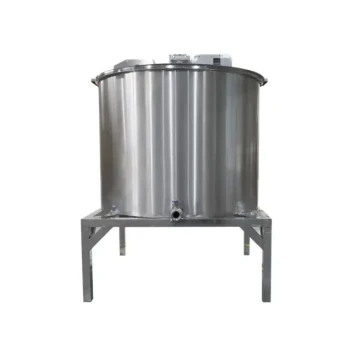
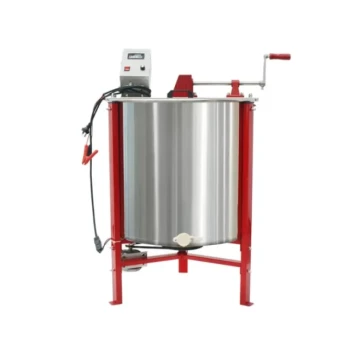
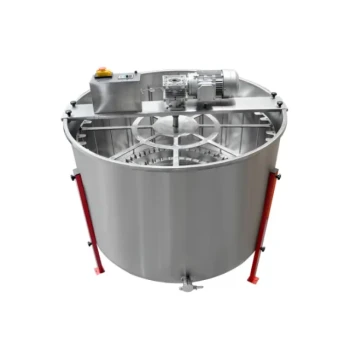
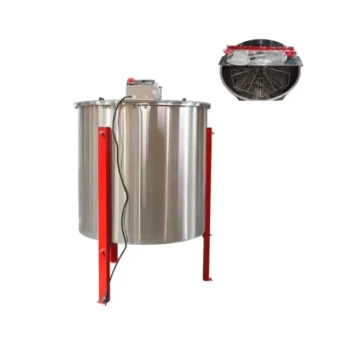
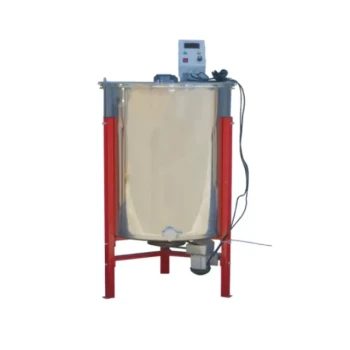
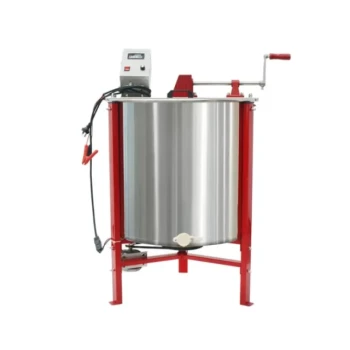
An electric honey extractor operates by utilizing an electric motor to automate the spinning of honeycomb frames. Instead of manual cranking, the device uses a motor to rotate a central basket at high speeds, generating centrifugal force that pulls liquid honey out of the wax cells and onto the drum's inner walls.
By replacing manual labor with motorized consistency, electric extractors allow beekeepers to process larger volumes of honey efficiently while multitasking during the harvest.
The Mechanics of Extraction
The Motorized Drive System
At the core of the machine is an electric motor, which replaces the hand crank found on manual models.
This motor is connected to a central rod that supports a rotating basket inside a drum. By simply flipping a switch or pushing a button, the motor initiates the spinning motion, automating the most physically demanding part of the harvest.
The Physics of Centrifugal Force
The extractor relies entirely on centrifugal force to function.
As the basket spins rapidly, the inertia forces the liquid honey out of the uncapped cells. The honey is flung outward against the inner walls of the extractor drum, leaving the wax comb intact.
Preservation of the Comb
A primary advantage of this mechanical process is that it is non-destructive to the comb structure.
Because the wax is not crushed, the empty frames can be returned immediately to the hive. This allows the bees to refill existing combs rather than expending energy to build new wax, increasing future honey production.
The Operational Workflow
Uncapping the Frames
Before the extractor can operate, the honey must be accessible.
The operator must first remove the wax cappings from the honeycomb cells. Without this step, the centrifugal force cannot pull the honey out, regardless of the spin speed.
Loading and Balancing
The uncapped frames are placed into the basket inside the drum.
It is crucial to balance the load within the basket. Just like a washing machine, an uneven distribution of frames can cause the extractor to wobble violently, potentially damaging the motor or the equipment.
Collection and Draining
Once the honey hits the walls of the drum, gravity takes over.
The honey runs down the sides and collects in a reservoir at the bottom of the extractor. From there, it is drained through a tap (honey gate) or removed via a pump into buckets for bottling.
Understanding the Trade-offs
Risk of Frame Damage
While efficient, the force generated by an electric motor can be destructive if not managed correctly.
Frames that lack wire or plastic foundation support are prone to breaking apart under high speeds. This method is generally not suitable for delicate, foundationless combs.
Operational Complexity
While the machine saves physical labor, it introduces new variables to manage.
Operators must be vigilant about balancing the unit and managing speed settings. However, the automation allows the operator to perform other tasks—such as uncapping the next batch of frames—while the machine is running.
Making the Right Choice for Your Goal
To determine if an electric extractor fits your operation, consider the scale of your harvest and your equipment.
- If your primary focus is efficiency and scale: An electric model is essential, as it frees you to uncap frames while the previous batch spins, significantly reducing total harvest time.
- If your primary focus is protecting delicate comb: Ensure your frames are reinforced with wire or plastic foundation, as the high-speed motor requires sturdy structural support to prevent "blowouts."
Ultimately, the electric extractor transforms honey harvesting from a physical endurance test into a streamlined, managerial process.
Summary Table:
| Feature | Function & Impact |
|---|---|
| Motorized Drive | Replaces manual cranking with consistent, high-speed rotation. |
| Centrifugal Force | Flings honey from uncapped cells while keeping the wax comb intact. |
| Automated Workflow | Allows beekeepers to uncap the next batch while the machine processes the current one. |
| Gravity Drainage | Directs honey to a bottom reservoir for easy collection via a honey gate. |
| Comb Preservation | Returns intact frames to the hive, enabling bees to focus on honey production. |
Maximize Your Honey Harvest with HONESTBEE
At HONESTBEE, we understand that for commercial apiaries and distributors, efficiency is the key to a successful season. Our high-performance electric honey extractors and specialized machinery are designed to transform honey harvesting from a labor-intensive task into a streamlined, high-yield operation.
We provide a comprehensive wholesale offering, including:
- Advanced Machinery: Honey-filling machines, hive-making equipment, and heavy-duty extractors.
- Essential Tools: A full spectrum of beekeeping hardware and industry consumables.
- Cultural Merchandise: Unique honey-themed products to expand your market reach.
Whether you are scaling your own production or supplying the next generation of beekeepers, we deliver the quality and reliability your business demands.
Ready to upgrade your equipment? Contact us today to discuss your wholesale needs!
Related Products
- HONESTBEE 72 Frame Industrial Electric Honey Extractor for Beekeeping
- Commercial Electric 12 Frame Honey Extractor Spinner Motorized Honey Extractor
- 32 Frame Commercial Electric Honey Extractor for Beekeeping and Honey Production
- Electric 4 Frame Tangential Honey Extractor
- electric honey extractor honey centrifuge 3 frame honey extractor stainless steel honey frame extractor
People Also Ask
- What is the importance of balancing honeycomb frames within a honey extractor? Ensure Stability and Protect Machinery
- How is honey separated from the frames after they are uncapped? Efficient Extraction Methods for High Yields
- What are the main benefits of using a honey extractor? Maximize Yields and Protect Your Honeycomb
- What are the recommended methods for removing honey from the honeycomb? Top Extraction Techniques for Maximum Efficiency
- How do manual honey extractors compare to electric honey extractors? Choosing the Right Tool for Your Apiary Growth