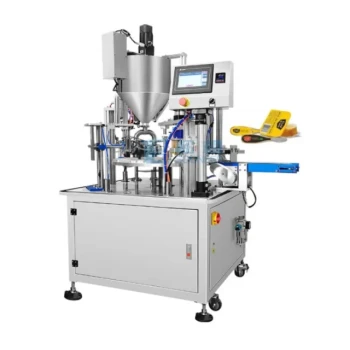
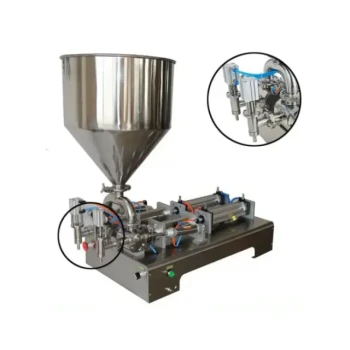
Industrial honey filling machines elevate product quality primarily by stabilizing the honey's pharmacological properties. Through precise quantitative filling and hermetically sealed workflows, these systems drastically reduce exposure to air and contaminants, preserving sensitive bioactive compounds that manual methods often degrade.
Core Takeaway While manual filling introduces variability and contamination risks, industrial automation utilizes closed-system engineering to isolate honey from environmental factors. This preservation of oxygen-sensitive nutrients—combined with strict moisture control—ensures the final product maintains the biological stability and uniformity required for high-end markets.
Preserving Chemical Integrity
Protecting Bioactive Compounds
Honey is valued not just as a sweetener, but for its medicinal properties. Industrial filling machines are designed to protect oxygen-sensitive substances such as inhibines, phenolic antioxidants, and vitamins.
Reducing Oxidative Stress
Manual filling exposes honey to open air for extended periods, leading to oxidation. Automated machines utilize sealed piping systems to minimize this contact time. This ensures the pharmacological stability of the honey remains intact from the apiary to the consumer.
Managing Moisture and Fermentation
Controlling Hygroscopic Activity
Honey is naturally hygroscopic, meaning it rapidly absorbs moisture from the surrounding environment. An automatic filling machine limits this interaction by utilizing precision metering pumps and closed loops.
Preventing Spoilage
By keeping the filling process rapid and sealed, machines help maintain honey moisture content within a safe range (typically below 20 percent). This inhibition of moisture uptake is critical for preventing yeast reproduction, which leads to fermentation and spoilage, thereby extending the product's shelf life.
Ensuring Hygiene and Consistency
Eliminating Secondary Contamination
Manual operations introduce high risks of human contact and airborne impurities. Industrial machines effectively eliminate these variables through automated metering and sealing.
Achieving Quantitative Precision
Beyond hygiene, quality is defined by consistency. Automated systems ensure consistent weight and volume across every unit. This standardization is a prerequisite for meeting international export standards and ensures consumers receive a uniform product every time.
Understanding the Trade-offs
Operational Complexity
While quality improves, industrial machines introduce technical complexity. Operators must be trained to manage calibration and sanitation protocols for the equipment, unlike the simplicity of manual tools.
Initial Capital Investment
High-end machines with closed-system designs represent a significant upfront cost. For very small, artisanal batches where "hand-packed" is a marketing angle, the ROI on preserving pharmacological stability might be lower compared to high-volume producers.
Making the Right Choice for Your Goal
To select the right approach for your facility, consider your primary objective:
- If your primary focus is Pharmacological Value: Prioritize machines with closed-system piping to maximize the retention of enzymes and antioxidants.
- If your primary focus is Commercial Export: Focus on machines with high-precision metering to ensure strict adherence to weight and hygiene regulations.
- If your primary focus is Shelf Life: Ensure the equipment features rapid sealing capabilities to minimize moisture absorption and preventing fermentation.
Automation transforms honey packaging from a simple transfer task into a preservation process.
Summary Table:
| Feature | Manual Filling | Industrial Machine Filling |
|---|---|---|
| Oxygen Exposure | High (Open to air) | Minimal (Sealed system) |
| Moisture Control | Poor (Hygroscopic risk) | Excellent (Closed-loop) |
| Nutrient Retention | Low (Oxidative loss) | High (Preserves antioxidants) |
| Consistency | Variable volume | Precision quantitative metering |
| Contamination | High human/airborne risk | Low (Automated/Hygienic) |
Elevate Your Honey Production with HONESTBEE
As a commercial apiary or distributor, maintaining the biological integrity of your honey is critical for premium market positioning. HONESTBEE provides high-precision honey-filling machines and specialized beekeeping hardware designed to eliminate contamination and maximize shelf life.
Whether you are scaling up with advanced machinery or sourcing essential industry consumables, our comprehensive wholesale solutions are tailored to your growth. Partner with HONESTBEE today to optimize your workflow and deliver superior quality honey to your customers.
References
- Pratap Anbalagan, Suhas Gorakh Karkute. Assessment of bee flora and development of a floral calendar in relation to pharmaceutical potential of honey and bee pollen in Eastern Uttar Pradesh, Indias. DOI: 10.54085/ap.2023.12.1.55
This article is also based on technical information from HonestBee Knowledge Base .
Related Products
- Commercial Rotary Honey Filling Machine for Production
- Precision Durable Efficient HONESTBEE Rotary Honey Filling Machine
- Fully Automatic Honey Filling Packaging Machine for Processing Line
- Economy Small Honey Filling Machine Honey Bottle Filler Packaging Machine
- Precision Automated Packaging Turntable Honey Spoon Filling Sealing Packing Machine
People Also Ask
- What role do commercial honey filling machines play in honey distribution? Scaling Efficiency and Quality Control
- What technical support do commercial-grade filling machines provide? Convert Honey NTFPs into Marketable Commodities
- What is the significance of specialized honey filling equipment? Scaling from Beekeeping to Commercial Success
- Why is professional honey filling machinery critical for honey production? Scale Your Apiary's Profit & Efficiency
- Why is high-capacity honey filling machinery necessary for Giant Honey Bees? Solve the Apis dorsata Volume Crisis