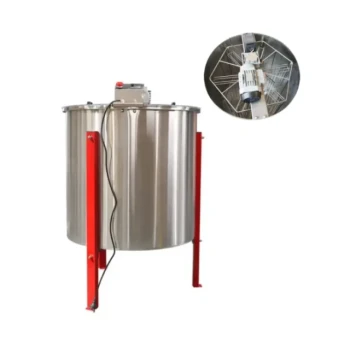
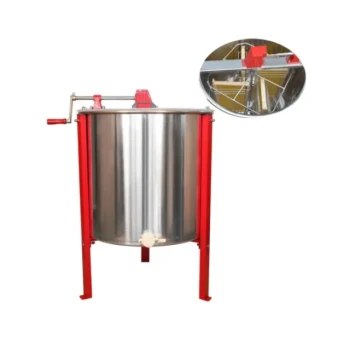
Industrial weighing scales and extraction machinery are the primary tools for converting raw honey production into precise, actionable performance data. By enabling the exact quantification of honey yield, this equipment allows apiary managers to scientifically assess colony efficiency, monitor health status, and evaluate the suitability of local floral resources.
Core Takeaway While manual estimation offers a general idea of production, industrial equipment establishes a standardized scientific baseline. This precision transforms yield from a simple economic metric into a diagnostic tool for evaluating colony genetics, health trends, and environmental compatibility.
The Science of Precise Quantification
Establishing Net Yield Accuracy
Industrial weighing equipment eliminates guesswork by calculating the exact net weight of mature honey. By weighing honey-filled supers and subtracting the tare weight of empty equipment, managers obtain a "pure" production figure.
This net weight serves as the core economic indicator for the apiary. It allows for a direct, data-driven comparison between different colonies without the variables introduced by inconsistent manual harvesting.
Monitoring Nectar Flow Dynamics
High-precision hive weighing sensors provide real-time data on the rate of honey accumulation. This allows beekeepers to pinpoint the exact start and end times of nectar flows from local source plants.
Understanding these windows is critical for operational timing. It ensures that harvesting occurs at the moment of peak yield, preventing lost opportunities during high-density flows.
Detecting Anomalies and Threats
Beyond measuring success, weighing sensors act as early warning systems. A sudden, unexplained drop in hive weight is rarely a natural occurrence.
This metric often indicates a swarm departure or a predator attack. Immediate detection allows for rapid intervention, protecting the commercial assets of the colony before the loss becomes total.
Evaluating Biological and Environmental Factors
Assessing Colony Health
Yield data obtained through standardized extraction is a direct reflection of a colony's biological efficiency. Consistently low yields in specific hives, when measured against the apiary average, often indicate underlying health issues.
This data prompts targeted inspections for disease or parasitic loads. It shifts management from reactive treatment to proactive health monitoring based on performance deviations.
Balancing Genetics and Productivity
For breeding programs, industrial scales are essential for determining the compatibility of specific traits. For example, beekeepers use this data to verify if mite-resistant genetic lines can still maintain high commercial productivity.
This helps in selecting bee varieties that are not only resilient but also economically viable. It ensures that the pursuit of hardiness does not come at the expense of honey output.
Analyzing Floral Resource Suitability
The data derived from these tools helps evaluate the environment as much as the bees. Precise yield measurement reveals whether the local floral sources are sufficient to support the current population density.
If yield data consistently underperforms despite healthy colonies, it suggests the local carrying capacity has been reached. This signals the need to relocate hives or adjust population density to match available forage.
Operational Efficiency and Workflow
Maximizing Turnover Speed
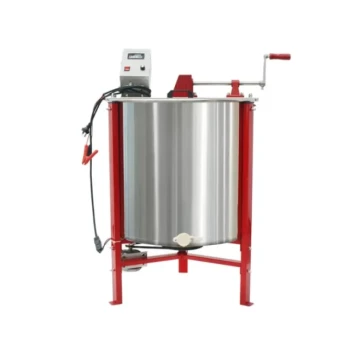
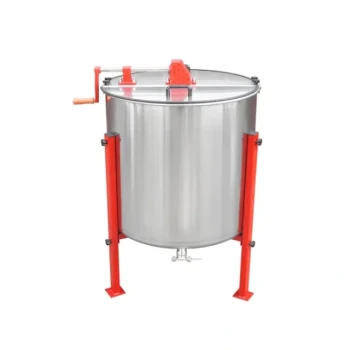
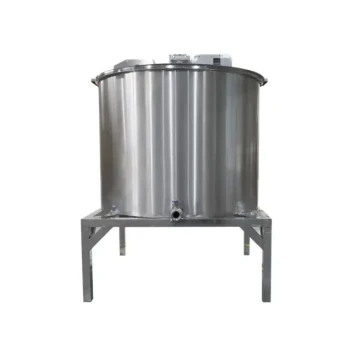
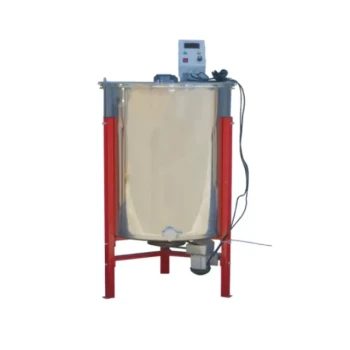
Industrial extraction machinery utilizes centrifugal and filtration processes to accelerate harvesting. This allows beekeepers to complete operations quickly during critical, short-term honey flow periods.
By shortening the turnover time, apiaries can process output faster. This ensures the facility captures the maximum possible yield from a bloom before the season ends.
Standardizing the Workflow
The use of complete sets of machinery creates a "systematic application of hardware." This standardization is the foundation of modern industrial beekeeping.
It allows for the scientific allocation of resources. Managers can plan labor and equipment usage around predictable cycles, ensuring maximum output during optimal foraging windows.
Understanding the Trade-offs
The Cost-Benefit Threshold
While industrial equipment provides superior data, the capital investment is significant. For smaller operations, the cost of automated sensors and heavy extraction machinery may outweigh the economic utility of the data they provide.
Reliance on Data vs. Observation
There is a risk of over-relying on weight metrics at the expense of visual inspection. While a scale can detect a weight drop, it cannot diagnose why a colony is failing—be it queen failure, disease, or pests—without a physical check.
Equipment Maintenance Overhead
Industrial machinery introduces a new layer of complexity regarding maintenance. The benefits of rapid extraction are lost if the machinery experiences downtime during a peak honey flow due to lack of technical support or parts.
Making the Right Choice for Your Goal
To select the right equipment strategy, align your tools with your primary management objective:
- If your primary focus is Genetic Breeding: Prioritize high-precision scales to correlate specific traits (like hygiene or mite resistance) with net productivity.
- If your primary focus is Commercial Volume: Prioritize high-throughput extraction machinery to minimize turnover time and capture peak nectar flows.
- If your primary focus is Colony Security: Invest in real-time weighing sensors to trigger alerts for swarming events or predator intrusion.
Ultimately, the value of this equipment lies not just in processing honey, but in generating the data required to make evidence-based management decisions.
Summary Table:
| Equipment Type | Key Data Point | Management Benefit |
|---|---|---|
| Industrial Scales | Net Honey Weight | Accurate ROI calculation & economic benchmarking |
| Hive Sensors | Real-time Weight Shifts | Early warning for swarming, theft, or predator attacks |
| Extraction Machinery | Throughput Velocity | Maximizing yield during peak nectar flow windows |
| Data Analytics | Yield Per Colony | Scientific evaluation of bee genetics & floral suitability |
Elevate Your Apiary’s Commercial Efficiency with HONESTBEE
Precise data is the backbone of a profitable beekeeping operation. At HONESTBEE, we specialize in empowering commercial apiaries and distributors with the professional-grade tools needed to scale. From high-precision industrial weighing systems and automated honey-filling machines to large-scale extraction lines and essential industry consumables, our comprehensive wholesale portfolio is designed for peak performance.
Whether you are looking to modernize your processing facility or supply the industry with top-tier hardware, our team provides the technical expertise and robust machinery required to turn raw honey into high-value output.
Ready to optimize your production and maximize your yield?
Contact HONESTBEE Today for Wholesale Solutions
References
- Chao Chen, Wei Shi. Managed honeybee colony losses of the Eastern honeybee (Apis cerana) in China (2011–2014). DOI: 10.1007/s13592-017-0514-6
This article is also based on technical information from HonestBee Knowledge Base .
Related Products
- Stainless Steel Manual 8 Frame Radial Honey Extractor Machine for Beehives
- HONESTBEE 6 Frame Three Use Electric Honey Extractor for Beekeeping
- 10L Stainless Steel Electric Honey Press Machine
- Commercial Electric 12 Frame Honey Extractor Spinner Motorized Honey Extractor
- HONESTBEE 72 Frame Industrial Electric Honey Extractor for Beekeeping
People Also Ask
- What types of beehive frames are compatible with honey extractor machines? Find the Perfect Match for Your Apiary
- Which type of honey extractor is generally more durable? Focus on Material & Build Quality for Longevity
- What are the key features and benefits of a stainless steel honey extractor? Upgrade to Professional Purity
- Why are manual extractors popular among beginner beekeepers? A Guide to Starting Simple & Saving Money
- What is a manual honey extractor? The Essential Guide to Cost-Effective Beekeeping for Beginners