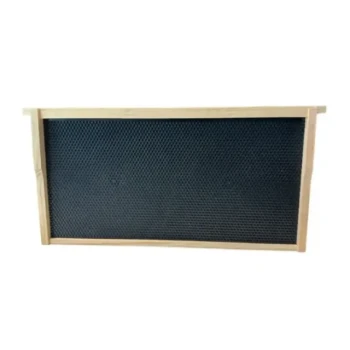
Modular comb honey cassette frames improve commercial harvesting by moving the work from the honey house into the hive. Bees build, fill, and cap comb directly inside individual plastic or wooden cassette units, allowing beekeepers to remove finished retail portions without cutting bulk comb. This reduces labor and leakage while producing cleaner, more uniform packaging for premium markets.
Modular cassette frames turn comb honey into a standardized, ready-to-sell product. The main gains are better appearance, lower handling loss, faster packing, and more predictable commercial fulfillment.
How the Frames Improve Comb Honey Quality
They produce uniform retail sections
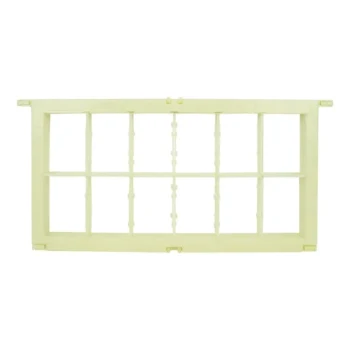
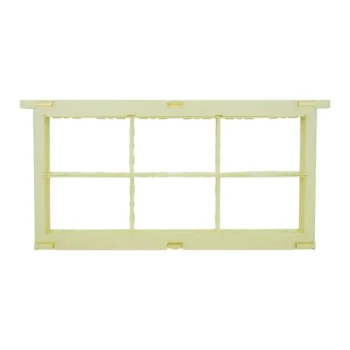
Each cassette acts as an individual section box. Because the bees build comb inside a defined unit, finished pieces have consistent dimensions and presentation.
This uniformity is valuable for wholesalers, distributors, and retailers that need predictable pack sizes, labeling, carton configuration, and shelf appearance.
They protect the natural comb structure
Traditional harvesting often requires cutting sections from a larger honeycomb. Cutting can crush cells, deform edges, and release honey onto equipment or packaging.
With cassette frames, the comb remains enclosed in the unit where it was built. The result is less physical damage and a more attractive natural-comb product.
They reduce honey leakage
Bulk comb must be handled, cut, and transferred before packaging. Every additional handling step creates opportunities for honey to leak.
Cassette harvesting largely eliminates this transfer process. Once the honey is capped, the section box can be removed from the frame and packaged directly.
They support hygienic handling
The cassette provides a defined container for the finished comb honey. This minimizes direct contact with the comb and reduces exposure during cutting and packing.
For commercial operations, that supports cleaner workflows and more consistent hygiene control, particularly when supplying premium retail channels.
How the Frames Improve Harvesting Efficiency
They eliminate manual cutting
The most important efficiency gain is the removal of bulk-comb cutting. Workers do not need to measure, trim, separate, and individually wrap every section.
Instead, the main steps become inspect, remove, package, and dispatch. This reduces repetitive labor and simplifies training for seasonal or expanding workforces.
They shorten the path from hive to customer
Once the comb is fully capped, each cassette can move directly from the frame into retail packaging. The product does not need to pass through a separate cutting and portioning stage.
A shorter process reduces handling time and makes production scheduling easier for commercial apiaries and packing operations.
They improve labor predictability
Manual cutting produces variable work times because comb thickness, shape, and honey content can differ. Cassette frames establish a more repeatable harvesting method.
Predictable unit sizes help businesses estimate labor requirements, packaging consumption, order capacity, and delivery timelines more accurately.
They improve order fulfillment
Standardized sections are easier to count, pack, carton, and palletize than irregular pieces cut from bulk comb. This supports faster preparation of wholesale and distributor orders.
For resellers, the benefit is not only lower harvesting effort. It is also a more dependable supply of consistently presented units for recurring customer demand.
Why the Hive System Matters
Dedicated honey supers keep comb cleaner
Cassette frames are installed in honey supers above the brood area. This separates honey storage from brood rearing and helps produce comb honey that is free from larvae and associated impurities.
A queen excluder can further prevent the queen from entering the honey super while allowing worker bees to pass through.
Removable frames preserve colony continuity
Modern movable-frame hives allow beekeepers to inspect colonies, manage pests, add supers, and harvest individual frames without destroying the hive structure.
That is an important commercial advantage over fixed-comb systems, where harvesting may damage the colony and require substantial reconstruction.
Standardized components support scalable operations
Using standardized hive boxes, frames, supers, and cassette units makes it easier to expand an apiary or coordinate equipment across multiple locations.
Standardization also simplifies sourcing. Distributors can provide a broader, compatible product portfolio rather than isolated components that do not fit the beekeeper’s existing system.
Foundations guide consistent comb building
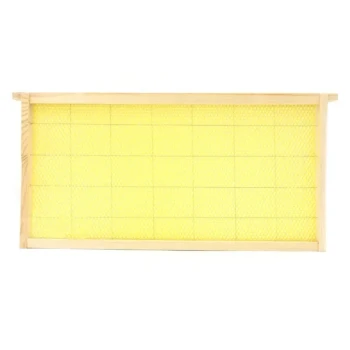
Comb foundation gives bees a defined base on which to construct the sections. This encourages more regular comb formation and reduces the likelihood of unusable or poorly shaped pieces.
The result is a higher proportion of finished cassettes suitable for premium sale, although colony strength, nectar flow, and management still determine final performance.
Understanding the Trade-offs
Cassette frames require suitable colony management
Frames do not guarantee complete or uniform filling. Bees may build unevenly if the colony is weak, nectar availability is poor, or the super is introduced at the wrong time.
Commercial operators must still manage colony strength, super placement, timing, and environmental conditions carefully.
Initial equipment costs may be higher
Cassette frames and compatible section boxes require an upfront investment. Plastic units may also require cleaning, inspection, and replacement management, while wooden units can be affected by moisture and wear.
The investment is easier to justify when the operation targets premium comb honey, repeat wholesale orders, or labor-intensive harvesting environments.
The system is specialized
Cassette frames are designed for comb honey production rather than general-purpose liquid honey extraction. They should therefore be evaluated as part of a product-specific production line.
An apiary producing multiple honey formats may need both cassette equipment for comb honey and conventional extractable frames for liquid honey.
Packaging compatibility must be planned
The cassette dimensions, retail container, label format, and shipping carton should be coordinated before large-scale purchasing. Otherwise, a standardized hive component may still create downstream packing inefficiencies.
Distributors and resellers should confirm frame compatibility, cassette availability, replacement-part supply, and delivery lead times as part of the procurement decision.
Making the Right Choice for Your Goal
Modular cassette frames are most effective when the entire operation is designed around consistent, low-handling comb honey production.
- If your primary focus is premium retail quality: Use cassette frames to preserve comb appearance, minimize leakage, and deliver clean, uniform sections with strong shelf presentation.
- If your primary focus is labor reduction: Replace bulk-comb cutting with direct cassette removal and packaging to simplify harvesting and reduce repetitive manual work.
- If your primary focus is wholesale or distribution growth: Standardize cassette sizes, packaging, and replenishment procedures so orders can be prepared and fulfilled more predictably.
- If your primary focus is apiary scalability: Combine removable frames, dedicated honey supers, queen excluders, and reliable foundation to support repeatable colony and harvest management.
- If your primary focus is equipment sourcing: Work with a supplier that can provide compatible frames, section boxes, foundations, hive components, packaging support, and responsive delivery from one coordinated product range.
The central advantage is simple: modular cassette frames convert comb honey harvesting from a cutting operation into a standardized production and fulfillment process.
Summary Table:
| Benefit | Description |
|---|---|
| Uniform retail sections | Consistent dimensions for predictable packaging and shelf appeal. |
| Protects natural comb | Reduces damage and maintains attractive appearance. |
| Reduces honey leakage | Minimizes handling and transfer, preserving product. |
| Hygienic handling | Defined container reduces contamination risk. |
| Eliminates manual cutting | Saves labor and simplifies training. |
| Shortens process | Faster from hive to customer. |
| Labor predictability | Consistent unit sizes aid planning. |
| Improves order fulfillment | Easier counting, packing, and shipping. |
Elevate your comb honey production with HONESTBEE's comprehensive range of modular cassette frames, hive components, and beekeeping equipment. Our one-stop sourcing and premium trading services ensure rapid response, dedicated support, and ultra-fast delivery. Whether you're a distributor seeking reliable supply and OEM/ODM options or a beekeeper aiming for efficiency, partner with us to standardize your harvesting and boost your bottom line. Contact us today to explore how we can streamline your operations and increase your market competitiveness.
Related Products
- Professional Sectional Comb Honey Frame with 250g Cassette System for Beekeeping
- Heart-Shaped Comb Honey Frame and Honeycomb Cassette
- Plastic Honey Comb Frames Cassette Box for Honey
- Professional 500g Sectional Comb Honey Frame System for Beekeeping
- Assembled Wooden Bee Frames with Beeswax Foundation Ready to Use by HONESTBEE
People Also Ask
- How are honeybee combs utilized for non-destructive colony monitoring? Master Population Density Tracking
- What is the technical purpose of exchanging honeycomb frames? Master Apiary Equalization for Growth
- What frame to use for honeycomb? Choose the Right System for Pure, Edible Comb
- What is a honeycomb frame? The Key to Modern, Sustainable Beekeeping
- What are the recommended temperature and duration settings for freezing honey frames? Ensure Pest-Free Comb Storage