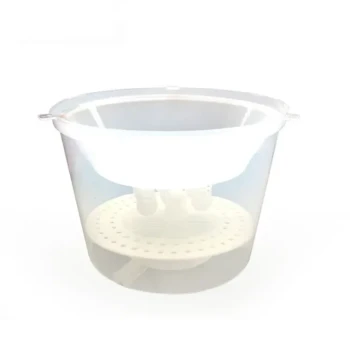
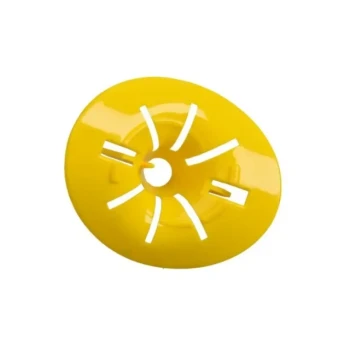
Pollen traps function as a mechanical filter installed at the entrance of a beehive to intercept foraging bees. These devices utilize precision-designed grids, mesh, or plastic plates with star-shaped holes that bees must crawl through to enter the colony. As the bees squeeze through these specific apertures, the edges physically scrape pollen pellets off their hind legs, causing the pellets to fall into a secure collection tray below.
Core Takeaway Pollen traps rely on a physical barrier principle to mechanically separate pollen from foraging bees without harming the insects. This allows for the non-destructive collection of representative samples used for nutritional analysis, environmental monitoring, and commercial pollen production.
The Mechanics of Interception
The Physical Barrier
The core component of any pollen trap is a grid or mesh barrier placed directly in the flight path of returning foragers.
These barriers often feature star-shaped holes or specific mesh sizes designed to be just large enough for the bee's body but too narrow for the pollen loads on their legs.
The Separation Process
As the bee navigates the grid to enter the hive, the friction from the hole's edges catches the pollen pellets.
This mechanical scraping creates a gentle separation, detaching the pellet from the bee’s corbicula (pollen basket).
Collection and Preservation
Once detached, the pollen falls through a screen into a bottom drawer or collection tray.
This tray isolates the samples from the colony, preventing the bees from retrieving the pollen and allowing researchers to collect fresh samples for analysis.
Trap Variations and Efficiency
Bottom vs. Mounted Traps
While most traps function on the same principle, their placement affects colony behavior.
Bottom-mounted traps generally cause less interference with bee flight frequency compared to top-mounted varieties, making them more effective for consistent collection.
Collection Rates
Pollen traps are not designed to capture 100% of incoming forage, as the colony still requires pollen for survival.
Typically, these devices intercept between 30% and 70% of the pollen pellets, depending on the grid size and the size of the specific pollen loads.
Applications of Collected Samples
Environmental Monitoring
Because bees forage across a wide radius, the contents of the trap serve as a bio-sensor for the local environment.
Researchers use these samples for palynological analysis to identify plant diversity and chemical analysis to detect pesticide residues.
Nutritional Profiling
Traps provide mixed samples from various botanical sources, offering a snapshot of the colony's dietary structure.
This allows for the analysis of dynamic changes in pollen quality, volume, and weight over specific time segments.
Understanding the Trade-offs
Variable Efficiency
The effectiveness of the trap is inconsistent; it varies heavily based on the relationship between the grid aperture and the size of the pollen pellet.
Smaller pellets may pass through the grid completely, potentially skewing data if you are looking for a complete representation of all forage sources.
Hive Interference
While designed to be non-destructive, forcing bees through a grid does introduce a physical obstacle.
Prolonged use without monitoring can stress the colony or reduce the amount of pollen reaching the brood, affecting colony development.
Making the Right Choice for Your Goal
To maximize the utility of pollen traps, align your equipment choice with your specific objective:
- If your primary focus is environmental monitoring: Prioritize traps that allow for "time-segment samples" to track changes in pesticide exposure or floral diversity over specific weeks.
- If your primary focus is colony health: Use bottom-mounted traps to minimize flight interference and ensure you are not stripping 100% of the colony's protein source.
- If your primary focus is commercial production: Select traps with higher efficiency ratings (closer to 70%) to maximize volume, but rotate their usage to allow the hive to recover.
Pollen traps turn the hive entrance into a data collection point, providing critical insights into the environment without sacrificing the bees that study it.
Summary Table:
| Feature | Bottom-Mounted Traps | Front/Top-Mounted Traps |
|---|---|---|
| Mechanism | Integrated floor grid | Entrance-attached mesh |
| Efficiency | 30% - 70% interception | 30% - 60% interception |
| Bee Impact | Minimal flight interference | Moderate flight resistance |
| Best Use Case | Commercial production | Environmental monitoring |
| Sample Purity | High (isolated from debris) | Medium (exposed to entrance) |
Maximize Your Harvest with HONESTBEE Beekeeping Solutions
At HONESTBEE, we specialize in empowering commercial apiaries and distributors with high-performance beekeeping technology. Whether you are scaling up commercial pollen production or conducting environmental research, our comprehensive wholesale range provides everything you need.
Why partner with us?
- Precision Equipment: From high-efficiency pollen traps to honey-filling and hive-making machinery.
- Reliable Consumables: A full spectrum of essential tools and supplies to keep your operations running smoothly.
- Tailored for Growth: We cater specifically to large-scale operations and distributors seeking quality and durability.
Ready to elevate your beekeeping business? Contact us today to explore our wholesale catalog and discover how our expertise can drive your success.
References
- Megan J. Colwell, Dave Shutler. Honey bee‐collected pollen in agro‐ecosystems reveals diet diversity, diet quality, and pesticide exposure. DOI: 10.1002/ece3.3178
This article is also based on technical information from HonestBee Knowledge Base .
Related Products
- Removable Plastic Pollen Trap With Ventilated Tray for Bees Pollen Collector
- 30 cm Plastic Entrance Hole Bee Pollen Trap and Collector
- Plastic Bee Pollen Trap Strips Comb Catcher Collector
- High-Efficiency Diamond Maze Bee Escape for Clearing Supers
- Professional Bucket Style Wasp and Moth Pheromone Trap
People Also Ask
- What are the design principles and advantages of pollen traps in the collection of bee pollen? Boost Your Apiary Yield
- What is the function of professional pollen traps in evaluating honey plants? Quantifying Pollination and Crop Potential
- What functions do pollen traps serve for bee bread production? Optimize Your Raw Material Collection
- What maintenance and pest prevention measures should be taken for pollen traps? Protect Your Hive and Harvest Quality
- How does the use of pollen traps in honeybee hives enhance crop fertilization? Boost Your Yield Through Induced Activity