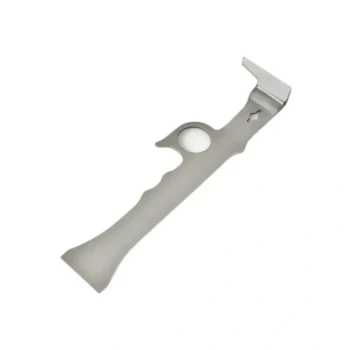
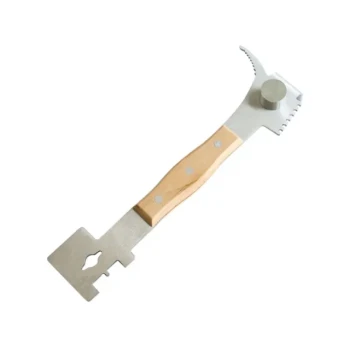
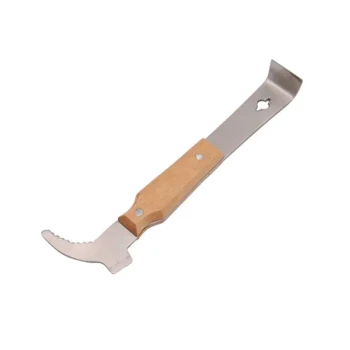
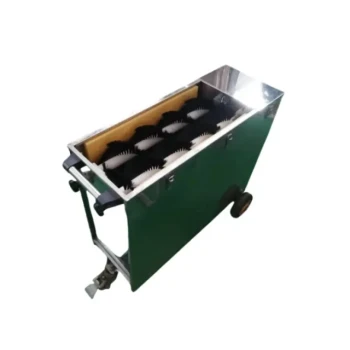
Professional beekeeping tools and standard sealed containers act as the primary defense against data distortion in honey analysis. By creating a physical barrier against wind-borne pollen and environmental impurities, these tools ensure that the sample sent to the laboratory represents the bees' actual foraging activity rather than external contamination.
Core Takeaway The integrity of melissopalynological (pollen) analysis relies entirely on sample isolation. Using professional tools and sealed containers serves a single, critical purpose: to preserve the honey's original biological and chemical state, preventing "secondary contamination" from obscuring the true botanical origin and foraging history of the colony.
The Mechanism of Pollen Isolation
Eliminating Environmental Noise
The primary threat to accurate botanical analysis is secondary contamination. This occurs when wind-borne pollen or dust enters the honey during extraction or storage.
Professional beekeeping tools are designed to isolate the honey immediately upon extraction. This isolation prevents foreign particles from mixing with the sample, which would otherwise create false positives in the data.
Reconstructing Foraging Paths
To determine exactly which plants a colony visited, scientists use melissopalynological analysis. This process counts and identifies pollen grains within the honey.
If the sample is contaminated by external pollen, the resulting profile is invalid. By using standard sealed containers, beekeepers preserve a precise "snapshot" of the hive's activity, allowing for the accurate reconstruction of foraging paths.
Preserving Chemical Integrity
Countering Hygroscopic Effects
Honey is highly hygroscopic, meaning it naturally attracts and absorbs moisture from the surrounding air.
Standard sealed containers are chemically stable and airtight. They prevent the sample from exchanging moisture with the atmosphere, ensuring that the laboratory measures the honey's moisture content exactly as it was in the hive, not as it became during storage.
Preventing Microbial Changes
Beyond moisture, open exposure allows for secondary microbial contamination. This can alter the chemical composition of the honey before it reaches the lab.
Professional containers block the entry of external microbes. This protection is essential for verifying safety requirements and ensuring the sample remains chemically stable for quantitative testing.
Understanding the Trade-offs
The Cost of Precision vs. Operational Speed
Implementing strict isolation protocols and using specialized, single-use or high-grade containers increases operational costs and time.
While "grabbing a sample" is fast, proper sterile sampling requires deliberate effort. However, this trade-off is necessary; saving time on sampling often renders the expensive laboratory analysis useless due to contamination.
Hardware Cannot Fix Source Issues
It is important to note that while these tools preserve the sample's state, they cannot improve the honey itself.
If a colony has been exposed to pollutants or harvested prematurely, the tools will simply seal in those imperfections. Professional equipment guarantees the accuracy of the data, not the quality of the underlying product.
Ensuring Accuracy in Your Analysis
To maximize the reliability of your botanical reports, align your sampling method with your specific objective.
- If your primary focus is Botanical Origin Tracing: Prioritize the immediate sealing of samples to prevent wind-borne pollen from skewing the melissopalynological profile.
- If your primary focus is Organic Certification: Focus on using chemically stable containers to prevent moisture absorption and prove the absence of secondary environmental contaminants.
The value of a laboratory result is defined by the integrity of the sample collection process.
Summary Table:
| Factor | Professional Tool/Container Contribution | Impact on Botanical Analysis |
|---|---|---|
| Pollen Integrity | Prevents secondary contamination from wind-borne dust/pollen | Ensures accurate melissopalynological (pollen) profiles |
| Moisture Levels | Airtight seals counter hygroscopic moisture absorption | Maintains the honey's original moisture content for testing |
| Microbial Safety | Blocks entry of external microbes and impurities | Preserves chemical stability and ensures safety verification |
| Data Reliability | Isolates the honey immediately upon extraction | Guarantees a precise snapshot of the colony's foraging path |
Elevate Your Beekeeping Standards with HONESTBEE
At HONESTBEE, we understand that for commercial apiaries and distributors, precision is everything. Our comprehensive wholesale offering includes high-grade, chemically stable sealed containers and professional extraction machinery designed to eliminate secondary contamination and protect your honey's botanical integrity.
Whether you need specialized hive-making machines or industry-standard consumables, we provide the tools to ensure your product meets the highest global standards. Partner with us to secure the accuracy of your honey analysis and enhance your brand's reputation.
Contact us today to explore our full range of beekeeping equipment and tools!
References
- Anna Wróblewska, Ernest Stawiarz. Botanical Characteristics of Polish Honeys from Natura 2000 Habitats. DOI: 10.1515/jas-2015-0003
This article is also based on technical information from HonestBee Knowledge Base .
Related Products
- Professional 600D Oxford Cloth Beekeeping Tool Bag with 8 Pockets and Elastic Loops
- HONESTBEE Professional Mini J-Hook Hive Tool for Beekeeping
- Double Head Beekeeping Grafting Tools for Beekeepers
- HONESTBEE 15-in-1 Beekeeper Multi-Tool with Hammer and Pliers for Beekeeping
- Stainless Steel J Hook Hive Tool for Beekeeping
People Also Ask
- What is the recommended method for storing beekeeping tools? Expert Vertical Storage Solutions for Your Apiary
- How does a favorable microclimate interact with beekeeping tools? Boost Overwintering Success and Equipment Longevity
- Why is the treatment of beekeeping tools with high-concentration chemical disinfectants necessary for preventing AFB?
- What essential beekeeping tools are needed besides the hive? Must-Have Gear for Every Apiary
- How does the genetic identification of honeybee populations influence the selection of beekeeping tools? Precision Gear Guide