Professional beekeeping tools serve as the primary interface for biosecurity, transforming a beehive from a sealed box into an accessible biological environment. In urban settings, smokers and hive tools are not merely convenience items; they are essential instruments that enable the frequent, deep inspections required to detect pathogens before they spread.
Core Takeaway In high-density urban environments, the ability to physically access the brood nest is the single greatest factor in disease control. Professional tools enable the early detection and treatment of pests, preventing urban apiaries from becoming reservoirs of infection that threaten vulnerable rural bee populations.
The Hive Tool: Enabler of Deep Diagnostics
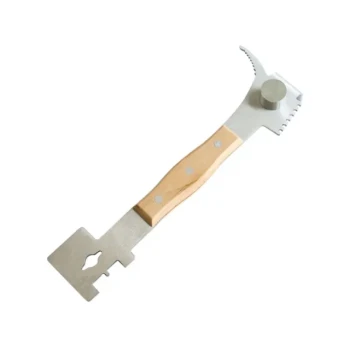
The hive tool is often mistaken for a simple lever, but its role in disease management is precise and surgical. Its primary function regarding health is overcoming the colony's physical defenses.
Accessing the Brood Nest
Bees seal their environment with propolis, a resinous glue. Without a specialized hive tool to pry apart frames, a beekeeper cannot access the center of the hive.
The brood nest—where eggs and larvae reside—is where most critical diseases (such as American Foulbrood) manifest. The hive tool allows for the separation of these stuck frames to obtain representative samples for diagnostic testing.
Precision and Sample Integrity
A proper hive tool allows for the scraping of excess wax and the careful manipulation of frames. This precision is vital for extracting larvae or adult bees for lab analysis without destroying the sample or the surrounding comb.
Furthermore, utilizing these tools prevents the accidental crushing of bees during inspection. Crushed bees release alarm pheromones and degrade the hygiene of the hive, complicating accurate health assessments.
The Smoker: Creating the Conditions for Inspection
A smoker is technically a sedation device that makes thorough disease monitoring possible. Without it, the defensive behavior of an urban colony can make deep inspections too dangerous or chaotic to perform effectively.
Masking Alarm Signals
When a hive is opened, bees release alarm pheromones to signal danger. The smoker burns fuel (like decayed wood) to produce cool smoke that masks these chemical signals.
By disrupting this communication, the colony remains calm. This allows the beekeeper to perform a slow, methodical examination of the frames rather than a rushed glance, ensuring subtle signs of pests or disease are not overlooked.
Reducing Stress During Sampling
Disease sampling is intrusive. Whether performing a sugar shake for mites or swabbing for bacterial spores, the process stresses the colony.
The smoker minimizes this stress. A calmer colony recovers faster after an inspection, maintaining its immune resistance better than a colony left in a state of high agitation.
The Urban-Rural Biosecurity Connection
The use of these tools in cities has implications that extend far beyond the urban rooftop.
Preventing Disease Reservoirs
Urban environments often have high densities of bee colonies. If left unmonitored, a single diseased city hive can become a "source of infection."
Regular intervention using professional tools allows for the early identification of these threats. By treating or quarantining a hive immediately, the beekeeper stops the apiary from exporting pathogens to surrounding areas.
Protecting Rural Agriculture
Diseases do not respect city limits. Pathogens incubated in neglected urban hives can easily spread to rural bee populations.
By using tools to maintain rigorous health standards, urban beekeepers act as a firewall, protecting the agricultural pollinators that operate in the rural hinterlands.
Common Pitfalls: The Tool as a Vector
While these tools are essential for detecting disease, they possess a significant trade-off: they can spread the very diseases they help manage.
Cross-Contamination Risks
Pathogen spores, particularly those of American Foulbrood (AFB), have high environmental persistence. They can survive on metal, wood, and fabric surfaces for long periods.
If a hive tool is used to inspect a sick colony and then immediately used on a healthy one, the tool becomes a vector for cross-infection.
The Necessity of Disinfection
Possessing the tool is not enough; maintaining it is equally critical. Strict disinfection procedures—such as scorching the hive tool or using chemical disinfectants—are required between hives.
Failure to disinfect turns the hive tool from an instrument of health into a primary cause of apiary collapse.
Making the Right Choice for Your Project
Effective disease management requires integrating these tools into a disciplined workflow.
- If your primary focus is Biosecurity: Prioritize a rigorous disinfection protocol for your hive tools between every single colony inspection to prevent vectoring spores.
- If your primary focus is Diagnostics: Ensure your smoker is lit and functioning well before opening the hive; a calm colony is the only way to safely extract precise larval samples.
- If your primary focus is Urban Planning: Recognize that supplying tools is not enough; technicians must be trained to use them for deep brood inspections to protect the wider ecosystem.
The effectiveness of an urban apiary is measured not by honey production, but by the rigor of its health monitoring.
Summary Table:
| Tool | Primary Role in Disease Management | Key Benefit for Urban Colonies |
|---|---|---|
| Hive Tool | Accessing the brood nest for deep diagnostics | Enables early detection of pathogens like AFB by prying frames. |
| Smoker | Masking alarm pheromones and sedating bees | Allows calm, methodical inspections without high-stress agitation. |
| Disinfectants | Preventing cross-contamination between hives | Ensures tools do not become vectors for pathogen transmission. |
| Sampling Kits | Facilitating lab-grade health assessments | Provides accurate data on mite levels and bacterial spores. |
Secure Your Apiary’s Health with HONESTBEE
Protecting your colonies requires more than just passion—it requires the right precision instruments. HONESTBEE caters to commercial apiaries and distributors with a comprehensive wholesale offering. We supply the full spectrum of beekeeping tools, machinery, and equipment, along with essential industry consumables.
From heavy-duty hive-making machines to sanitary honey-filling equipment and professional-grade hand tools, our portfolio covers everything needed to maintain a biosecure and productive operation. Whether you are scaling a commercial apiary or supplying a regional market, our hardware ensures you can detect threats early and maintain the highest hygiene standards.
Ready to elevate your beekeeping standards? Contact us today to discuss your wholesale needs!
References
- L. I. DEMCHUK, I. YU. TSYGANENKO-DZYUBENKO. THE ROLE OF BEEKEEPING ON THE ROOFS OF CITY BUILDINGS. DOI: 10.46913/beekeepingjournal.2022.9.03
This article is also based on technical information from HonestBee Knowledge Base .
Related Products
- Professional 600D Oxford Cloth Beekeeping Tool Bag with 8 Pockets and Elastic Loops
- HONESTBEE Professional Mini J-Hook Hive Tool for Beekeeping
- Double Head Beekeeping Grafting Tools for Beekeepers
- HONESTBEE 15-in-1 Beekeeper Multi-Tool with Hammer and Pliers for Beekeeping
- Stainless Steel J Hook Hive Tool for Beekeeping
People Also Ask
- What is the recommended method for storing beekeeping tools? Expert Vertical Storage Solutions for Your Apiary
- How does a favorable microclimate interact with beekeeping tools? Boost Overwintering Success and Equipment Longevity
- Why is the treatment of beekeeping tools with high-concentration chemical disinfectants necessary for preventing AFB?
- What are the approximate costs of basic beekeeping tools? Start Your Apiary for Under $85
- How does the genetic identification of honeybee populations influence the selection of beekeeping tools? Precision Gear Guide