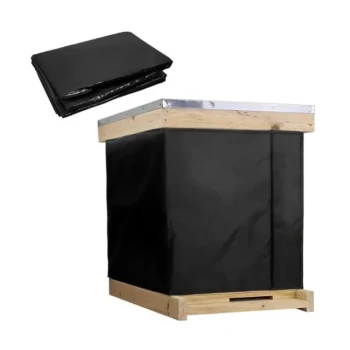
Reflective coatings on beehive exteriors function as a passive thermal shield. By utilizing professional light-colored materials, these coatings reflect a significant portion of incoming visible light and near-infrared radiation. This mechanism drastically reduces the amount of solar heat absorbed by the hive structure, keeping internal temperatures lower than those found in standard or dark-colored hives.
By rejecting solar radiation before it enters the hive, reflective coatings provide a physical cooling method that significantly reduces the colony's biological energy expenditure.
The Mechanism of Solar Rejection
Targeting the Full Spectrum
Effective thermal regulation requires more than just looking "white" to the human eye.
Professional reflective coatings are engineered to have high reflectivity not just for visible light, but also for near-infrared radiation.
This ensures that a broader spectrum of solar energy is turned away from the hive surface.
Reducing Heat Absorption
The primary function of these coatings is to minimize the absorption of solar radiation.
When a hive absorbs less radiation, the exterior material remains cooler.
Consequently, less heat transfers through the hive walls into the living space of the colony.
Biological Impact on the Colony
Passive vs. Active Cooling
Honeybees typically expend significant energy to actively cool their hive through fanning and water evaporation.
Reflective coatings act as a physical cooling method that operates without any biological input.
Energy Conservation
Because the external heat load is reduced, the colony does not need to work as hard to maintain a livable temperature.
This allows the bees to perform temperature control without consuming additional energy.
Preserving this energy reduces stress on the bees and allows resources to be directed toward foraging and brood care.
Context and Comparative Performance
The Disadvantage of Dark Hives
Standard or dark-colored hives absorb high levels of solar radiation, acting as heat sinks.
This absorption drives up internal temperatures, increasing the risk of heat stress for the colony.
A Cost-Effective Solution
Reflective coatings offer a distinct advantage over dark hives by maintaining significantly lower internal temperatures.
The primary reference highlights this as a cost-effective material solution for managing environmental stress.
It is a one-time application that yields continuous benefits during hot weather.
Strategy for Hive Management
To effectively manage thermal stress in your apiary, consider the following applications based on your specific goals:
- If your primary focus is reducing heat stress: Apply professional light-colored coatings with high reflectivity to reject both visible and near-infrared radiation.
- If your primary focus is colony energy efficiency: Use reflective exteriors to provide passive cooling, freeing up the colony's energy for honey production and survival.
By modifying the hive exterior to reject solar heat, you provide a passive defense that supports colony health and operational efficiency.
Summary Table:
| Feature | Standard/Dark Hives | Reflective Coated Hives |
|---|---|---|
| Heat Mechanism | Absorbs solar radiation (Heat Sink) | Reflects Visible & Near-Infrared light |
| Internal Temperature | High (Risk of heat stress) | Significantly lower and stable |
| Colony Energy Use | High (Active fanning/evaporation) | Low (Energy conserved for foraging) |
| Cost-Efficiency | Higher long-term biological cost | One-time cost-effective application |
| Primary Benefit | Simple traditional aesthetic | Passive thermal shield and efficiency |
Elevate Your Apiary's Efficiency with HONESTBEE
At HONESTBEE, we specialize in supporting commercial apiaries and distributors with high-performance beekeeping solutions. Whether you need specialized machinery like hive-making and honey-filling machines or a full spectrum of beekeeping tools and consumables, our comprehensive wholesale offering is designed to scale your operations.
Protect your colonies and maximize honey production by integrating professional-grade equipment into your workflow. Contact us today to discuss how our specialized hardware and industrial supplies can bring lasting value to your beekeeping business!
References
- Ahmed Al-Gohary. Beekeepers' Adaptation to Climate Changes in Gharbia Governorate تکيف مربي نحل العسل مع التغيرات المناخية بمحافظة الغربية. DOI: 10.21608/sjas.2021.73807.1091
This article is also based on technical information from HonestBee Knowledge Base .
Related Products
- Telescopic Beehive Outer Cover Lid Roof with Galvanised Sheeting for Langstroth Hive and Beehive Outer Cover
- Inner Beehive Cover for Beekeeping Bee Hive Inner Cover
- Professional Insulated Winter Hive Wrap for Beekeeping
- Professional Insulated Plastic Bee Hives
- Wholesales Dadant Size Wooden Bee Hives for Beekeeping
People Also Ask
- What is a telescoping outer cover and what are its advantages? Maximize Hive Protection in Harsh Climates
- What is the function of an outer telescoping cover on a beehive? Ultimate Weather Protection for Your Colony
- What is the purpose of the outer telescoping cover in a beehive? The Key to Weatherproofing Your Hive
- What are the benefits of the telescoping outer cover? Essential Protection for Hive Health & Longevity
- How should a telescoping outer cover be removed? Expert Techniques for Smooth Beekeeping Operations