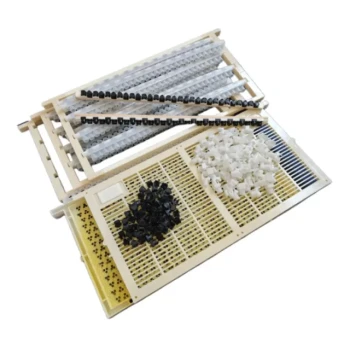
Specialized beekeeping management systems and isolation devices optimize pollination by strictly regulating the physical activity range and population density of commercial bee colonies. By mechanically and systemically limiting where and in what numbers commercial bees forage, these tools create a safeguarded buffer that allows native wild bees to access resources without being overrun by industrial hives.
The core function of these industrial-grade tools is to impose precise spatial and numerical limits on commercial colonies, effectively preventing the displacement of native species and ensuring the long-term stability of local pollination networks.
The Mechanics of Regulation
To understand how these systems prevent competitive exclusion, we must look at how they manipulate the two critical variables of foraging: space and numbers.
Controlling Foraging Ranges
Isolation devices act as physical or systemic boundaries that define the operational area of a commercial hive. By restricting the effective range of commercial bees, these devices prevent them from encroaching into sensitive ecological zones. This ensures that specific territories remain available exclusively for native wild bees.
Managing Population Densities
Management systems provide the data and control mechanisms necessary to cap the number of active foragers in a given sector. If the density of commercial bees becomes too high, they can strip an area of nectar and pollen in hours. Precision management limits the colony size per acre to sustainable levels.
Preventing Ecological Displacement
The goal of this technology is to stop "competitive exclusion"—a scenario where one species dominates resources so thoroughly that others cannot survive.
Mitigating Resource Monopoly
Commercial bee varieties are often aggressive, highly efficient foragers. Without intervention, they can monopolize food sources, leaving native pollinators to starve. Specialized equipment curbs this dominance by enforcing a fair distribution of resources.
Stabilizing Pollination Networks
A pollination network relies on biodiversity to remain resilient. If commercial bees drive wild bees to extinction, the network becomes fragile and prone to collapse. By using these tools to protect wild populations, operators ensure the ecosystem retains the redundancy and diversity needed to survive disease or climate shifts.
Understanding the Trade-offs
While these systems are essential for ecological balance, they introduce specific operational constraints that must be acknowledged.
Balancing Production Limitations
The primary trade-off is a potential cap on maximum honey production intensity. By limiting density and range to protect wild bees, operators may sacrifice the short-term volume of honey that could be extracted if the land were fully exploited by commercial hives.
Increased Operational Complexity
Moving from traditional beekeeping to precision-engineered management requires a shift in mindset. It demands rigorous monitoring of colony activity and strict adherence to density limits, rather than simply placing as many hives as physically possible.
Making the Right Choice for Your Goal
The implementation of these systems depends on balancing your agricultural output with your environmental responsibilities.
- If your primary focus is Ecological Conservation: Prioritize strict isolation devices to create definitive "no-fly zones" for commercial bees, ensuring wild pollinators have protected sanctuaries.
- If your primary focus is Sustainable Agriculture: Utilize density management systems to calculate the maximum number of commercial hives the land can support without collapsing the local wild bee population.
By integrating these precision tools, you transform beekeeping from a resource extraction industry into a sustainable stewardship practice.
Summary Table:
| Feature | Function in Pollination Optimization | Ecological Impact |
|---|---|---|
| Isolation Devices | Physical/Systemic boundary regulation | Prevents encroachment into sensitive native habitats |
| Density Management | Capping foragers per acre | Mitigates resource monopoly & prevents wild bee starvation |
| Spatial Controls | Defining operational foraging ranges | Maintains territory for native pollinator biodiversity |
| Precision Monitoring | Rigorous tracking of colony activity | Ensures long-term resilience of the local ecosystem |
Elevate Your Stewardship with HONESTBEE Precision Equipment
As a commercial apiary or distributor, your success depends on balancing high-yield production with ecological responsibility. HONESTBEE specializes in providing the comprehensive wholesale solutions needed to manage this delicate balance.
From industrial-grade hive-making and honey-filling machinery to a full spectrum of specialized beekeeping tools and consumables, we empower you to implement precision management systems that protect pollination networks while maximizing operational efficiency. Whether you are scaling an industrial honey production line or supplying local markets with premium hardware, HONESTBEE delivers the quality and reliability your business demands.
Ready to optimize your apiary operations? Contact HONESTBEE Today to explore our wholesale catalog and discover how our advanced equipment can drive your sustainable growth.
References
- Konstantinos Kougioumoutzis, Theodora Petanidou. Assessing Climate Change Impacts on Island Bees: The Aegean Archipelago. DOI: 10.3390/biology11040552
This article is also based on technical information from HonestBee Knowledge Base .
Related Products
- Queen Bee Artificial Insemination Instrument Equipment for Instrumental Insemination
- Metal Bee Hive Stand Bee Box Stand for Beekeeping
- Durable Galvanized Steel Frame Grip
- HONESTBEE Collapsible Tiered Bee Swarm Catcher for Beekeeping
- Multi-Functional Sliding Hive Entrance for Beekeeping
People Also Ask
- Why is maintaining sanitary conditions important during artificial insemination? Protect Your Queen from Fatal Infections
- Why are artificial insemination instruments critical in bee hybridization? Master Genetic Control & Pure Breeding
- What is the core value of bee artificial insemination instruments in breed improvement? Achieve Precise Genetic Control
- Why is professional bee artificial insemination equipment considered a core tool for genetic control in honeybee breeding? Ensure 100% Purity
- Why is high-purity CO2 used for queen bee artificial insemination? Unlock Precision Breeding & Faster Egg-Laying