Specialized honey dryers prevent the increase of hydroxymethylfurfural (HMF) by utilizing a dehydration process that operates either without heating or at strictly controlled low temperatures. By removing moisture rapidly under these conditions, the equipment circumvents the thermal decomposition of sugars that creates HMF, preserving the honey's chemical freshness.
Core Takeaway The critical function of a specialized dryer is to decouple moisture removal from high heat. By shortening the processing time and eliminating the high temperatures required by standard evaporation, these dryers prevent the chemical breakdown of honey sugars, ensuring HMF levels remain low and compliant with international standards.
The Mechanics of HMF Prevention
Decoupling Heat from Evaporation
Standard dehydration often relies on heat to evaporate water, but heat is the primary catalyst for HMF formation.
Specialized dryers differ by employing methods designed to remove moisture either completely without heat or with very low heating temperatures.
This approach ensures the honey is never subjected to the thermal stress that converts natural sugars into HMF byproducts.
The Importance of Processing Speed
Time is a critical variable in honey processing. Even at moderate temperatures, prolonged exposure can lead to a gradual rise in HMF.
Specialized dryers are engineered to remove moisture effectively in a short time.
By minimizing the duration of the drying cycle, these machines reduce the window of opportunity for chemical degradation to occur.
Why HMF Control Matters
The Indicator of Decomposition
HMF is not naturally present in fresh honey in significant amounts; it is a marker of decomposition.
It forms when honey has been subjected to excessive heat treatment, improper processing, or aging.
Controlling the drying process is the single most effective intervention to prevent this marker from spiking during production.
Meeting Quality Standards
HMF content is a vital quality control metric for purity and export compliance.
Levels exceeding 40 mg/kg typically indicate that the honey has reduced freshness or has undergone improper high-temperature treatment.
Using a specialized dryer is often necessary to keep HMF levels well below this threshold, ensuring the product is viable for international markets.
Understanding the Trade-offs
Prevention vs. Reversal
It is critical to understand that specialized dryers are preventative, not restorative.
While they prevent the increase of HMF during processing, they cannot remove HMF that has already formed due to prior mishandling or long-term storage of old honey.
If the raw honey is already old or thermally degraded, the dryer will simply preserve it in that state; it cannot improve the chemical age of the product.
Verification Requirements
Investing in a specialized dryer does not eliminate the need for rigorous testing.
Because HMF changes can be minute, relying on equipment settings alone is insufficient for quality assurance.
Precision lab instruments, such as UV-Visible spectrophotometers, are required to quantitatively analyze absorbance (typically at 284 nm and 336 nm) to confirm the dryer is performing correctly.
Making the Right Choice for Your Goal
How to Apply This to Your Project
Before selecting processing equipment or setting quality protocols, verify your objectives against the capabilities of your drying technology.
- If your primary focus is International Export: Ensure your drying equipment is calibrated for "low heat" or "no heat" operation to keep HMF consistently below the 40 mg/kg limit required by standards like the Codex Alimentarius.
- If your primary focus is Process Validation: Implement regular testing using a spectrophotometer or chromatograph to verify that your rapid drying cycles are not inadvertently raising HMF levels due to friction or latent heat.
Specialized drying technology is not just about removing water; it is about protecting the biological integrity of the honey from the irreversible chemistry of heat.
Summary Table:
| Feature | Specialized Honey Dryer | Standard Evaporator |
|---|---|---|
| Primary Mechanism | Low-heat or No-heat Dehydration | High-heat Evaporation |
| HMF Formation Risk | Minimal to None | High due to thermal stress |
| Processing Speed | Rapid moisture removal | Often prolonged |
| Impact on Quality | Preserves chemical integrity | Risk of nutrient degradation |
| Compliance | Ideal for Export (Codex standards) | Often exceeds HMF limits |
Elevate Your Honey Quality with HONESTBEE
Protect your harvest’s integrity and meet global export standards with HONESTBEE. As a premier partner for commercial apiaries and distributors, we offer a comprehensive wholesale range of professional equipment designed for excellence.
From low-temperature honey dryers and honey-filling machines to specialized hive-making machinery, our portfolio ensures your operations remain efficient and your products stay fresh.
Ready to scale your production? Contact us today to discover how our industrial solutions and honey-themed cultural merchandise can add value to your business.
Related Products
- 0.5T Capacity Honey Dehumidifier Dryer with Vacuum Heating and Thickening Filtering Machine
- High Quality Honey Dehumidifier Dryer Thickening Machine for Beekeeping
- Economy Small Scale Honey Dryer Dehumidifier Thickening Machine
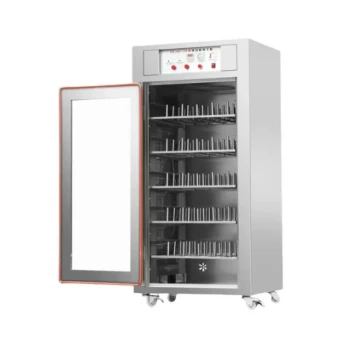
- HONESTBEE Professional Cabinet Bottle Dryer
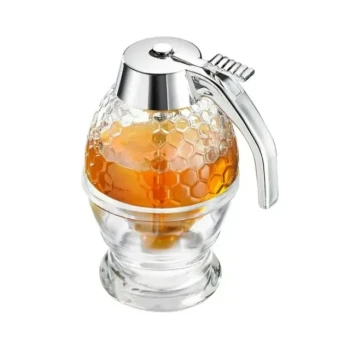
- Honeycomb Style Drip Free Honey Dispenser
People Also Ask
- What is the primary function of professional dehumidification equipment in honey processing? Stability & Quality
- How to dry up honey? The Safe Guide to Stabilizing Honey and Preventing Fermentation
- What is the process for using a dehumidifier to lower honey's moisture content? Expert Drying Techniques
- How to decrease moisture in honey? Prevent Fermentation and Ensure Long-Term Quality
- How to remove humidity from honey? Protect Your Harvest from Fermentation