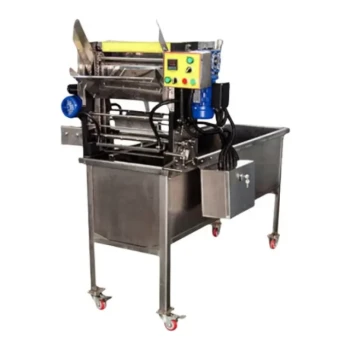
The primary function of industrial mechanical dehumidification equipment is the artificial dehydration of immature honey that has been harvested before the natural maturation process is complete. By utilizing physical methods to forcibly extract water, this equipment drastically reduces moisture content, typically bringing it down from a raw level of 80 percent to a shelf-stable range of 16 to 20 percent.
This technology effectively acts as a mechanical substitute for the biological work of bees, allowing producers to bypass natural hive evaporation to shorten production cycles and maximize yield.
The Mechanics of Artificial Dehydration
Rapid Moisture Reduction
Immature honey, often harvested at a stage closer to nectar, contains significantly higher water content than finished honey.
Mechanical dehumidifiers are engineered to bridge this gap aggressively. They reduce the moisture load from approximately 80 percent down to the industry standard of 16 to 20 percent, a process that would otherwise take bees days or weeks to accomplish through fanning and enzymatic activity.
Bypassing Biological Processes
In a traditional setting, bees perform "biological dehumidification." They manipulate the nectar and create air currents within the hive to evaporate water slowly.
Industrial equipment circumvents this entirely. By removing the honey early and dehydrating it artificially, the machinery decouples the production schedule from the natural pace of the hive, enabling a continuous, high-volume workflow.
Operational Efficiency and Standardization
Accelerating Production Cycles
The core value driver of this equipment is speed. By harvesting immature honey, producers do not have to wait for the bees to cap the honeycomb.
This allows for more frequent harvests within a single season. The equipment integrates into automated processing centers, ensuring that the dehydration step keeps pace with high-speed extraction and filtration systems.
Ensuring Consistency
Natural evaporation can be inconsistent depending on humidity and colony health. Mechanical dehydration provides precise control over the final moisture percentage.
This ensures the final product meets strict standardized criteria required for large-scale commercial distribution, preventing fermentation issues associated with high water content.
Understanding the Trade-offs
Impact on Nutritional Value
While efficient, this process forces a compromise between quantity and quality. The primary reference indicates that this method often comes at the expense of the natural biological activity of the honey.
The rapid, forcible removal of water can degrade sensitive enzymes and volatile compounds that are preserved during the slow, natural ripening process in the hive.
The "Immature" Distinction
It is critical to distinguish this process from simply filtering raw honey.
Dehumidifying immature honey transforms a product that is not yet chemically "honey" into a viscous sweetener. Consequently, while the yield increases, the product may lack the full nutritional profile and enzymatic complexity found in naturally matured, raw honey.
Strategic Considerations for Production
Deciding whether to utilize mechanical dehumidification depends heavily on your target market and volume requirements.
- If your primary focus is Mass Market Volume: This equipment is essential for maximizing yield and turnover speed by removing the bottleneck of natural hive maturation.
- If your primary focus is Boutique or Raw Quality: You should avoid artificial dehydration of immature honey to preserve the full enzymatic activity and nutritional integrity valued by high-end consumers.
Ultimately, while mechanical dehumidification solves the logistical challenge of moisture control, it fundamentally alters the biological character of the final product.
Summary Table:
| Feature | Biological Maturation (Bees) | Mechanical Dehumidification (Industrial) |
|---|---|---|
| Moisture Reduction | Natural evaporation & fanning | Forced physical dehydration |
| Processing Time | Days to weeks | Hours |
| Production Yield | Lower (limited by hive pace) | Higher (shorter harvest cycles) |
| Enzymatic Quality | High (fully preserved) | Lower (potential degradation) |
| Shelf Stability | Natural & consistent | Standardized at 16-20% |
| Best For | Boutique/Premium Raw Honey | Large-scale Mass Market Volume |
Scaling Your Apiary Operations with HONESTBEE
Are you looking to optimize your production efficiency and maximize commercial yields? HONESTBEE specializes in supporting commercial apiaries and distributors with high-performance beekeeping machinery and tools. Whether you need industrial-grade honey-filling machines, specialized hive-making equipment, or a reliable supply of industry consumables, we provide the comprehensive wholesale solutions your business requires to thrive.
From hardware to honey-themed cultural merchandise, our portfolio is designed to help you meet the demands of the global market. Contact HONESTBEE today to discuss how our equipment can streamline your operations and enhance your bottom line.
References
- Norberto L. García. The Current Situation on the International Honey Market. DOI: 10.1080/0005772x.2018.1483814
This article is also based on technical information from HonestBee Knowledge Base .
Related Products
- High Quality Honey Dehumidifier Dryer Thickening Machine for Beekeeping
- 0.5T Capacity Honey Dehumidifier Dryer with Vacuum Heating and Thickening Filtering Machine
- Honey Concentrating Vacuum Heating Thickening Machine Dehumidifier for Honey
- Honey Concentrating and Filtering Dehumidifier Machine 2T Capacity for Honey
- Economy Small Scale Honey Dryer Dehumidifier Thickening Machine
People Also Ask
- Can you dehumidify honey? A Beekeeper's Guide to Preventing Fermentation
- How to dry up honey? The Safe Guide to Stabilizing Honey and Preventing Fermentation
- How can the moisture content of honey be reduced? A Guide to Safe, Effective Drying Methods
- How to remove humidity from honey? Protect Your Harvest from Fermentation
- How to decrease moisture in honey? Prevent Fermentation and Ensure Long-Term Quality