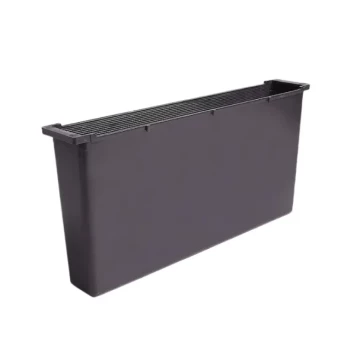
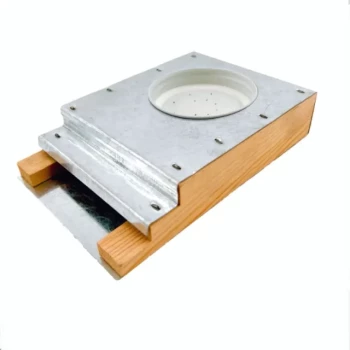
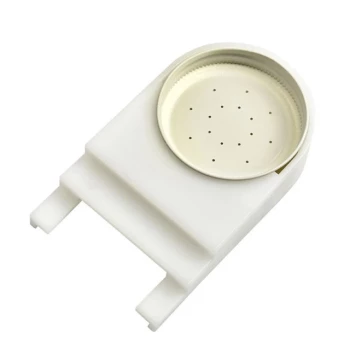
Specialized honeybee feeders function by utilizing precise dispensing ports to provide a continuous, controlled supply of sucrose syrup or nutrient solutions. These devices serve as a standardized interface that allows researchers to accurately quantify consumption by weighing the apparatus or measuring liquid levels on a daily basis.
By minimizing environmental variables like evaporation and contamination, these feeders transform simple feeding into a precise data collection method. This enables the calculation of average sugar consumption per individual, providing essential insights into how factors like pathogen infection impact host energy metabolism.
The Mechanics of Controlled Delivery
Precision Dispensing Ports
Most specialized feeders feature a cylindrical design equipped with specifically sized openings. These ports regulate the flow of liquid, ensuring it is accessible to the bees without flooding the enclosure.
Mimicking Natural Behavior
The design of the dispensing mechanism often attempts to mimic natural feeding habits. This ensures that the data collected reflects realistic foraging behaviors rather than artifacts caused by an unnatural feeding apparatus.
Continuous Supply
These devices provide a constant source of nutrition. This allows the colony to feed ad libitum (at liberty), which is essential for establishing a baseline of normal consumption against which experimental variables can be tested.
Quantifying Biological Impact
Accurate Daily Measurement
The primary utility of these feeders is the ability to easily weigh or measure volume changes. Because the system is contained, researchers can attribute the loss of mass directly to consumption rather than spillage.
Calculating Individual Intake
By tracking total colony consumption, researchers can calculate the average sugar consumption per bee. This metric is vital for normalizing data across colonies of slightly different sizes.
Evaluating Pathogen Stress
These measurements are frequently used to study host energy metabolism. For example, researchers use this data to determine if pathogen-infected bees consume more energy to fight infection or less due to lethargy.
Controlling Environmental Variables
Preventing Evaporation
A major trade-off in open-feeding experiments is the loss of liquid to the air. Specialized feeders use a closed system design to effectively prevent evaporation, ensuring that recorded volume changes represent actual ingestion.
Minimizing Contamination
Large, exposed liquid surfaces are prone to debris and biological waste. The restricted openings of specialized feeders prevent contamination, keeping the nutrient solution pure throughout the duration of the experiment.
Making the Right Choice for Your Goal
To maximize the value of your experimental data, consider the specific requirements of your research when selecting a feeder design.
- If your primary focus is metabolic research: Prioritize feeders with high-precision weighing capabilities to detect minute changes in energy intake related to immune response.
- If your primary focus is behavioral ecology: Ensure the feeder’s dispensing ports closely mimic local flora to maintain the validity of foraging behavior data.
Accurate measurement of energy intake is the foundational step in understanding the physiological cost of bee health and disease.
Summary Table:
| Feature | Function in Experiments | Research Benefit |
|---|---|---|
| Precision Ports | Controls syrup flow and accessibility | Prevents flooding and mimics natural feeding |
| Closed System | Eliminates evaporation and leakage | Ensures weight loss equals actual consumption |
| Ad Libitum Supply | Provides constant nutritional access | Establishes baselines for energy metabolism |
| Daily Monitoring | Quantitative weighing or volume measurement | Enables calculation of average intake per bee |
Elevate Your Apiary Operations with HONESTBEE
Are you looking to scale your research or optimize commercial honey production? HONESTBEE is your dedicated partner, providing professional-grade beekeeping equipment designed for precision and durability. From specialized honey-filling machines and hive-making hardware to a comprehensive range of beekeeping tools and consumables, we cater specifically to the needs of commercial apiaries and global distributors.
Whether you need robust machinery for high-volume processing or honey-themed cultural merchandise to expand your retail portfolio, our wholesale solutions deliver unmatched value and industry expertise.
Ready to upgrade your equipment? Contact us today to explore our full catalog and wholesale pricing!
References
- Régis Fontbonne, David G. Biron. Comparative susceptibility of three Western honeybee taxa to the microsporidian parasite Nosema ceranae. DOI: 10.1016/j.meegid.2013.04.016
This article is also based on technical information from HonestBee Knowledge Base .
Related Products
- HONESTBEE Professional Entrance Bee Feeder Hive Nutrition Solution
- HONESTBEE Entrance Bee Feeder Professional Hive Nutrition Solution for Beekeeping
- HONESTBEE Professional Hive Top Bee Feeder Feeding Solution
- Professional In-Hive Bee Feeder HONESTBEE Frame for Beekeeping
- HONESTBEE Round Hive Top Bee Feeder for Syrup
People Also Ask
- What types of bee feeders are available for beginners? Start with the Simple Entrance Feeder
- What are the advantages and disadvantages of using an entrance feeder for bees? Balance Convenience and Hive Security.
- How does a bee entrance feeder work? A Simple Guide to Convenient Hive Feeding
- What is a bee entrance feeder and what are its drawbacks? Essential Guide to Hive Security and Feeding Efficiency
- How to make an entrance feeder for bees? A DIY Guide for Safe & Effective Feeding