Standardized beehive systems provide the essential physical baseline for data accuracy by ensuring uniform dimensions and environmental constants. These systems, such as the Langstroth hive, offer fixed frame surface areas (approximately 1760 cm² per side) that allow researchers to apply precise mathematical formulas to estimate populations, such as 2430 adult bees per frame. By eliminating hardware-induced variables, these hives transform biological observation into quantifiable, reproducible science.
Core Takeaway: Standardized beehive hardware functions as a "control" in apiary research, allowing for the accurate calculation of colony dynamics, parasite rates, and yield forecasts. For distributors, providing precision-engineered, standardized equipment is the foundation for supporting both high-level research and commercial scaling.
The Mathematical Foundation of Population Estimation
Precision via Uniform Frame Dimensions
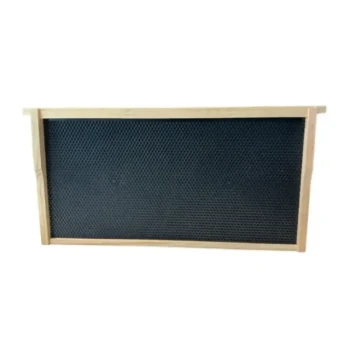
Standardized systems utilize identical frame sizes which provide a reliable physical constant for all measurements. When every frame in a study has a surface area of 1760 cm², researchers can accurately correlate the visible bee coverage with total population counts. This eliminates the guesswork associated with varying hive sizes and allows for a standardized "bees-per-cm²" metric.
Correlating Colony Dynamics and Health
Uniform hardware enables the accurate tracking of parasite infestation rates by providing a stable denominator for data sets. Because the internal volume is fixed, the density of bees and the spread of pathogens can be measured against a consistent baseline. This makes it possible to compare health data across different geographical regions and time periods.
Eliminating Non-Biological Variables
Standardized hive boxes ensure that entrance dimensions, internal volume, and thermal insulation properties remain identical across all experimental replicates. This consistency ensures that any observed differences in bee behavior or honey production are the result of biological or environmental factors, not the equipment itself. By removing mechanical errors, researchers can achieve a higher degree of data repeatability.
Enhancing Research Reproducibility and Scaling
Facilitating Mechanized Management
In commercial and research settings, standardized hives allow for the use of specialized machinery for honey extraction and colony movement. This uniformity supports rapid response times in data collection, as researchers can process large numbers of colonies using identical protocols. For wholesalers, this highlights the importance of a comprehensive product portfolio that meets these strict technical specifications.
Modular Design for Flexible Expansion
The use of standardized honey supers allows for the flexible expansion of storage space during nectar flows without disrupting the data baseline. This modularity ensures that productivity modeling remains accurate even as colonies grow. It provides a stable physical infrastructure for calculating yield per colony, which is essential for agricultural policy and forecasting.
Neutralizing Geographical and Genetic Variations
Standardized hives provide a uniform microclimate that helps isolate genetic traits from environmental adaptations. When colonies of different subspecies are housed in identical hardware, observed reproductive traits—such as pheromone ratios or ovary development—accurately reflect genetic characteristics. This level of control is vital for large-scale genetic assessments and breeding programs.
Understanding the Trade-offs and Technical Challenges
The Risks of Manufacturing Deviations
Even "standardized" designs can suffer from slight variations in manufacturing tolerances, which can compromise research data. If a hive body is off by even a few millimeters, it can alter the "bee space," leading to irregular comb building and skewed population estimates. This is why deep professional industry expertise is required when sourcing equipment for high-stakes research.
Material Consistency and Thermal Data
Variations in wood density or plastic composition can affect the internal thermal insulation of the hive. While the dimensions may be standard, the material properties can introduce hidden variables in overwintering studies or activity frequency tracking. Distributors must prioritize premium trading services that guarantee material consistency across large-scale orders.
Maintenance and Wear Over Time
Standardized systems require consistent maintenance to ensure they remain within the necessary technical tolerances. Warping or wear can change the internal dimensions, potentially introducing the very mechanical errors that standardization is meant to prevent. Providing dedicated customer service and guidance on equipment upkeep is essential for maintaining the integrity of long-term studies.
How to Apply This to Your Distribution Strategy
To effectively support the needs of researchers and large-scale commercial apiaries, distributors should focus on technical precision and supply chain reliability.
- If your primary focus is supporting apiary research: Prioritize sourcing hives with the strictest manufacturing tolerances to ensure data repeatability for your clients.
- If your primary focus is large-scale commercial productivity: Emphasize a full-spectrum product portfolio that includes modular components for mechanized management and expansion.
- If your primary focus is regional agricultural forecasting: Offer standardized systems that align with international benchmarks (like Langstroth) to ensure your clients' data is compatible with global models.
- If your primary focus is rapid market entry: Leverage ultra-fast delivery and efficient fulfillment to provide researchers with the identical equipment they need exactly when the nectar flow begins.
By providing precision-engineered standardized systems, you empower your clients to move beyond anecdotal observations into the realm of high-accuracy, data-driven apiculture.
Summary Table:
| Feature | Research Benefit | Commercial Value |
|---|---|---|
| Uniform Frame Size | Precise population estimation via math formulas | High-level data repeatability |
| Fixed Internal Volume | Stable baseline for parasite/pathogen tracking | Reliable regional comparisons |
| Modular Design | Flexible expansion without disrupting data | Efficient mechanized management |
| Strict Tolerances | Eliminates hardware-induced biological variables | Foundation for professional scaling |
Partner with HONESTBEE for Precision-Engineered Apiary Solutions
To support high-stakes research and commercial productivity, you need a partner that understands the value of technical precision. HONESTBEE provides a comprehensive one-stop sourcing experience for distributors and commercial apiaries worldwide. From specialized hive-making and honey-filling machinery to a full spectrum of beekeeping tools and essential consumables, our portfolio is designed to meet the strictest industry standards.
Why choose HONESTBEE?
- Deep Industry Expertise: We supply precision-engineered equipment that ensures data accuracy.
- Comprehensive Portfolio: Full-spectrum products, including honey-themed cultural merchandise.
- Rapid Fulfillment: Ultra-fast delivery and efficient order processing to meet seasonal flows.
- Premium Service: Dedicated support with OEM/ODM capabilities to enhance your profit margins.
Ready to elevate your wholesale offering? Contact us today to discuss your bulk requirements and custom solutions!
References
- Carlos Aurelio Medina-Flores, Luis Alaníz Gutiérrez. Population Dynamics of the Mite Varroa destructor in Honey Bee (Apis mellifera) Colonies in a Temperate Semi-Arid Climate. DOI: 10.3390/insects15090696
This article is also based on technical information from HonestBee Knowledge Base .
Related Products
- Stainless Steel Round Beehive Air Vents for Ventilation
- High Security Emlock Strap System
- Modern Flat-Mount Hive Number Set for Beekeeping
- Professional Large-Format Hive Number Set for Beekeeping
- Durable Plastic Interlocking Hive Connector for Beekeeping
People Also Ask
- How does ventilation affect colony health, and how should it be managed seasonally? A Guide to Preventing Moisture & Overheating
- Why is proper ventilation important in a beehive? Prevent Mold, Regulate Temperature, and Boost Colony Health
- How can a beekeeper provide proper ventilation for a beehive throughout the year? Seasonal Strategies for Bee Health
- Why is good ventilation crucial when transporting beehives? Protect Your Colony from Lethal Overheating
- How can ventilation be added to a beehive without using an inner cover? Simple, Effective Solutions for Healthy Hives