Standardized packaging and professional sealing are the primary catalysts that transform bee products from raw agricultural commodities into tradable consumer goods. By adopting these technologies, producers bridge the gap between informal roadside sales and high-value formal markets, effectively unlocking access to supermarkets, regional retail chains, and international export channels.
The Core Insight High-quality honey and pollen are unmarketable in formal channels without rigorous standardization. Packaging and sealing equipment provide the technical compliance and preservation necessary to meet food safety regulations, allowing producers to shift from low-volume local sales to premium, wide-scale commercial distribution.
Overcoming Regulatory and Technical Barriers
Market access is rarely about the quality of the raw honey alone; it is about the ability to prove safety and consistency.
Meeting Food and Drug Safety Standards
Formal retail channels, such as supermarkets and export partners, enforce strict regulatory requirements. Standardized packaging ensures that bee products comply with these food and drug safety mandates. This compliance is a non-negotiable prerequisite for obtaining the necessary market labels and certifications required for legal retail entry.
Ensuring Hygiene and Precision
Manual filling often introduces variability and contamination risks. Professional equipment ensures honey is dispensed in a sterile environment with precise volumetric measurement. This hygienic consistency transforms bulk honey into a retail-ready product that retailers trust to place on their shelves.
Preservation: The Key to Extended Distribution
To sell products beyond a local village, they must survive storage and transport without degrading.
Preventing Spoilage and Fermentation
Honey is hygroscopic, meaning it absorbs moisture from the air, which leads to fermentation and spoilage. Automated sealing equipment ensures airtight encapsulation. This barrier prevents moisture ingress, significantly extending shelf life and ensuring the product remains stable during long-distance transport.
Managing Crystallization and Oxidation
High-quality packaging acts as a critical barrier against oxidation. By maintaining an optimal internal environment, standardized materials delay natural crystallization and preserve the visual appeal of the honey. This stability allows the product to sit on retail shelves for longer periods without appearing "spoiled" to uneducated consumers.
specialized Protection for Bee Pollen
Bee pollen requires even stricter environmental controls than honey due to its high susceptibility to mold. Advanced sealing equipment, often utilizing vacuum or nitrogen-flushing processes, creates a dry micro-environment. This locks in nutritional components and prevents the oxidation of active ingredients, making the pollen viable for health-conscious commercial markets.
Commercial Scaling and Brand Value
Standardization affects the economic viability of the beekeeping enterprise.
Transitioning to Commercial Enterprise
Adopting industrial-grade packaging facilitates the shift from small-scale workshops to commercial enterprises. It allows producers to move away from informal, low-income sales models. Instead, they can diversify income streams by entering inter-regional trade networks that demand uniform product specifications.
Competing with Premium and Imported Goods
Professional presentation allows local bee products to compete directly with imported goods. By matching the external quality and "shelf presence" of established brands, producers can justify premium market pricing. This added value turns a basic agricultural output into a branded commodity.
Understanding the Trade-offs
While standardization is essential for growth, it introduces specific challenges that producers must manage.
Capital Investment vs. Market Volume
Implementing professional filling and sealing lines requires significant upfront capital. For very small hobbyists, this cost may outweigh the benefits of entering formal markets. This equipment is best utilized when production volume is high enough to justify the move from manual to automated processes.
Loss of Artisanal Perception
Highly standardized, industrial-looking packaging can sometimes alienate customers looking for "farm-fresh" or rustic products. Producers must balance the need for regulatory compliance with design choices that allow the product to retain its local, authentic identity.
Making the Right Choice for Your Goals
Your investment in packaging technology should align with your specific market targets.
- If your primary focus is Local Markets: Prioritize basic hygiene and airtight sealing to prevent spoilage, but maintain simple packaging that emphasizes local authenticity.
- If your primary focus is Retail Supermarkets: Invest in precise volumetric filling and standardized labeling equipment to ensure strict compliance with weights and measures regulations.
- If your primary focus is Export/International Trade: You must utilize advanced vacuum or nitrogen sealing technologies to maximize shelf life and prevent moisture-related degradation during shipping.
Standardized packaging is not merely a container; it is the passport that allows bee products to cross the border from the farm to the global economy.
Summary Table:
| Feature | Impact on Market Access | Key Technology/Equipment |
|---|---|---|
| Regulatory Compliance | Meets food safety & certification standards for retail | Automated filling & labeling systems |
| Shelf Life | Prevents fermentation, moisture ingress, & oxidation | Airtight sealing & nitrogen flushing |
| Product Integrity | Ensures precise weight & sterile environment | Volumetric filling & vacuum sealers |
| Brand Value | Enhances shelf presence to compete with imports | Professional bottle/jar materials |
| Distribution | Enables long-distance transport & regional trade | Industrial-grade capping & sealing lines |
Scale Your Honey Business with HONESTBEE
Transform your raw honey from a basic commodity into a premium retail brand. HONESTBEE empowers commercial apiaries and distributors with the high-performance machinery needed to conquer global markets. From specialized honey-filling and hive-making machines to a comprehensive range of beekeeping tools and industry consumables, we provide the hardware and support required for industrial-grade success.
Ready to elevate your production and secure your place on supermarket shelves? Contact HONESTBEE today to discuss our wholesale solutions and customized equipment packages.
References
- Emmanuel Bintaayi Jeil, Alexander Yao Segbefia. Challenges to sustaining beekeeping livelihoods in Ghana. DOI: 10.1007/s10708-020-10293-2
This article is also based on technical information from HonestBee Knowledge Base .
Related Products
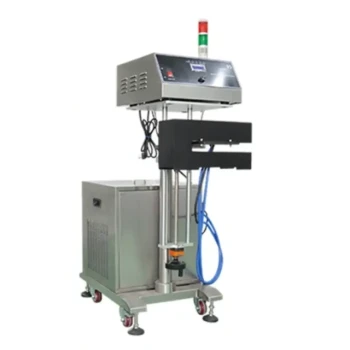
- Professional Water Cooled Induction Sealing Machine for Bottles and Containers
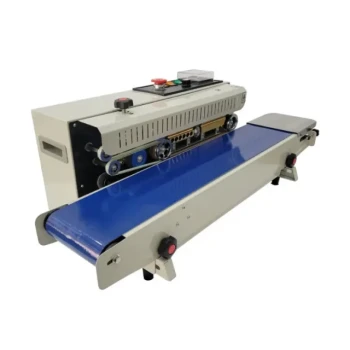
- Automatic Continuous Heat Sealing Machine
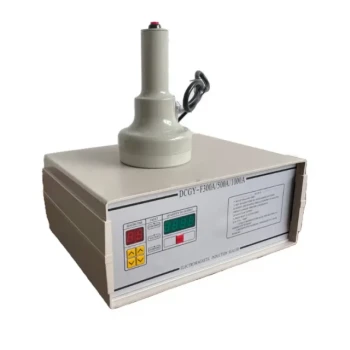
- Handheld Induction Sealing Machine for Tamper Evident Packaging
- Precision Automated Packaging Turntable Honey Spoon Filling Sealing Packing Machine
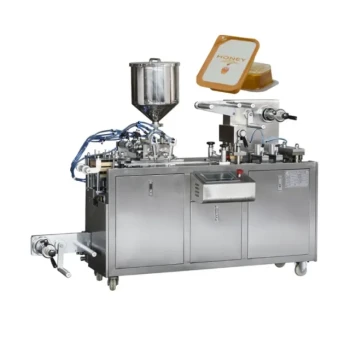
- Professional Durable Customizable Blister Packing Machine
People Also Ask
- How does tamper-evident sealing equipment benefit the honey trade? Ensure Product Integrity and Market Trust
- What is the function of an induction sealing machine in packaging? Secure Your Brand with Tamper-Evident Seals
- How does an induction sealing machine work? Enhance Honey Packaging with Hermetic Seals & Tamper Evidence
- What is an induction sealing machine and how does it work? Achieve Airtight, Tamper-Evident Seals
- How does the induction sealing process work? Create Tamper-Evident, Airtight Seals for Your Products