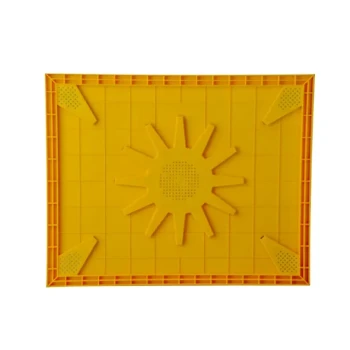
Sticky boards and miticide strips function as a coordinated active detection system. The miticide strips act as the catalyst, chemically forcing Varroa mites to detach from their host bees. The sticky board acts as the capture mechanism, immobilizing the fallen mites to provide an accurate, quantifiable dataset of the infestation level.
Core Insight While sticky boards can passively monitor natural mite death, adding miticide strips transforms the setup into a diagnostic tool for total infestation severity. This combination forces a rapid "mite drop" over a short window (typically 24 hours), exposing the hidden population that natural monitoring might miss.
The Mechanics of Active Diagnosis
The Chemical Trigger (Miticide Strips)
The process begins with the introduction of miticide strips into the hive. These strips typically contain active ingredients, such as synthetic pyrethroids.
Rather than waiting for mites to die naturally, these agents actively irritate or paralyze the parasites. This chemical reaction causes the mites to lose their grip and detach from the bees' bodies immediately.
The Physical Trap (Sticky Boards)
Once dislodged, the mites fall toward the bottom of the hive where the sticky board is positioned. This board provides a physical adhesive force that is crucial for data integrity.
Without the adhesive layer, fallen mites could be blown away by hive ventilation, removed by hygiene-conscious bees, or crawl back up to re-parasitize the colony. The sticky surface ensures that every dislodged mite is permanently immobilized in the collection area.
Visual Quantification
To convert this biological debris into usable data, industrial-grade sticky boards often feature a high-contrast grid design (typically black and white).
This grid allows technicians to systematically count the fallen mites without confusion. By tallying the total "drop" within a set timeframe, beekeepers can mathematically estimate the total parasite load of the colony.
Understanding the Methodological Trade-offs
Active vs. Passive Monitoring
It is critical to distinguish between using a sticky board alone versus pairing it with a strip.
Passive Monitoring (Board Only): This measures "natural mite fall." It is non-invasive and good for long-term trending, but it relies on the natural death rate of mites, which can be low even in infected hives.
Active Monitoring (Board + Strip): This measures "accelerated fall." By forcing mites to drop, you get a more immediate and severe picture of the infestation. However, this method introduces chemicals into the hive, which constitutes an intervention rather than simple observation.
Accuracy Factors
The combination is highly effective, but accuracy depends on the board's placement.
If using a screened bottom board, the sticky board must be placed beneath the mesh. This prevents bees from walking on the adhesive while ensuring mites fall through the screen onto the trap, preventing them from crawling back into the hive.
Making the Right Choice for Your Goal
This combination is a powerful diagnostic tool, but its use depends on your specific data requirements.
- If your primary focus is routine surveillance: Use sticky boards alone to track natural mite drop trends without introducing chemicals.
- If your primary focus is acute diagnosis: Use miticide strips in conjunction with sticky boards to force a drop and calculate the total infestation severity over a 24-hour period.
- If your primary focus is treatment validation: Use the combination after a treatment cycle to verify that mite population levels have actually decreased.
By pairing the provoking action of the strip with the retention capability of the board, you convert invisible pests into visible, actionable data.
Summary Table:
| Feature | Passive Monitoring (Board Only) | Active Diagnosis (Board + Strip) |
|---|---|---|
| Mechanism | Natural mite death and gravity | Chemical detachment + physical capture |
| Speed | Long-term trending (several days) | Rapid results (typically 24 hours) |
| Accuracy | Baseline data only | High-precision total parasite load |
| Intervention | Non-invasive | Chemical intervention required |
| Best Use Case | Routine surveillance | Acute diagnosis & treatment validation |
Maximize Your Apiary Health with HONESTBEE Precision Tools
Accurate Varroa mite assessment is the first step toward a healthy harvest. At HONESTBEE, we specialize in supporting commercial apiaries and distributors with a comprehensive range of professional beekeeping machinery and essential supplies. Whether you need high-contrast sticky boards for precise diagnostics or industrial-grade hive-making and honey-filling machines, our portfolio is designed to enhance your operational efficiency.
Why partner with HONESTBEE?
- Wholesale Excellence: Full spectrum of beekeeping tools and industry consumables.
- Industrial Solutions: Specialized hardware to scale your production.
- Market Variety: From hardware to honey-themed cultural merchandise.
Don't leave your hive health to chance. Contact us today to discover how our wholesale offerings can strengthen your beekeeping business!
References
- Mark Goodwin. Introduction and spread of varroa in New Zealand. DOI: 10.1080/0005772x.2004.11099614
This article is also based on technical information from HonestBee Knowledge Base .
Related Products
- Langstroth Solid Bottom Board for Beekeeping
- Solid Bottom Board Australian Pine Wood Langstroth Bottom Board for Wholesale
- HONESTBEE Multi Exit Plastic Bee Escape Board for Efficient Honey Harvesting
- Langstroth Screen Bottom Board for Beekeeping Wholesale
- Australian Pine Wood Langstroth Screen Bottom Board for Wholesale
People Also Ask
- What are the functions of solid bottom boards for a beehive? Essential Thermal Protection and Winter Survival Tips
- What is the purpose of a solid bottom board for bee hives? Enhance Hive Health and Winter Survival
- How does climate influence the choice between a solid and screened bottom board? Optimize Your Hive for Local Weather
- What is the primary function of a bottom board in a modern modified beehive system? Essential Foundation Guide
- What are the characteristics of a solid bottom board for a beehive? Boost Colony Health and Thermal Insulation