The comparison between Crush & Strain, Centrifugal, and Flow Hive extraction methods hinges primarily on the trade-off between upfront investment, labor intensity, and equipment preservation. While all three methods result in high-quality honey, they offer vastly different experiences regarding speed, cost, and how the honeycomb frames are treated.
All three methods produce excellent honey, so the decision should not be based on the final product quality. Instead, your choice must balance your budget against your desire for convenience and your long-term goals for hive productivity.
Operational Cost and Investment
The Budget-Friendly Option
Crush & Strain is the low-cost leader. It requires minimal equipment—often just a mashing tool, a filtration medium (like cheesecloth), and a bucket.
It removes the barrier to entry, making it highly accessible for beginners who are not ready to invest in specialized machinery.
The Investment for Efficiency
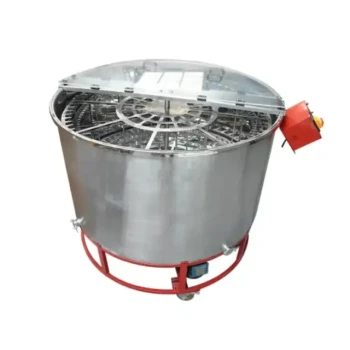
Centrifugal extraction involves a medium to high initial cost. You must purchase a honey extractor (manual or electric) and often an uncapping knife or tool.
This investment is standard for serious beekeepers because the machinery is usually made of durable, food-grade stainless steel designed to last for many seasons.
The Premium Solution
Flow Hive represents the high-cost option. This system utilizes proprietary frame technology that allows for unique extraction mechanisms.
It is designed specifically for hobbyists willing to pay a premium for the highest level of convenience.
Speed and Ease of Use
Manual vs. Mechanical
Crush & Strain is a slow process that is only moderately easy to perform. It relies on gravity to drain honey through a filter, which can take hours and is influenced by ambient temperature.
Centrifugal extraction is fast and generally easy. The mechanical rotation generates force to separate honey quickly, significantly speeding up the process compared to gravity alone.
The "Instant" Option
Flow Hive is rated as "very easy" and offers instant extraction. It eliminates the traditional processing steps entirely, allowing honey to flow directly from the hive without removing frames.
Impact on Hive Resources (Frame Reuse)
The Cost of Wax Destruction
A critical distinction is the fate of the honeycomb. In the Crush & Strain method, the wax frames are destroyed during the mashing process.
This means the frames are not reusable. The bees must consume significant energy and resources to rebuild the wax comb from scratch the following season.
Preserving the Comb
Both Centrifugal and Flow Hive methods allow for frame reuse. The centrifugal force spins honey out without destroying the wax structure.
Because the physical structure of the comb remains intact, it can be returned to the hive. This allows bees to focus their energy on honey production rather than wax secretion, potentially increasing future yields.
Understanding the Trade-offs
The "Wax Tax" vs. Cash
With Crush & Strain, you save money upfront but "tax" your bees' energy reserves because they must rebuild the comb every time. This is acceptable for small harvests but inefficient for larger operations.
Scalability Limits
While Flow Hive and Crush & Strain are excellent for hobbyists, they have scalability limits. The primary reference notes that the Centrifugal method is the only one explicitly suitable for "all levels" of beekeepers, from hobbyist to commercial.
If you plan to expand your apiary significantly, the speed and frame preservation of a centrifugal extractor eventually become a necessity rather than a luxury.
Making the Right Choice for Your Goal
To select the best method, you must identify your primary constraint: budget, time, or volume.
- If your primary focus is minimal upfront cost: Choose the Crush & Strain method, as it requires almost no capital investment despite the extra labor.
- If your primary focus is maximum yield and scalability: Choose the Centrifugal method, as it preserves drawn comb and allows bees to produce more honey in subsequent cycles.
- If your primary focus is convenience and ease: Choose the Flow Hive, as it offers the simplest, most instant extraction process for those with a higher budget.
Ultimately, if you are unsure of your long-term commitment, start with the low-cost method; if you are building an apiary for the long haul, invest in the efficiency of centrifugal extraction.
Summary Table:
| Feature | Crush & Strain | Centrifugal Extraction | Flow Hive |
|---|---|---|---|
| Initial Investment | Low (Budget-friendly) | Medium to High | Premium (High) |
| Speed | Slow (Gravity-based) | Fast (Mechanical) | Instant |
| Ease of Use | Moderate | Easy | Very Easy |
| Frame Reuse | No (Wax destroyed) | Yes (Wax preserved) | Yes (Proprietary) |
| Scalability | Hobbyist only | Hobbyist to Commercial | Hobbyist focus |
Maximize Your Honey Production with HONESTBEE
Whether you are scaling a commercial apiary or supplying the next generation of beekeepers, HONESTBEE provides the professional-grade tools you need to succeed. From high-efficiency centrifugal honey extractors and honey-filling machines to durable hive-making hardware and essential consumables, our comprehensive wholesale portfolio is designed for distributors and large-scale operations.
Ready to upgrade your efficiency and boost your yields? Contact HONESTBEE today for specialized machinery and wholesale beekeeping supplies!
Related Products
- Honey Gate Valve with Ergonomic Ball Handle Plastic Bee Honey Tap for Beekeeping Bottling and Honey Extractor Equipment
- Plastic Hand Crank 2 Frame Honey Extractor Low Price
- Stainless Steel Manual 8 Frame Radial Honey Extractor Machine for Beehives
- Commercial 48-Frame Stainless Steel Honey Extractor
- electric honey extractor honey centrifuge 3 frame honey extractor stainless steel honey frame extractor
People Also Ask
- How is the flow of honey controlled using a honey gate valve? Master Precise Bottling and Extraction Techniques
- How do you adjust the flow of honey using a honey gate valve? Master Precision Control for Your Bottling Line
- What is the function of the honey gate on the honey press? Master Clean and Precise Bottling Controls
- What is a honey gate and what is its purpose? Master Precision Bottling and Waste Reduction
- Under what conditions should the honey gate be closed? Prevent Messy Spills and Ensure Extraction Efficiency