Caste-specific dimensions determine equipment compatibility. Worker bees occupy standard horizontal hexagonal cells and mature in 21 days, while drones require larger cells and mature in 24 days. Queens develop fastest, emerging after 16 days from large, vertically oriented, acorn- or peanut-shaped queen cells. These differences directly influence queen excluder spacing, cell cup geometry, foundation sizing, frame design, grafting tools, and hive-management hardware.
The right equipment must match both the bee’s body size and the structure in which each caste develops. Standardized hardware supports reliable colony management, but professional suppliers must account for species, subspecies, ecotype, and intended brood type before selecting dimensions.
Why Caste Differences Matter to Equipment Design
Worker Bees Set the Standard Hive Geometry
Workers are the smallest adult caste and perform most construction, nursing, foraging, and honey-storage tasks. Their brood develops in regular horizontal hexagonal cells, which form the basis of standard worker foundation, frames, and most movable-frame hive systems.
This makes worker-sized comb the default for commercial hive equipment. Frame spacing, foundation embossing, and brood-chamber dimensions should encourage workers to build consistent comb without creating excessive gaps or irregular cell construction.
Drones Require Larger Cell Volume
Drones have broader bodies and larger thoraxes than workers. Their brood develops in larger cells over approximately 24 days, so drone comb requires greater cell volume and must be accommodated intentionally in foundation and frame systems.
Equipment designed for drone production may use drone-sized foundation or allow colonies to draw larger natural cells. This can be useful for breeding programs, mating management, and planned varroa control, but it should not be introduced accidentally into areas intended for worker brood or honey storage.
Queens Develop in Specialized Vertical Cells
Queens are the largest caste and develop in large, vertically hanging cells that project from the comb. Their 16-day development period is shorter than that of workers and drones, and their differentiation depends on both cell structure and intensive royal-jelly provisioning.
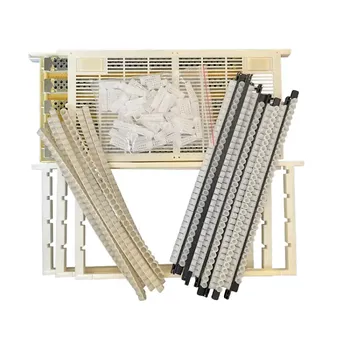
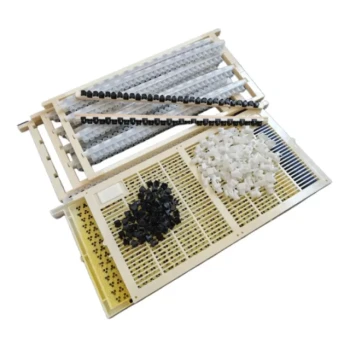
Commercial queen-rearing equipment therefore uses artificial cell cups, grafting frames, cell bars, and vertical suspension systems. The equipment must give nurse bees access to the larva while preserving the orientation and volume needed for normal queen development.
How Body Size Influences Hive Hardware
Queen Excluders Depend on Calibrated Spacing
A queen excluder uses narrow, accurately spaced openings that allow worker bees to move between the brood chamber and honey supers while restricting the larger queen. Because drones are also larger than workers, standard excluders generally restrict drone movement as well.
The spacing must be consistent across the entire grid. Openings that are too narrow can impede workers, while openings that are too wide may allow the queen to enter honey supers and undermine brood-location control.
Frame Spacers Must Preserve Functional Clearance
Frame spacers and hive dimensions must provide enough room for bees to move, build comb, and maintain brood temperature. Incorrect spacing can cause burr comb, brace comb, crushed bees, or irregular cell construction.
For distributors and equipment manufacturers, dimensional consistency is especially important. Frames, boxes, foundation sheets, and excluders should be treated as a compatible system rather than selected as isolated products.
Pollen Traps and Other Collection Devices Need Worker Access
Workers carry pollen using specialized structures on their hind legs, making worker passage and body clearance central to pollen-trap design. A trap that is too restrictive can obstruct normal traffic, increase congestion, or interfere with colony productivity.
Collection equipment should therefore be matched to the target bee population and installed with attention to traffic volume, ventilation, and colony strength.
How Cell Structure Influences Queen-Rearing Equipment
Artificial Cups Reproduce the Queen Cell Environment
Queen and worker larvae begin from identical fertilized eggs. Queen development is produced by placing a young worker larva in a vertically suspended queen cell and providing abundant royal jelly.
Artificial cell cups imitate the size, shape, and orientation of natural queen cells. Cell cups that are poorly dimensioned, incorrectly positioned, or unstable can reduce acceptance and interfere with nurse-bee care.
Grafting Frames Enable Controlled Production
Grafting frames hold cell cups in a stable arrangement and allow breeders to transfer selected young larvae into queen-rearing colonies. Their spacing must provide sufficient room for cell enlargement and nurse-bee access.
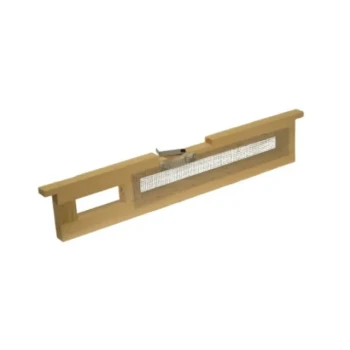
A complete queen-rearing system typically includes compatible cell cups, bars or frames, grafting tools, and mating nuclei. Supplying these components together gives commercial customers a more dependable procurement option than mixing incompatible parts from different specifications.
Mating Nuclei Must Support the Mature Queen
After emergence, a queen requires a controlled environment for orientation and mating. Mating nuclei must provide appropriate space, worker support, food reserves, and access to drones while preventing overcrowding.
Because queens mate with multiple drones in open air, mating equipment cannot guarantee complete genetic control by itself. Breeders seeking tighter genetic management may need planned drone populations, isolated mating locations, or instrumental insemination systems in addition to standard queen-rearing hardware.
Why Foundation and Hive Dimensions Require Local Matching
Bee Populations Do Not Share Identical Cell Sizes
Honeybee species and ecotypes can construct different cell dimensions. For example, the supplementary reference identifies approximate cell sizes of 4.8 mm in some hill varieties of Apis cerana and 4.15 mm in smaller plains varieties.
These differences matter when selecting foundation embossing machinery, foundation sheets, frames, and hive-making equipment. A specification suitable for one population may encourage poor comb construction or inefficient use of hive space in another.
Species and Ecotype Affect Hive Retention
Apis mellifera is widely managed in standardized frame hives and often supports high-volume extraction systems. Apis cerana and other cavity-nesting populations may require more precisely dimensioned hive bodies to reduce stress and discourage absconding.
The equipment decision must therefore include species and local ecotype, not only the general label “honeybee.” This is a key requirement for wholesalers and resellers serving multiple geographic markets.
Foundation Accuracy Supports Comb Quality
Precisely embossed foundation guides workers toward uniform cell construction. This improves frame interchangeability, brood inspection, honey storage, and extraction efficiency.
Machinery should be evaluated for dimensional accuracy, repeatability, material compatibility, and the ability to produce the cell sizes required by the target bee population.
How Management Equipment Should Reflect Caste Behavior
Brood Management Requires Caste Separation
Queen excluders help keep the queen in the brood chamber, allowing honey supers to remain largely free of brood. Frame layouts and brood-box equipment should support this separation without restricting normal worker movement.
Drone management may require separate decisions because drones are larger and are typically excluded by the same grid. Beekeepers should account for this when planning mating access and colony traffic.
Breeding Equipment Must Protect Genetic Objectives
Queen-rearing tools support the selection and propagation of desirable genetic lines. Mating nuclei, drone-management equipment, and carefully selected breeder colonies help commercial operations manage queen quality and maintain population vitality.
However, equipment alone does not determine genetic outcomes. Breeding schedules, mating locations, drone availability, and stock selection remain equally important.
Hive Tools and Protective Gear Must Match Temperament
Italian bees are often valued for docility and honey production, while some hardier or more defensive stocks demand more cautious handling. Protective clothing, hive tools, and inspection equipment should reflect the temperament and seasonal behavior of the customer’s bee stock.
For B2B suppliers, this means a full equipment portfolio should include both production hardware and operational safety products. A one-stop offering reduces procurement delays when customers are managing different races or expanding apiary capacity.
Understanding the Trade-offs
Standardization Improves Availability but Reduces Flexibility
Standard frames, boxes, excluders, and extraction machinery simplify purchasing, replacement, training, and fulfillment. They are particularly effective for large Apis mellifera operations built around high-volume production.
The limitation is that standardized dimensions may not suit every species, ecotype, or management objective. Suppliers should make compatibility information explicit rather than treating one specification as universally appropriate.
Tighter Excluders Improve Control but Can Restrict Traffic
A correctly calibrated excluder improves brood and honey separation. An inaccurate or overly restrictive grid can slow worker movement, create congestion, and reduce colony efficiency.
Product quality depends on dimensional precision, smooth construction, and compatibility with the target bee population. Excluders should be selected as functional management devices, not merely as generic hive accessories.
Drone Foundation Supports Planning but Changes Colony Balance
Drone-sized foundation can support breeding programs or deliberate drone management. However, providing too much drone comb may shift colony resources toward drone production and reduce space available for worker brood or honey storage.
The correct proportion depends on the beekeeper’s objective, colony strength, and seasonal conditions. Resellers should offer drone equipment with clear use-case guidance.
Queen-Rearing Kits Improve Scale but Require Skilled Handling
Artificial cups and grafting frames make queen production more repeatable and scalable. They do not remove the need for accurate larval selection, proper orientation, strong nurse colonies, and careful timing.
A premium supplier should support the hardware with reliable specifications, responsive service, and practical technical guidance. Fast fulfillment is valuable only when the delivered components are dimensionally compatible and ready for the intended production schedule.
Making the Right Choice for Your Goal
Equipment selection should begin with the target caste, bee population, production objective, and required operating scale.
- If your primary focus is queen production: Select vertically oriented artificial cell cups, stable grafting frames, grafting tools, and mating nuclei designed to support royal-jelly provisioning and controlled queen development.
- If your primary focus is honey production: Prioritize worker-compatible foundation, standardized frames, accurately spaced queen excluders, and extraction equipment matched to the hive system and production volume.
- If your primary focus is drone management or breeding: Use appropriately sized drone comb and mating equipment while planning for the larger body dimensions and 24-day development period of drones.
- If your primary focus is serving multiple markets: Build a product portfolio covering species-specific foundation, frame dimensions, hive bodies, excluders, queen-rearing systems, protective gear, and replacement parts.
- If your primary focus is reliable procurement: Work with suppliers that provide precise specifications, rapid response, dedicated technical support, and coordinated fulfillment across compatible equipment categories.
Successful apiary equipment selection begins with matching every component to the biology, dimensions, and management purpose of the bees it will serve.
Summary Table:
| Aspect | Worker | Drone | Queen |
|---|---|---|---|
| Cell Size | Small | Larger | Largest |
| Cell Shape | Horizontal hexagonal | Horizontal hexagonal | Vertical peanut-shaped |
| Development Time | 21 days | 24 days | 16 days |
| Equipment Implication | Standard foundation, frames, excluders | Drone foundation, larger clearance | Queen cups, grafting frames, mating nuclei |
For beekeeping equipment tailored to your specific bee species and production goals, HONESTBEE offers a comprehensive range of hive tools, queen rearing supplies, and custom solutions. As a dedicated wholesaler for commercial apiaries and distributors, we provide one-stop sourcing with OEM/ODM support, certified quality, and rapid delivery. Contact us today to discuss your requirements and benefit from our expertise and efficient supply chain. Get in touch now.
Related Products
- HONESTBEE Improved No Grafting Queen Rearing Kit For Queen Rearing and Royal Jelly Production
- Stainless Steel Beekeeping Queen Grafting Tool for Honey Bee Rearing
- Plastic Beekeeping Honey Bee Larvae Grafting Tools for Queen Rearing and Chinese Grafting
- Twin Queen Styrofoam Honey Bee Nucs Mating and Breeding Box
- Retractable Chinese Queen Rearing Grafting Tools Equipment
People Also Ask
- How can commercial queen rearers and royal jelly producers align their harvesting schedules and equipment with the biological timing of larval development? Master the 48-Hour Grafting Window and 72-Hour Harvest Cycle
- How do honeybee reproductive traits affect queen rearing and hive equipment?
- What equipment and systems are utilized in queen rearing operations to scale queen bee production? Essential Tools for Commercial-Scale Queen Rearing
- How can commercial queen breeders and apiaries utilize low-density SNP screening alongside queen rearing equipment to maintain genetic purity in native honey bee populations? Achieve Genetic Purity with Efficient Screening
- What biological principles govern honeybee queen rearing, and why should commercial beekeepers use controlled queen-rearing equipment rather than relying on natural queen cells?