Biology determines both how queens are produced and which hive equipment is practical. Honeybees’ haplo-diploid genetics, caste-specific development, royal-jelly nutrition, and polyandrous mating make queen rearing a precision process rather than simple colony multiplication. Commercial operations therefore need grafting tools, artificial queen cells, mating nuclei, queen-handling equipment, correctly dimensioned frames, and—where appropriate—queen excluders and high-capacity brood chambers.
The central principle is biological compatibility: equipment must reproduce the conditions that create and protect a queen while also accommodating her reproductive capacity, mating behavior, and physical differences from workers and drones. For commercial users, the best equipment portfolio combines genetic-control tools with standardized, durable hive components suited to the target species and production scale.
How Honeybee Reproduction Shapes Queen Rearing
Haplo-diploid genetics require deliberate breeding control
Female workers and queens develop from fertilized, diploid eggs, while drones develop from unfertilized, haploid eggs. This reproductive system allows a queen to produce both female offspring and drones, but it also means that genetic selection must account for both the queen and the drones contributing to the colony.
Queens mate in flight with multiple drones, often ten or more, and store the sperm in their spermatheca for later use. Because mating commonly occurs in the open air, commercial breeders cannot fully control genetic inputs without specialized mating arrangements or instrumental insemination equipment.
Polyandry affects mating equipment and genetic consistency
A queen’s multiple-d mating behavior creates genetic diversity within the colony, which can support population vitality and resilience. However, it makes it more difficult to preserve a specific breeding line through uncontrolled mating.
Mating nuclei, drone-management equipment, and, for advanced breeding programs, instrumental insemination devices help breeders manage this challenge. These tools do not eliminate the biological complexity of mating, but they provide greater control over mating location, queen handling, and parentage.
Queen rearing depends on nutrition, not a different egg
A queen and a worker begin as the same type of fertilized egg. The difference arises when nurse bees place a young female larva in a vertically oriented queen cell and feed it abundant royal jelly continuously.
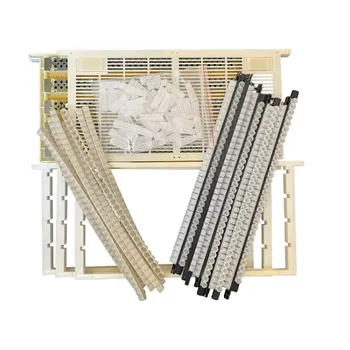
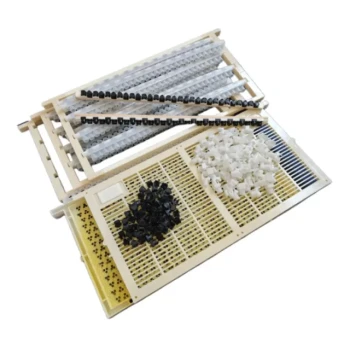
This is why commercial queen-rearing equipment includes artificial cell cups, grafting frames, cell bars, and larval grafting tools. The equipment must allow a very young worker larva—generally under three days old—to be transferred into a correctly positioned artificial cell where nurse bees can continue the queen-development process.
How Caste Biology Determines Equipment Design
Queen cells must reproduce natural geometry
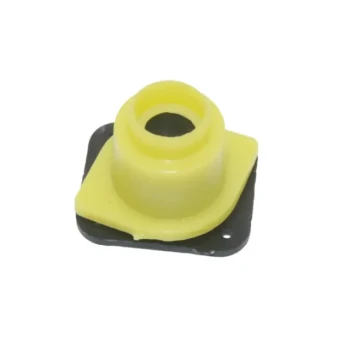
Queens develop in large, vertically hanging, thimble- or acorn-shaped cells rather than the horizontal hexagonal cells used for workers. Artificial cell cups and queen-rearing kits replicate this general structure and orientation.
The purpose is biological, not merely mechanical. Correct cell geometry and positioning encourage nurse bees to accept the grafted larva and provide the royal jelly required for successful queen development.
Development timing drives production scheduling
Queens typically develop in about 16 days, workers in about 21 days, and drones in about 24 days. These differences make timing critical in grafting, cell-builder management, mating, and queen introduction.
Frame cell bars and standardized queen-rearing systems help commercial operators maintain consistent queen age and production intervals. For distributors and resellers, this creates demand for compatible kits rather than isolated components that do not fit the beekeeper’s existing frames or cell-bar system.
Physical differences affect queen separation
Queens are larger than workers, while drones have a broader thorax and larger overall body. Queen excluders use grid spacing that allows workers to pass while restricting the queen’s movement between brood chambers and honey supers.
When correctly selected and installed, excluders help keep the queen in the brood area and prevent egg laying in honey supers. However, they should be treated as a management tool rather than an automatic requirement for every hive or operating method.
How Reproductive Capacity Shapes Hive Equipment
High egg production requires adequate brood space
During strong spring and summer conditions, a healthy queen may lay up to approximately 1,500 eggs per day. Commercial colonies therefore need sufficient brood-chamber capacity, standardized frames, and reliable internal dimensions to support continuous egg laying and brood expansion.
Inadequate space can contribute to congestion and may interfere with colony management. High-capacity brood chambers and compatible wooden or plastic frames make it easier to inspect brood, replace damaged components, and scale operations consistently.
Gentle queen handling protects reproductive organs
A queen’s abdomen contains extensive ovaries and a spermatheca that stores sperm throughout her productive life. Pressure or rough handling can damage the organs that determine her laying performance and longevity.
Queen marking cages, queen clips, mating nuclei, and instrumental insemination equipment should therefore immobilize or hold the queen gently and without compressing the abdomen. Equipment quality is directly connected to the preservation of the breeder’s most valuable biological asset.
Queen excluders support honey-super management
Keeping the queen in the brood chamber prevents brood from being established in honey supers, where it can complicate harvesting and extraction. Workers can still move through the excluder to store nectar above the brood area.
For high-volume Apis mellifera operations, this arrangement works alongside standardized frames and automated extraction or filling machinery. Equipment selection should consider frame dimensions, throughput, honey viscosity handling, and compatibility across the full harvesting line.
How Species and Ecotype Differences Change Equipment Selection
Apis mellifera favors standardization and throughput
Commercial Apis mellifera operations commonly use standardized frame hives. This supports interchangeable hive parts, mechanical extraction, high-volume filling, and more efficient order fulfillment and maintenance.
For distributors, the practical implication is the value of a complete compatible product range: hive bodies, frames, queen-rearing supplies, excluders, extraction equipment, and replacement components should be sourced as a coordinated system.
Apis cerana requires precise hive dimensions
Cavity-nesting species such as Apis cerana may require more precisely dimensioned hive bodies. Poorly matched internal space can increase colony stress and contribute to absconding.
Specialized wooden hive-making machinery helps manufacturers produce durable, accurately sized components for the species and local management system. A universal hive design is therefore not always the best commercial recommendation.
Behavior matters as much as physical size
Honeybee species and ecotypes can differ in nesting habits, absconding tendencies, and honey-yielding capacity. Equipment should be selected according to the bees’ retention needs, colony behavior, and intended production environment—not solely according to the beekeeper’s preferred hardware format.
Why Controlled Queen Rearing Is Preferable to Unmanaged Production
Natural emergency cells are not a complete breeding program
A queenless colony may raise emergency queen cells naturally, but this approach provides limited control over queen quantity, age, parentage, and production timing. It can also perpetuate undesirable traits such as excessive swarming, aggression, or poor disease resistance.
Controlled grafting allows breeders to select larvae from colonies with desirable characteristics, including gentleness, strength, hygienic behavior, and productivity. Frame cell bars, artificial cups, and grafting tools make this selection repeatable at commercial scale.
Cell-builder colonies determine acceptance and quality
Equipment alone cannot compensate for weak colony management. Grafted larvae need access to nurse bees and appropriate feeding conditions in a properly configured cell-builder colony.
A reliable queen-rearing system therefore combines hardware with biological scheduling: selecting suitable larvae, maintaining nurse-bee strength, positioning cells correctly, and managing queen emergence and mating at the right time.
Understanding the Trade-offs
Genetic control versus natural diversity
Open mating preserves genetic diversity but makes parentage less predictable. Instrumental insemination and controlled mating systems improve line preservation but require greater technical skill, specialized equipment, and careful handling.
Breeders should choose the degree of control that matches their objective. Producing robust commercial queens may call for a different balance than preserving a tightly defined research or breeding line.
Standardization versus species-specific design
Standardized equipment improves interchangeability, inventory management, and automation. However, equipment designed around Apis mellifera dimensions may not be appropriate for Apis cerana or another local ecotype.
Wholesalers and B2B resellers should clearly separate standard commercial systems from species-specific hive bodies, frames, and accessories. Precise product specifications reduce returns, compatibility problems, and colony-management failures.
Automation versus operational flexibility
Automated extraction and filling machinery can increase throughput and consistency in large apiaries. Smaller operations may value modular equipment that is easier to adapt, clean, repair, and scale gradually.
The correct choice depends on production volume, frame standard, labor availability, honey characteristics, and after-sales support. Fast delivery is useful only when replacement parts and accessories remain compatible with the installed system.
Precision equipment versus handling risk
Queen-rearing tools improve consistency, but every additional handling step creates a risk of damaging larvae or queens. Tools should be selected for controlled movement, correct dimensions, and gentle handling rather than for complexity alone.
How to Apply This to Your Project
The most reliable purchasing approach is to match the equipment system to both the bee’s biology and the operation’s commercial priorities.
- If your primary focus is controlled queen production: Prioritize grafting tools, artificial queen cups, cell bars, cell-builder frames, mating nuclei, and gentle queen-handling equipment that support precise timing and genetic selection.
- If your primary focus is high-volume honey production: Choose standardized brood chambers and frames, suitable queen excluders, and extraction and filling machinery designed for consistent throughput and the relevant honey characteristics.
- If your primary focus is species-specific colony retention: Select accurately dimensioned hive bodies and wooden components adapted to the target species or ecotype, especially where absconding or cavity-nesting behavior is a concern.
- If your primary focus is distribution efficiency: Build a compatible, full-spectrum portfolio with clear specifications, rapid response, dependable replacement parts, and coordinated delivery across queen-rearing and honey-processing equipment.
When equipment is selected as a biologically compatible system, commercial beekeepers can improve queen quality, protect valuable breeding stock, retain colonies, and scale production with greater confidence.
Summary Table:
| Biological Trait | Influence on Queen Rearing | Equipment Implication |
|---|---|---|
| Haplo-diploid genetics | Controlled breeding needed | Grafting tools, mating nuclei |
| Polyandry | Genetic diversity | Queen excluders, mating control |
| Royal jelly nutrition | Queen development | Artificial cells, grafting frames |
| Development timing | 16 days for queens | Cell bars for scheduling |
| Queen size | Larger than workers | Queen excluders, gentle handling |
| High egg production | Up to 1500 eggs/day | High-capacity brood chambers |
| Species differences | Apis cerana vs. mellifera | Species-specific hive dimensions |
Are you a commercial apiary or distributor looking to optimize queen rearing and hive equipment? Our comprehensive wholesale portfolio includes grafting tools, artificial queen cells, mating nuclei, queen excluders, and high-capacity brood chambers. Protect your breeding stock and scale production with reliable, biologically compatible tools. Contact our experts today for rapid quotes, OEM/ODM support, and fast delivery. [Contact us] (#ContactForm) for tailored solutions!
Related Products
- Retractable Chinese Queen Rearing Grafting Tools Equipment
- HONESTBEE Improved No Grafting Queen Rearing Kit For Queen Rearing and Royal Jelly Production
- No Grafting Queen Rearing Kit: System for Royal Jelly Production and Queen Rearing
- Nicot Queen Rearing Kit for Beekeeping and Grafting in Nicot System
- Premium Nicot Style Queen Rearing Kit with Hair Roller Bee Cages
People Also Ask
- Which specialized tools are necessary for implementing standardized queen rearing? Scale Your High-Yield Apiary
- How does selective queen rearing benefit an apiary? Discover Essential Tools for High-Quality Queen Bees
- Why are specialized queen rearing tools necessary to mitigate winter hive losses? Boost Apiary Survival and Recovery
- What operational workflows and queen rearing tools are required for implementing instrumental insemination and isolated mating in commercial queen breeding programs?
- How do queen-rearing tools facilitate the sustainability and expansion of a commercial apiary? Drive Scalable Growth