Commercial queen-rearing operations use a coordinated system of breeder colonies, cell-building hives, grafting or non-grafting equipment, mating nuclei, and queen-handling supplies. The Doolittle grafting method is the standard approach for high-volume production, while Miller-style and non-grafting plug systems can reduce manual handling in suitable operations. Together, these systems support controlled genetics, reliable queen development, mating, introduction, and distribution.
The key is not one piece of equipment but an integrated workflow: select larvae from breeder colonies, raise queen cells in strong cell builders, mate virgin queens in nucleus hives, and safely package or introduce the finished queens.
The Core Systems Behind Scaled Queen Production
Breeder colonies for genetic selection
Breeder or mother colonies provide the eggs and young larvae used to produce new queens. Operators select colonies with desirable traits such as productivity, temperament, resilience, or disease resistance.
The breeder hive is therefore the genetic starting point of the entire production system. Equipment consistency matters because it allows beekeepers to manage source colonies, brood frames, and hive components predictably.
Cell-building colonies
Cell builders raise grafted larvae into mature queen cells. They must contain a strong population of nurse bees and sufficient pollen and food resources to provide the royal jelly required for queen development.
A small mating nuc is not a substitute for a strong cell builder. Commercial operations typically use dedicated starter or finisher arrangements, or strong colonies managed specifically for queen-cell acceptance and development.
Mating nucleus hives
Mating nuclei, or mating nucs, house virgin queens after queen cells mature. These compact colonies provide the bees, food, and space needed for mating flights and the beginning of egg laying.
Mating nucs are central to scaling because they use fewer bees and less equipment than full-size colonies while allowing multiple queens to be managed in parallel.
Grafting Equipment for High-Volume Production
Precision grafting tools
Grafting tools transfer very young worker larvae from brood cells into artificial queen cups. The instruments must be fine and accurate because the larvae are delicate and easily damaged.
Common equipment includes manual grafting tools designed for precise larval transfer. Operator skill remains important; high-quality tools improve consistency but do not eliminate the need for careful technique.
Cell bar frames
Cell bar frames hold rows of queen cell cups inside starter or finisher colonies. They allow many developing queen cells to be managed, inspected, and transferred as a group.
For commercial users, standardized cell bars simplify handling and support repeatable production schedules. They also make it easier to align replacement cups, frames, and related consumables across multiple apiaries.
Plastic or wax queen cell cups
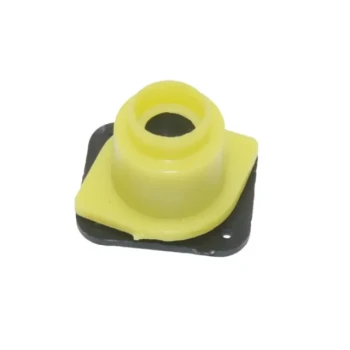
Queen cell cups receive grafted larvae and provide the foundation on which worker bees build full queen cells. Plastic cups offer consistency and reuse potential, while wax cups can be produced or adapted within the apiary.
The choice depends on the operation’s workflow, labor model, and preference for standardized or traditional materials.
Starter and finisher hive components
Starter colonies encourage nurse bees to accept grafted larvae, while finisher colonies provide the resources needed to complete queen-cell development. Some operations use separate colonies for each function; others use modified systems that combine them.
The practical requirement is the same: maintain strong nurse-bee populations and suitable food conditions throughout the queen-cell development period.
Non-Grafting and Alternative Production Methods
Non-grafting plug systems
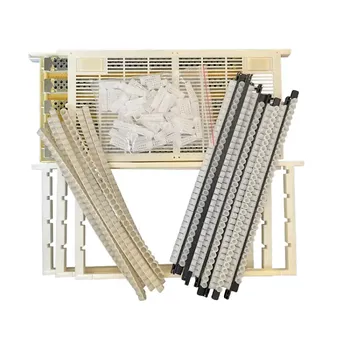
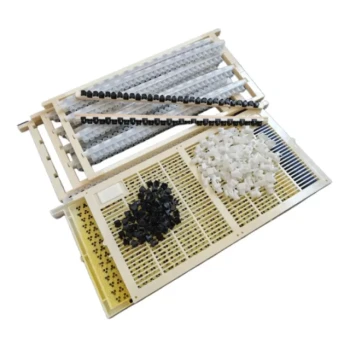
Non-grafting systems allow a queen to lay directly into removable cell cups or plugs. The cups can then be transferred to a cell-building colony for further development.
This approach reduces manual larval handling and may be useful for operations seeking a simpler workflow. However, it still requires suitable breeder colonies, cell builders, queen-cell protection, and mating capacity.
Miller-style queen rearing
The Miller method uses specially prepared brood comb and natural queen-cell construction rather than transferring individual larvae with a grafting tool. It can be practical for smaller or less labor-intensive operations.
Compared with Doolittle grafting, it generally offers less direct control over the exact number and placement of queen cells. That trade-off may be acceptable where simplicity is more important than maximum production density.
Queenless nucleus systems
Queenless nucs can be organized to encourage workers to raise queen cells from selected brood. These systems can support controlled propagation but require careful colony preparation and timely management.
They are best viewed as a production method within the broader cell-builder and mating-nuc workflow, not as a replacement for all other equipment.
Equipment for Protecting and Handling Queen Cells
Queen cell protectors
Protectors and cell shields cover developing or mature queen cells during handling and introduction. They help reduce the risk of damage or premature destruction by workers or another queen.
These components are especially valuable when mature cells must be moved between colonies or placed into mating nuclei.
Push-in cages
Push-in cages protect individual queen cells after placement in a colony. They can help control contact between the developing queen and resident bees during sensitive stages of introduction.
Their use depends on the colony configuration and the operator’s introduction method.
Queen cages
Queen cages hold mature queens for short-term storage, transport, or introduction into a new colony. Common formats include plastic cages and Benton-style wooden or wire cages.
Many introduction cages include space for worker escort bees and a candy plug. The workers consume the candy gradually, allowing the receiving colony time to become accustomed to the queen’s scent before release.
Marking pens and identification tags
Marking tools support queen identification, recordkeeping, and stock management. Tags or paint marks can indicate queen age, source, or production batch.
For commercial distributors and breeders, consistent identification reduces fulfillment errors and helps customers verify queen origin and management records.
How the Equipment Fits Together
Stage 1: Select and prepare breeder stock
The operation begins with breeder colonies containing the desired genetic characteristics. Suitable brood frames provide the larvae or eggs used in the selected production method.
Stage 2: Build queen cells
In a grafting workflow, young larvae are transferred into queen cups using precision tools. The cups are installed on cell bars and placed into starter or finisher colonies.
In a non-grafting workflow, the queen lays directly into removable cups or prepared comb, reducing the need for manual transfer.
Stage 3: Transfer mature cells to mating nucs
Once queen cells are sufficiently developed, they are protected and moved into mating nuclei. Each nuc provides a controlled environment for the virgin queen’s emergence, mating flights, and early egg laying.
Stage 4: Verify and distribute queens
After mating and initial performance checks, queens may be introduced into customer colonies, held for requeening programs, or shipped in queen cages with escort bees.
This final stage makes reliable cages, identification supplies, packaging, and order fulfillment just as important as production equipment.
Understanding the Trade-offs
Grafting offers scale but requires skill
Doolittle grafting provides precise control over queen-cell quantity and source larvae, making it well suited to commercial production. Its limitation is labor intensity: success depends on operator precision, larval age, colony strength, and consistent handling.
Non-grafting reduces handling but may reduce control
Plug-based systems simplify larval transfer and can shorten the learning curve. They may provide less direct control over which larvae are selected and how many cells are produced compared with systematic grafting.
Mating nucs improve efficiency but need close management
Mating nuclei use fewer resources than full-size hives and allow many queens to be processed simultaneously. Their smaller population makes them more sensitive to food availability, weather, queen loss, and colony condition.
Standardization improves supply reliability
Using compatible cell bars, cups, frames, cages, and hive components simplifies purchasing and reduces production interruptions. However, standardization does not replace biological management; strong colonies, adequate nutrition, and careful timing remain essential.
Equipment quality affects commercial consistency
Low-quality grafting tools, poorly fitting cups, weak cages, or incompatible hive components can increase handling losses and delay production. For distributors and resellers, product compatibility, replacement availability, and rapid fulfillment are often as important as the initial unit price.
Making the Right Choice for Your Goal
The most effective equipment package depends on production volume, labor availability, genetics program, and distribution requirements.
- If your primary focus is high-volume queen production: Build around Doolittle grafting tools, standardized cell bar frames, queen cups, strong cell-builder colonies, and sufficient mating nuc capacity.
- If your primary focus is reducing manual labor: Consider non-grafting plug systems while retaining reliable cell-building, mating, and queen-protection equipment.
- If your primary focus is genetic improvement: Prioritize well-managed breeder colonies, accurate queen identification, grafting or selection tools, and production records.
- If your primary focus is wholesale distribution: Maintain a full inventory of compatible cups, cell bars, cages, protectors, marking supplies, and replacement hive components to prevent fulfillment delays.
- If your primary focus is safe requeening and transport: Use appropriate queen introduction or shipping cages with secure construction and controlled-release features.
A scalable queen-rearing operation succeeds when its equipment, colonies, genetics, and fulfillment process function as one reliable system.
Summary Table:
| System/Component | Purpose | Key Equipment | Considerations |
|---|---|---|---|
| Breeder Colonies | Genetic foundation | Hive components, frames | Select for traits; ensure consistency |
| Cell-Building Colonies | Raise grafted larvae into queen cells | Starter/Finisher hives, frames | Strong nurse bee population |
| Grafting Equipment | Transfer larvae to cups | Grafting tools, cell bar frames, queen cups | Precision and operator skill |
| Mating Nuclei | House virgin queens for mating | Mating nucs, queen protectors | Manage multiple queens with fewer resources |
| Non-Grafting Systems | Reduce manual handling | Plug systems, Miller-style comb | Easier but less control; for suitable ops |
| Protection & Handling | Protect and transport queens | Queen cell protectors, push-in cages, queen cages | Ensure safe introduction and shipping |
| Identification & Distribution | Track and ship queens | Marking pens, tags, packaging | Supports stock management and customer satisfaction |
Ready to scale up your queen rearing operation? Partner with HONESTBEE, a trusted wholesale supplier for commercial apiaries and distributors. We offer a comprehensive range of beekeeping equipment, from precision grafting tools and standardized cell bars to mating nucs and queen cages, all backed by rapid delivery and expert support. Our one-stop sourcing ensures you get compatible, high-quality products that streamline your production and reduce downtime. Whether you're increasing output, improving genetics, or expanding distribution, we have the solutions to help you succeed. Contact us today to discuss your needs and discover how HONESTBEE can support your growth with reliable supply and premium service. Get in touch now!
Related Products
- Retractable Chinese Queen Rearing Grafting Tools Equipment
- HONESTBEE Improved No Grafting Queen Rearing Kit For Queen Rearing and Royal Jelly Production
- No Grafting Queen Rearing Kit: System for Royal Jelly Production and Queen Rearing
- Nicot Queen Rearing Kit for Beekeeping and Grafting in Nicot System
- Premium Nicot Style Queen Rearing Kit with Hair Roller Bee Cages
People Also Ask
- Which specialized tools are necessary for implementing standardized queen rearing? Scale Your High-Yield Apiary
- How does selective queen rearing benefit an apiary? Discover Essential Tools for High-Quality Queen Bees
- Why are specialized queen rearing tools necessary to mitigate winter hive losses? Boost Apiary Survival and Recovery
- What operational workflows and queen rearing tools are required for implementing instrumental insemination and isolated mating in commercial queen breeding programs?
- How do queen-rearing tools facilitate the sustainability and expansion of a commercial apiary? Drive Scalable Growth