Queen rearing is controlled developmental biology, not simply cell production. Honeybee queens and workers originate from identical fertilized female eggs; nurse bees create the difference by placing selected young larvae in vertically oriented queen cells and feeding them abundant royal jelly throughout larval development. Commercial beekeepers use artificial cups, cell bars, grafting tools, and mating equipment to control larval selection, production timing, queen quality, and replacement planning more reliably than natural queen cells allow.
Natural queen cells are useful for colony survival, but controlled queen-rearing equipment is essential for commercial consistency. It enables beekeepers to select superior genetics, produce queens to a schedule, standardize queen age, and manage the operational risks associated with large-scale apiaries.
The Biological Principles Behind Queen Rearing
Queens and workers begin with the same genetic starting point
Both queen and worker bees develop from fertilized female eggs. Their different adult forms are produced primarily through larval nutrition and cell environment rather than through different types of eggs.
During the earliest larval period, all female larvae receive brood food. Larvae selected for queen development are then continuously supplied with large quantities of royal jelly, while worker larvae transition to a different food regime.
Nutrition directs caste development
Royal jelly is produced by nurse bees and is provided in substantial quantities to developing queen larvae. This sustained feeding supports the physiological development of a reproductive queen rather than a sterile worker.
The key commercial principle is therefore simple: a young female larva must be selected and placed where nurse bees will treat it as queen-destined brood.
Cell structure reinforces the developmental signal
Worker brood develops in horizontal hexagonal cells. Queen cells are built vertically, initially resembling small cups and later expanding into elongated, peanut-shaped structures.
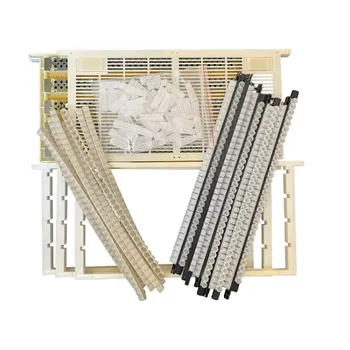
Artificial queen cups and cell bars replicate the physical arrangement that nurse bees recognize as suitable for queen rearing. The equipment does not create the queen by itself; it provides the framework that allows the colony’s natural biology to do so.
Queen development depends on precise larval age
The most suitable grafting material is generally a very young female larva, commonly under three days old. Younger larvae are more readily redirected toward queen development because their caste differentiation is not yet fixed.
This makes timing critical. Delayed grafting can reduce acceptance, weaken queen quality, or produce more variable results.
Why Natural Queen Cells Are Not Enough for Commercial Production
Natural cells are produced in response to colony conditions
A queenless or failing colony may construct emergency queen cells to replace lost reproductive capacity. A colony preparing to swarm may also build queen cells as part of its natural reproductive cycle.
These cells are valuable biological responses, but they are not designed around a beekeeper’s production calendar. Their number, location, age, and genetic origin depend on the colony’s immediate condition.
Natural production provides limited genetic selection
When a colony raises a replacement queen naturally, the beekeeper may have little control over which larva is selected. The colony can therefore reproduce traits that are undesirable in a commercial operation, including excessive swarming, defensive temperament, poor productivity, or weaker hygienic behavior.
Controlled grafting allows larvae to be selected from colonies demonstrating gentleness, strong population growth, honey production, and hygienic or disease-resilient characteristics.
Queen age and availability can be inconsistent
Natural cells in the same apiary may be at different developmental stages. This complicates scheduling, transport, introduction, and coordinated colony replacement.
Cell bars and artificial cups allow breeders to organize batches by grafting date. More uniform queen age improves planning across mating nuclei, queen banks, and production colonies.
Emergency rearing can compromise colony management
A colony that becomes queenless unexpectedly loses time and population momentum. It may also redirect resources toward emergency queen production instead of honey collection or other productive activity.
Planned queen rearing helps commercial operators replace aging or failing queens before a crisis occurs, reduce uncontrolled swarming pressure, and maintain more stable production colonies.
How Controlled Queen-Rearing Equipment Supports the Biology
Artificial queen cups create standardized starting points
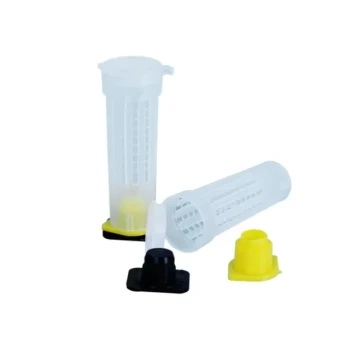
Artificial cups provide consistent locations for grafted larvae. When mounted on cell bars and placed correctly in a well-prepared starter colony, they allow nurse bees to extend the cups into queen cells and provision the larvae.
Standardized cups also simplify inspection, movement, harvesting, and integration with other queen-rearing equipment.
Grafting tools improve handling precision
Grafting needles and related tools are designed to transfer very young larvae with minimal damage. Since early larvae are delicate, careful handling directly affects acceptance and survival rates.
For commercial operations, reliable grafting tools are not merely convenience items. They support repeatability across large numbers of cells and reduce avoidable variation between production batches.
Cell bars organize queen production
Cell bar frames allow breeders to arrange artificial cups in a predictable pattern. This improves access for inspection and makes it easier to track graft dates, source colonies, acceptance rates, and expected emergence dates.
That traceability is especially important for distributors, commercial breeders, and apiaries supplying queens to multiple customers or regions.
Starter and finishing colonies provide the biological workforce
Equipment works within a living colony. Nurse bees must be numerous, well fed, and physiologically prepared to accept and feed grafted larvae.
A well-designed queen-rearing system therefore combines physical equipment with colony-management practices, including strong nurse populations, adequate nutrition, suitable brood conditions, and careful timing.
Mating Determines the Final Genetic Outcome
A newly emerged queen is not yet fertile
A newly emerged queen is a virgin queen. She must mature and complete mating flights before she can reliably lay fertilized worker-producing eggs.
At approximately one week of age, she typically flies to a drone congregation area, where she mates with multiple drones during one or more flights.
Polyandry creates both strength and management complexity
Queens mate with roughly 20 drones, storing sperm in the spermatheca for use over an extended period. Multiple-dDrone mating increases genetic diversity within the colony, which can support colony vigor and resilience.
However, open-air mating also means that a breeder cannot fully control the paternal genetics through grafting alone. Controlled larval selection controls the maternal line; mating yards, drone management, isolated locations, or specialized breeding programs are required for greater control of the paternal contribution.
Mating nucs support post-rearing management
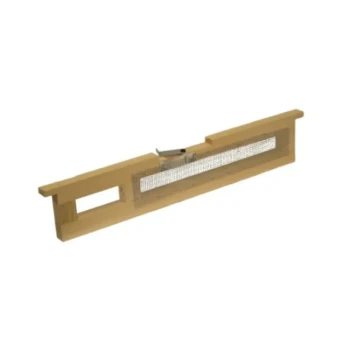
Mating nuclei provide compact colonies in which virgin queens can mature, mate, and begin laying. Proper entrances, colony strength, and placement help protect the queen during this critical transition.
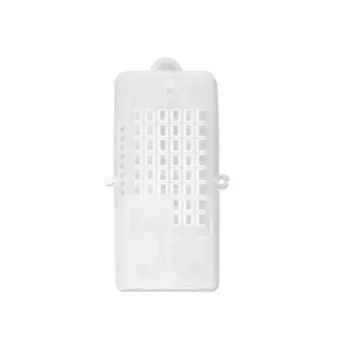
Once a queen is laying fertilized eggs, queen cages and introduction cages support safe transfer into queenless production colonies or customer colonies.
Drone management strengthens breeding programs
Commercial breeders can maintain strong drone-producing colonies and use drone comb frames to support an abundant population of healthy drones. This does not guarantee a specific mating outcome in an open environment, but it improves the genetic environment around designated mating yards.
For operations seeking stronger genetic control, queen-rearing equipment should be considered alongside mating nucs, drone management, and appropriate isolation strategies.
Understanding the Trade-offs
Equipment improves control, not biological certainty
Controlled equipment cannot guarantee that every graft will be accepted or that every emerged queen will mate successfully. Weather, nutrition, colony strength, disease pressure, and local drone availability remain important variables.
The advantage is managed probability and repeatability, not elimination of all biological risk.
Natural queen cells still have a legitimate role
Natural cells can be useful for small-scale beekeepers, emergency queen replacement, or operations that deliberately favor local adaptation and minimal intervention. They may also be an economical entry point for learning basic colony biology.
The limitation is that natural production provides less control over genetics, timing, quantity, and uniformity. Those limitations become more consequential as the number of colonies and customer commitments increases.
Selection claims must be supported by records
A grafting tool does not automatically produce disease-resistant or high-yield queens. Those traits must be identified through credible colony performance records and careful breeder selection.
Commercial suppliers should therefore evaluate equipment quality together with traceability, breeder documentation, replacement availability, and technical support.
Open mating limits genetic purity
Artificial cups and grafting frames alone cannot preserve a pure genetic line when queens mate freely with surrounding drones. Claims of genetic integrity require appropriate mating controls and a documented breeding strategy.
This distinction is important when specifying products for breeding centers, mating yards, or commercial queen-production programs.
How to Apply This to Your Operation
Controlled queen rearing is most valuable when the cost of inconsistency is high. Select equipment as a complete workflow rather than as isolated accessories.
- If your primary focus is reliable queen replacement: Use artificial queen cups, cell bars, and grafting tools to produce queens on a planned schedule instead of waiting for emergency cells.
- If your primary focus is genetic improvement: Select larvae from documented, gentle, productive, and hygienic colonies, then pair grafting equipment with strong breeder records and suitable mating management.
- If your primary focus is large-scale production: Standardize cups, frames, grafting procedures, mating nucs, cages, and inspection records so batches can be managed and fulfilled consistently.
- If your primary focus is genetic control: Combine maternal-line selection with drone management, mating-yard planning, and appropriate isolation measures because grafting alone cannot control open-air mating.
- If your primary focus is dependable sourcing: Work with a supplier able to provide a full queen-rearing portfolio, responsive technical service, consistent product quality, and efficient delivery across repeat orders.
With the right biology, equipment, and operating discipline, commercial beekeepers can turn queen rearing from an unpredictable colony response into a dependable production system.
Summary Table:
| Aspect | Natural Queen Cells | Controlled Queen-Rearing Equipment |
|---|---|---|
| Timing | Inconsistent, based on colony needs | Scheduled and standardized |
| Genetic selection | Limited control | High control over maternal line |
| Uniformity | Variable age and quality | Similar age and quality |
| Production scale | Small, unpredictable | Large, scalable |
| Colony disruption | Emergency response | Planned management |
Upgrade your queen-rearing program with HONESTBEE's comprehensive range of grafting tools, cell bars, mating nucs, and more. Our wholesale solutions are designed for commercial apiaries and distributors seeking reliable supply, OEM/ODM support, and fast delivery. Contact us today to streamline your operation and ensure consistent queen quality. Contact us now.
Related Products
- HONESTBEE Improved No Grafting Queen Rearing Kit For Queen Rearing and Royal Jelly Production
- Stainless Steel Beekeeping Queen Grafting Tool for Honey Bee Rearing
- Plastic Beekeeping Honey Bee Larvae Grafting Tools for Queen Rearing and Chinese Grafting
- Twin Queen Styrofoam Honey Bee Nucs Mating and Breeding Box
- Retractable Chinese Queen Rearing Grafting Tools Equipment
People Also Ask
- How can commercial queen rearers and royal jelly producers align their harvesting schedules and equipment with the biological timing of larval development? Master the 48-Hour Grafting Window and 72-Hour Harvest Cycle
- How do honeybee reproductive traits affect queen rearing and hive equipment?
- What equipment and systems are utilized in queen rearing operations to scale queen bee production? Essential Tools for Commercial-Scale Queen Rearing
- How can commercial queen breeders and apiaries utilize low-density SNP screening alongside queen rearing equipment to maintain genetic purity in native honey bee populations? Achieve Genetic Purity with Efficient Screening
- How does sex allele genetics cause shot brood patterns in honeybee colonies, and what management strategies and queen-rearing equipment are used to prevent this issue during line breeding?