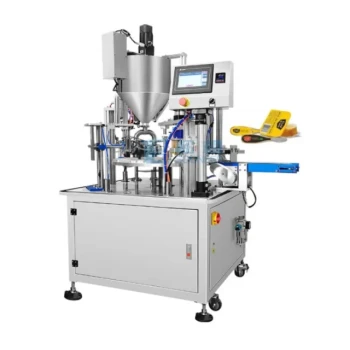
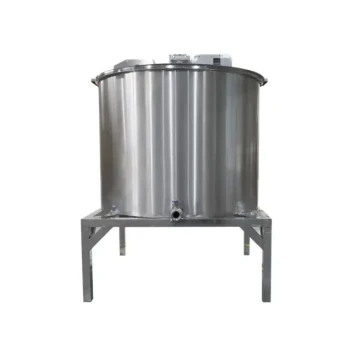
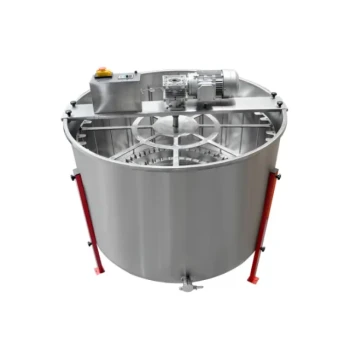
Floral honey variety directly affects the machinery required for reliable commercial processing and filling. Longan honey’s higher viscosity demands stable temperature control, high-torque positive-displacement pumping, and filling systems that prevent dripping or inconsistent doses. Lychee honey’s lighter profile may allow easier flow and gentler filtration, while Citrus honey’s tendency to crystallize quickly requires liquefying, agitation, and anti-clogging capabilities throughout the line.
The correct equipment should be selected according to measured viscosity, moisture, glucose-related crystallization behavior, and intended package format—not floral name alone. A flexible line with temperature-controlled tanks, adaptable pumps, suitable filtration, and precision filling heads gives distributors and processors the greatest ability to handle multiple varietal products without sacrificing quality or throughput.
Why Floral Origin Changes Equipment Requirements
Nectar source affects processing behavior
Honey’s floral source influences its color, aroma, viscosity, moisture content, and crystallization pattern. These characteristics determine how easily the product moves through filters, pipes, pumps, valves, and filling nozzles.
Two honeys can both meet the same general quality standard while behaving very differently in a commercial line. Equipment selected for a fluid honey may struggle when used with a dense or partially crystallized product.
Product specifications matter more than labels
Longan, Lychee, and Citrus are useful starting points for equipment planning, but they are not complete engineering specifications. Actual batches may vary by region, harvest conditions, nectar composition, storage history, and moisture level.
Before finalizing machinery, processors should measure viscosity, moisture, water activity, temperature-dependent flow, and crystallization tendency for the products they expect to handle.
Longan Honey: Plan for Stable High-Viscosity Flow
Higher viscosity increases pumping demand
Longan honey is commonly associated with an amber appearance and relatively high viscosity. As viscosity rises, the product requires more force to move through transfer lines and filling equipment.
A suitable system should use high-torque positive-displacement pumps, such as piston, gear, or rotor-based designs, rather than relying only on equipment intended for thin liquids. Pump sizing should account for pipe length, elevation changes, line diameter, and the required production rate.
Temperature control improves consistency
Controlled warming can reduce viscosity and make Longan honey easier to filter, transfer, and fill. Jacketed storage or processing tanks allow the operator to maintain a consistent product temperature without exposing the honey to uncontrolled hot spots.
The objective is flow consistency with minimal thermal exposure. Excessive or prolonged heating can damage delicate flavor, color, aroma, and naturally occurring enzymes, so temperature control should be precise and validated for the product.
Filling heads must handle stringiness
Viscous honey can stretch into strings as a filling valve closes. This creates bottle-mouth contamination, poor presentation, and inaccurate net weights.
Longan honey lines benefit from volumetric piston filling, controlled shutoff valves, and anti-drip or suck-back devices. A filling head designed for clean cut-off is particularly important for narrow-neck containers and high-speed retail packaging.
Lychee Honey: Protect a Lighter Product Profile
Lighter color can increase quality sensitivity
Lychee honey typically presents a pale yellow color and a lighter sensory profile than darker, more robust varieties. For table honey, visual clarity and flavor preservation may be central to its commercial value.
The processing line should therefore support gentle filtration and controlled thermal handling. Filtration should remove unwanted particles while avoiding unnecessary processing that could strip desirable characteristics or create excessive air incorporation.
Flow may be easier, but assumptions are risky
A lighter Lychee profile may be easier to pump and fill than a highly viscous Longan batch. However, lighter color does not automatically mean low viscosity or slow crystallization.
Processors should confirm the batch behavior at the intended filling temperature. A line that handles Lychee honey efficiently should still offer adjustable pump speed, filling volume, and temperature settings so it can accommodate seasonal or regional variation.
Flexible equipment protects product value
For premium unifloral honey, equipment selection should support repeatable clarity, accurate dosing, and low product loss. Fine filtration, sanitary piping, low-shear transfer, and precision filling can help maintain a consistent product appearance across multiple production runs.
This flexibility is commercially useful for distributors and contract packers handling several retail grades or customer-specific specifications.
Citrus Honey: Design for Rapid Crystallization
Crystallization can obstruct the process
Citrus honey tends to crystallize rapidly and may develop a slightly yellow appearance. As crystals form, the honey becomes thicker and can eventually obstruct filters, valves, pumps, and filling nozzles.
The risk is not limited to the filling machine. Crystallization can begin during storage or in transfer lines, creating a line-wide flow problem if the product is not kept within a controlled operating range.
Liquefying tanks and agitation are important
A Citrus honey line should generally include temperature-controlled liquefying or holding tanks with gentle, controlled agitation. These systems help redistribute crystals and maintain a uniform consistency before filtration and filling.
Agitation should be sufficient to prevent localized thickening without introducing excessive air or applying unnecessary shear. Tank jackets, insulation, temperature sensors, and programmable controls improve repeatability.
Pumps and nozzles need anti-clogging capability
Citrus honey requires pumps and valves that can tolerate increased viscosity and intermittent crystal content. Wide-flow passages, positive-displacement pumping, and appropriately sized non-clogging nozzles reduce stoppages.
Filling heads should also include anti-drip controls and be easy to disassemble for cleaning. This matters because partially crystallized honey can remain inside valve seats and nozzle tips after a production run.
The Main Equipment Selection Criteria
Moisture and water activity
Honey is generally expected to remain below 20% moisture to reduce fermentation risk, while water activity provides an additional indication of microbial stability. The cited reference gives a typical water-activity range of approximately 0.49 to 0.65, but the actual value must be confirmed for each product.
Moisture affects both storage stability and flow behavior. It should be checked before processing because a filling line cannot compensate for a batch that is unsuitable for stable storage.
Viscosity and specific gravity
Standard honey is highly viscous, with the supplementary reference citing approximately 150 P and a specific gravity near 1.423 at 17% moisture as general reference values. These figures are not substitutes for batch testing, but they demonstrate why honey-filling machinery must be designed for dense products.
Specific gravity affects volumetric filling calculations, while viscosity affects pump torque, flow rate, pressure, and valve response. The equipment supplier should receive both the expected density range and the viscosity range at the planned filling temperature.
Glucose concentration and crystal formation
Higher glucose levels generally increase the likelihood of glucose monohydrate crystal formation. This can change honey from a smooth liquid into a thick, grainy, or paste-like product.
For products with strong crystallization tendencies, the line may require heated holding tanks, jacketed mixing vessels, heated transfer paths, and piston-driven filling systems. The design should be based on the expected end state: fluid honey, creamed-style honey, or honey that may contain suspended crystals.
Filtration and product positioning
Light-colored table honeys often require fine filtration and gentle handling to preserve clarity and delicate flavor. Darker or more viscous honeys may require more robust filtration and bulk-handling equipment, particularly when they are destined for industrial food manufacturing.
Filtration capacity, mesh selection, pressure limits, and cleanability should be matched to the product’s particle load and viscosity. A filter that works well for Lychee honey may create excessive pressure when processing dense Longan honey.
Filling accuracy and container format
Professional honey fillers commonly use piston or rotor pump systems, volumetric controls, and anti-drip devices. These features help maintain accurate fill weights and reduce bottle-mouth contamination caused by honey strings.
Nozzle size, number of filling heads, container opening diameter, fill volume, and line speed all influence the final selection. A machine optimized for small retail jars may not be appropriate for large food-service pails or industrial drums.
Understanding the Trade-offs
Heating improves flow but can affect quality
Higher temperatures reduce viscosity and help dissolve or disperse crystals. However, excessive heating or long holding times can affect color, aroma, flavor, and natural enzymes.
The practical solution is not maximum heat. It is controlled, even, and sufficiently short thermal treatment, supported by accurate sensors and documented operating limits.
High-speed equipment may reduce flexibility
A high-speed filling machine can improve output for a single standardized product. It may be less suitable for a distributor or wholesaler handling Longan, Lychee, Citrus, and other varieties with different flow characteristics.
Adjustable filling speeds, interchangeable nozzles, recipe-based controls, and easy changeover features may produce greater commercial value than maximum rated speed alone.
One pump design will not suit every honey
A liquid-filling system may perform well with slow-crystallizing honey but fail when crystals increase resistance in the line. Conversely, an oversized high-torque system may add cost and energy consumption when used primarily for fluid products.
The best line is usually configured around the full product portfolio, with enough flexibility to manage the thickest and most crystallization-prone product expected in routine production.
Varietal separation may be necessary
Strongly colored or strongly flavored honeys can affect lighter products if they share poorly cleaned tanks, pumps, filters, or hoses. This is especially important when the commercial specification requires a distinct unifloral identity.
Dedicated circuits may be justified for premium products, while validated cleaning and efficient changeover procedures can support shared equipment for less sensitive product groups.
Making the Right Choice for Your Goal
The equipment decision should reflect both the honey’s physical behavior and the commercial role of the operation.
- If your primary focus is premium retail honey: Prioritize fine filtration, gentle temperature control, low product loss, anti-drip precision filling, and sanitary changeovers that preserve clarity and varietal character.
- If your primary focus is high-throughput wholesale packing: Choose high-torque positive-displacement pumps, programmable filling heads, heated or jacketed holding capacity, and robust filtration sized for the most viscous product.
- If your primary focus is a multi-variety product portfolio: Specify adjustable temperatures, pump speeds, nozzle configurations, and filling volumes so one line can handle Longan, Lychee, Citrus, and other floral honeys efficiently.
- If your primary focus is crystallization-prone honey: Include liquefying tanks, controlled agitation, heated transfer areas, non-clogging valves, and piston filling equipment capable of handling increased viscosity.
- If your primary focus is distributor and reseller service: Work with an equipment partner that can provide a complete configuration, rapid technical response, spare parts, operator support, and fast fulfillment across the full processing and packaging line.
The right machinery turns floral variation from a processing constraint into a controllable advantage in quality, efficiency, and market coverage.
Summary Table:
| Honey Type | Key Property | Processing Impact | Machinery Requirement |
|---|---|---|---|
| Longan | High viscosity | Requires more force to pump and fill | High-torque positive-displacement pumps, temperature-controlled tanks, anti-drip piston fillers |
| Lychee | Light color, delicate flavor | Sensitive to heat and over-processing | Gentle filtration, precise temperature control, low-shear transfer |
| Citrus | Rapid crystallization | Crystals can clog filters and nozzles | Liquefying tanks with agitation, heated lines, non-clogging valves and nozzles |
Optimize Your Honey Processing Line for Every Floral Varietal
At HONESTBEE, we understand the unique challenges of processing Longan, Lychee, Citrus, and other floral honeys. Our comprehensive wholesale portfolio includes temperature-controlled tanks, high-torque pumps, precision filling machines, and complete processing lines designed to handle varying viscosities and crystallization tendencies. Whether you're a distributor, wholesaler, or B2B reseller, we offer:
- One-stop sourcing for all beekeeping and honey processing equipment
- OEM/ODM support to tailor machinery to your specific products
- Rapid response and dedicated service to minimize downtime
- Ultra-fast delivery with efficient order fulfillment to keep your operations running
Don't let floral variability slow you down. Contact us today to design a flexible line that maximizes your efficiency and profit margins.
Related Products
- Commercial Rotary Honey Filling Machine for Production
- Fully Automatic Honey Filling Packaging Machine for Processing Line
- Precision Durable Efficient HONESTBEE Rotary Honey Filling Machine
- Automatic Honey Filling and Filtering Machine for Beekeeping Bottle Filling
- Economy Small Honey Filling Machine Honey Bottle Filler Packaging Machine
People Also Ask
- What role do commercial honey filling machines play in honey distribution? Scaling Efficiency and Quality Control
- What technical support do commercial-grade filling machines provide? Convert Honey NTFPs into Marketable Commodities
- What is the significance of specialized honey filling equipment? Scaling from Beekeeping to Commercial Success
- Why is professional honey filling machinery critical for honey production? Scale Your Apiary's Profit & Efficiency
- Why is high-capacity honey filling machinery necessary for Giant Honey Bees? Solve the Apis dorsata Volume Crisis