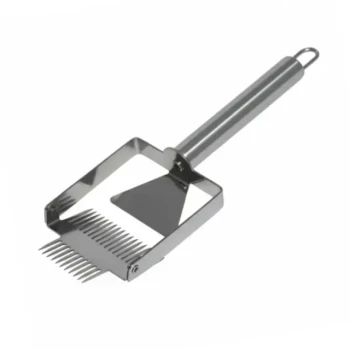
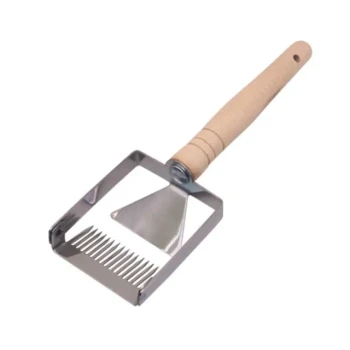
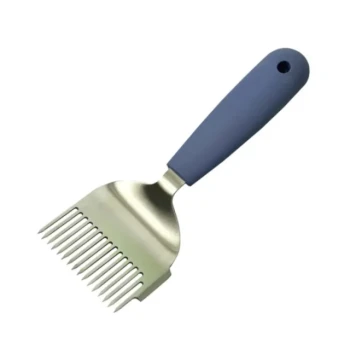
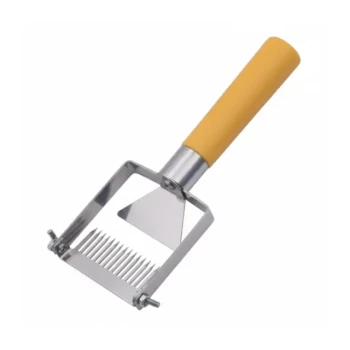
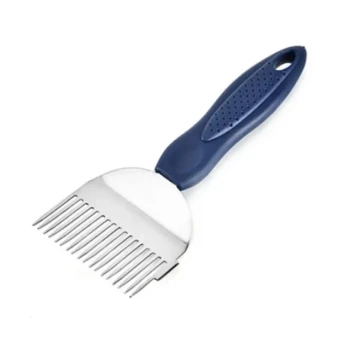
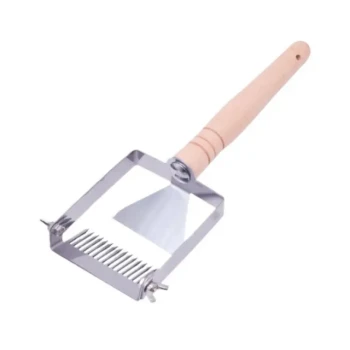
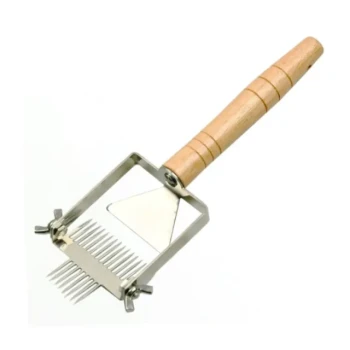
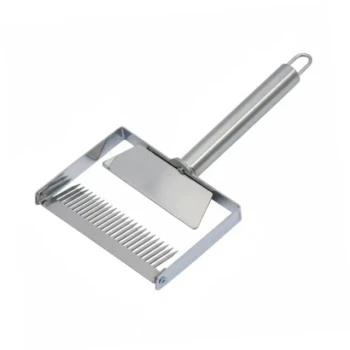
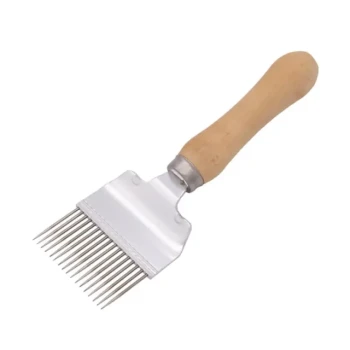
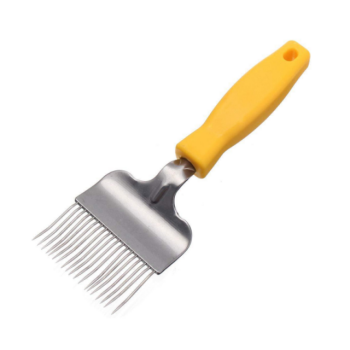
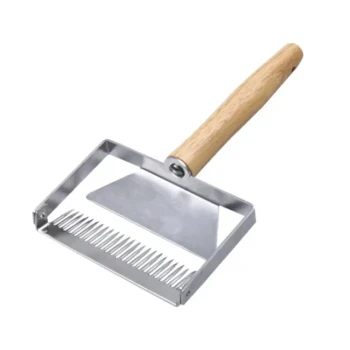
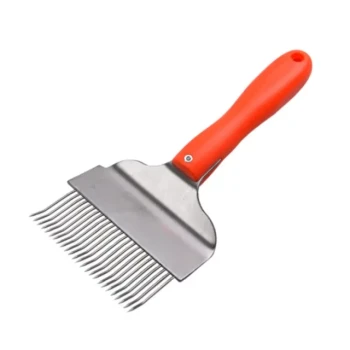
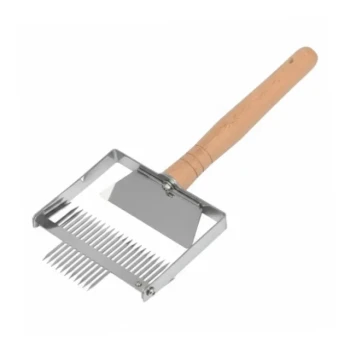
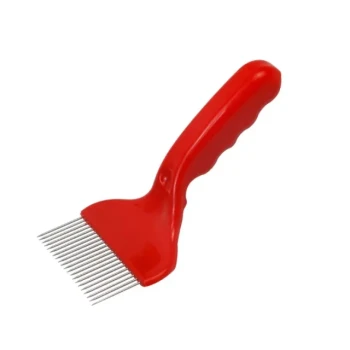
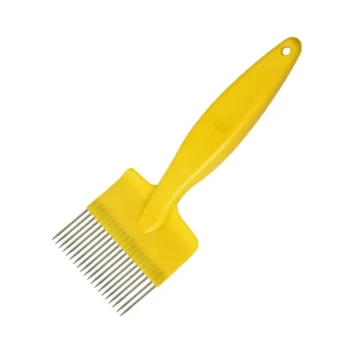
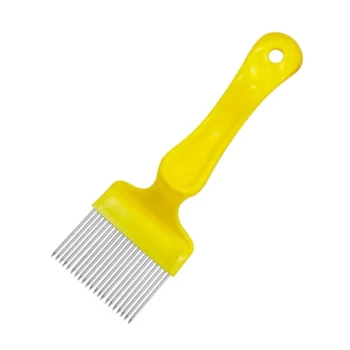
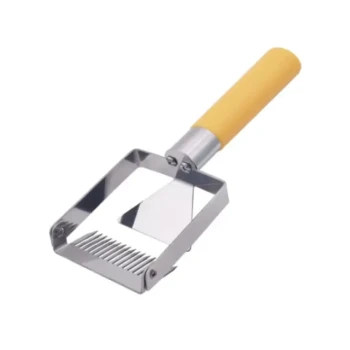
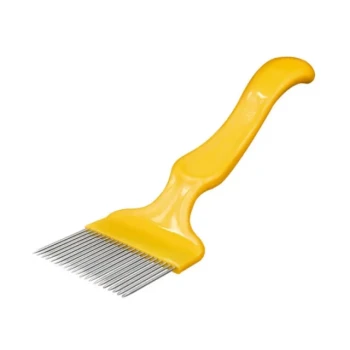
Uncapping forks and rollers act as essential finishing tools designed to capture yield that standard cutting methods miss. While heated knives or automated machines perform the initial bulk removal of wax cappings, they often skip over low-lying or uneven areas of the honeycomb. Forks and rollers resolve this by meticulously opening these remaining sealed cells, ensuring that the centrifuge can extract every available drop of honey.
Maximum honey recovery is rarely achieved in a single pass; it requires a secondary finishing step. Uncapping forks and rollers serve as the bridge between bulk efficiency and total yield by exposing honey pockets that are inaccessible to flat blades.
The Gap in Primary Uncapping
Why "Missed" Cells Occur
Primary uncapping tools, such as heated knives or automated spiral cutters, are designed for speed and consistency. They typically cut a flat plane across the face of the frame.
However, honeycombs are natural structures and are rarely perfectly flat. Variations in comb depth often result in "low spots" where the wax cappings sit below the cut line of the knife.
Without intervention, the honey inside these intact cells remains trapped during extraction.
The Specific Roles of Finishing Tools
Uncapping Forks: Precision Detail Work
The uncapping fork is the primary instrument for addressing the irregularities of natural comb. It is designed for meticulous detail work rather than broad removal.
The tines of the fork slide under the cappings of individual cells that the knife missed. By lifting these caps, the beekeeper exposes the honey without needing to slice away valuable comb depth.
This tool ensures that even the most deeply recessed cells contribute to the final harvest.
Uncapping Rollers: Puncturing for Flow
Uncapping rollers take a different mechanical approach to the same problem. Rather than lifting the cap off, they utilize spikes or needles to puncture the surface.
Beekeepers roll this tool over areas where the wax seal is still intact. The perforations break the vacuum seal of the cell.
This opening is sufficient to allow honey to flow out under centrifugal force, ensuring no honey is left behind in the comb.
Understanding the Trade-offs
Time vs. Yield
The primary trade-off in using forks and rollers is the additional labor required. Treating every frame with a secondary tool increases the time spent per frame significantly compared to a single knife pass.
However, skipping this step results in a direct loss of product. The "tax" you pay in time is returned in the form of higher extraction volume.
Comb Integrity and Debris
Using these tools requires a balance between force and finesse. Forks, if used aggressively, can gouge the comb structure, making it harder for bees to repair for reuse.
Rollers are generally less invasive to the structure but can push small wax particles into the honey, potentially increasing the filtering workload later.
Making the Right Choice for Your Goal
To maximize your efficiency, match the tool to your specific operational needs.
- If your primary focus is maximum yield on a small scale: Use an uncapping fork to meticulously lift every missed cap, ensuring 100% cell exposure with minimal wax debris.
- If your primary focus is speed and workflow efficiency: Use an uncapping roller to quickly puncture missed patches on multiple frames without stopping for detailed manual work.
By integrating these finishing tools into your workflow, you convert potential waste into harvestable product.
Summary Table:
| Tool Type | Mechanism | Primary Advantage | Best For |
|---|---|---|---|
| Uncapping Fork | Lifting/Prying | High precision; preserves comb depth | Small-scale maximum yield & detail work |
| Uncapping Roller | Puncturing/Perforating | Rapid processing; breaks vacuum seals | High-speed workflows & large missed patches |
| Heated Knife | Slicing (Flat Plane) | Bulk removal efficiency | Leveling consistent, protruding combs |
Maximize Your Harvest with HONESTBEE Professional Equipment
Every drop of honey counts toward your bottom line. At HONESTBEE, we specialize in empowering commercial apiaries and distributors with the high-performance tools needed to eliminate waste and optimize production.
Whether you are scaling your operation with our automated honey-filling and hive-making machinery or seeking premium wholesale beekeeping tools and consumables, we provide the industrial-grade solutions your business demands. Partner with us to access a comprehensive portfolio designed for durability and maximum yield.
Ready to elevate your apiary's efficiency? Contact our expert team today to discuss our wholesale offerings and customized equipment solutions.
Related Products
- All Stainless Steel Double Sided Pivoting Honey Uncapping Fork
- Professional Stainless Steel Uncapping Fork with Wooden Handle
- Professional Multi-Function Uncapping Fork with Ergonomic Rubber Grip
- Adjustable Stainless Steel Honey Uncapping Fork with Plastic Handle for Beekeeping
- Professional Multi-Function Uncapping Fork with Integrated Blade for Beekeeping
People Also Ask
- What is the design purpose of honey uncapping forks and honey uncapping tanks? Maximize Your Harvest Efficiency
- How does a honey uncapping fork supplement the use of an uncapping knife? Boost Your Honey Yield and Extraction Efficiency
- What are the disadvantages of using an uncapping fork? Overcoming Manual Limits for Better Honey Extraction
- What are the benefits and drawbacks of using an uncapping fork? Maximize Comb Preservation in Your Apiary
- What is the original purpose of an uncapping fork? Mastering Precision Honey Extraction and Comb Preservation