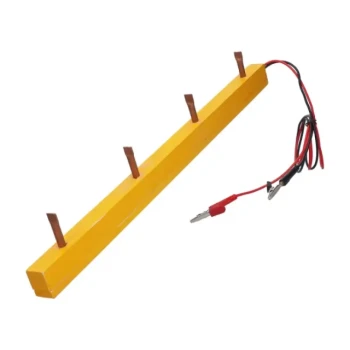
Wooden bars function as the critical structural bridge between individual artificial queen cups and the larger grafting frame. They serve a dual purpose: physically securing multiple queen cups in a suspended arrangement and acting as a positioning tool to center larvae within the hive.
The wooden bar is more than a simple support; it is a mechanism for environmental control. Its primary function is to suspend larvae in the colony's "core zone," ensuring the stable temperature and humidity required for successful queen development.
The Mechanics of the Grafting Frame
Structural Integration
The wooden bar transforms the grafting frame from a simple boundary into a functional nursery. It acts as the connection point where artificial cups are attached.
Without this bar, there is no standardized method to secure the delicate cups to the rigid frame structure.
Enabling Batch Processing
Efficiency is key in queen production. The wooden bar allows a beekeeper to arrange multiple grafted cups in a single row.
This consolidation permits the simultaneous rearing of numerous queens, streamlining the workflow within the hive.
Environmental Positioning
Targeting the Core Zone
The physical placement of the bar determines the survival of the larvae.
The bar is designed to suspend the cups directly in the center of the frame. This central nursing area is where the colony naturally maintains the most stable conditions.
Stabilizing the Micro-Climate
Developing queens are highly sensitive to fluctuations in their environment.
By holding the cups in this specific position, the wooden bar ensures the larvae remain in a zone where temperature and humidity are regulated by the nurse bees, maximizing acceptance and development rates.
Understanding the Trade-offs
Precision vs. Flexibility
While wooden bars offer excellent stability, they require precise placement.
If the bar is not positioned perfectly within the frame, the cups may drift out of the optimal thermal zone. This can result in chilled larvae or lower acceptance rates by the nurse bees.
Handling Risks
The bar allows you to move many cells at once, which is efficient but carries risk.
Because all cups are connected to a single bridge, a single mishandling event—such as dropping or jarring the wooden bar—can compromise the entire batch of developing queens.
Optimizing Your Grafting Frame Setup
To ensure the highest success rate in your queen rearing operation, consider these factors:
- If your primary focus is survival rates: Ensure the wooden bar is centered vertically in the frame to keep larvae in the warmest, most humid part of the brood nest.
- If your primary focus is workflow efficiency: Utilize the bar to group larvae of the exact same age, allowing you to manage the timeline of the entire batch simultaneously.
The wooden bar is the simple yet vital tool that aligns human efficiency with the biological needs of the hive.
Summary Table:
| Feature | Function in Queen Rearing | Impact on Production |
|---|---|---|
| Structural Bridge | Connects artificial queen cups to the rigid frame | Enables organized, high-volume batch processing |
| Core Positioning | Suspends larvae in the hive's central thermal zone | Maximizes larval acceptance and development rates |
| Micro-Climate Control | Maintains stable temperature and humidity | Protects delicate larvae from environmental fluctuations |
| Workflow Efficiency | Groups larvae of the same age together | Streamlines timing for grafting and harvesting queens |
Scaling Your Queen Production? Partner with HONESTBEE
At HONESTBEE, we understand that precision is the foundation of a successful commercial apiary. Our comprehensive wholesale catalog offers the high-quality beekeeping tools, machinery, and equipment needed to streamline your operations—from specialized grafting frames and wooden components to advanced honey-filling machines.
Whether you are a distributor looking for reliable inventory or a commercial beekeeper seeking to optimize your queen rearing workflow, our team provides the industry expertise and hardware you need to grow.
Ready to elevate your apiary's productivity? Contact us today to explore our wholesale solutions and see how our premium consumables and machinery can benefit your business.
References
- Celia A. Contreras-Martinez, Ernesto Guzmán‐Novoa. Effect of Different Substrates on the Acceptance of Grafted Larvae in Commercial Honey Bee (Apis Mellifera) Queen Rearing. DOI: 10.1515/jas-2017-0019
This article is also based on technical information from HonestBee Knowledge Base .
Related Products
- HONESTBEE Wooden Bar Copper Prong Wire Embedder for Battery Operation
- Wooden Bee Hive Frames for Beekeeping and Wholesale
- Assembled Wooden Bee Frames with Beeswax Foundation Ready to Use by HONESTBEE
- Assembled Wooden Bee Frames with Plastic Foundation for Durability and Convenience by HONESTBEE
- HONESTBEE Wired and Assembled Wooden Bee Frames Foundation for a Thriving Hive
People Also Ask
- What tools and materials are required for wiring a beehive frame? Essential Equipment for Stronger Honeycomb
- What is the purpose of bee frame wire? Secure Wax Foundation and Reinforce Honeycomb
- What is the specified wire gauge for the bee frame wire? Mastering 26-Gauge Wire for Durable Honeycomb Support
- What material is bee frame wire typically made from? The Critical Choice for Hive Health
- What is the final step in wiring a frame? Secure Lasting Tension for a Durable Hive