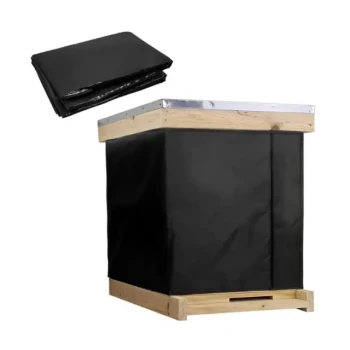
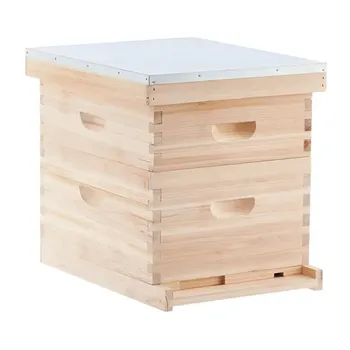
Wooden, plastic, and extended polystyrene hive covers serve different apiary priorities. Wooden covers provide strong physical durability and natural moisture regulation but need regular inspection, painting, and repair. Plastic covers minimize routine maintenance and resist moisture, although they can bow over time. Extended polystyrene covers offer the strongest thermal insulation, but they require protection from sunlight, impact, and prolonged weather exposure.
The best cover depends on the operating environment and management priority: choose wood for durability and repairability, plastic for low-maintenance handling, and extended polystyrene for thermal performance. In exposed or windy apiaries, a telescoping metal-covered wooden top generally provides the most secure weather protection.
How the Materials Perform in an Apiary
Wooden Covers: Durable and Repairable
Wooden rimmed covers are a proven option for commercial and small-scale apiaries. They provide good physical strength, tolerate routine handling, and can often be repaired rather than replaced.
Wood also helps regulate moisture within the hive more naturally than many synthetic materials. This can support a more stable internal environment, particularly when the cover design includes appropriate ventilation and weather protection.
Plastic Covers: Practical and Moisture-Resistant
Plastic covers are resistant to rain, pests, and rot. Their low maintenance burden makes them attractive for distributors, migratory beekeepers, and operators managing large numbers of colonies.
They are also easy to clean and typically lighter to handle than comparable wooden equipment. These advantages can reduce labor during inspections, transport, and seasonal equipment rotation.
Extended Polystyrene Covers: Strong Thermal Insulation
Extended polystyrene provides better thermal insulation than standard wood or plastic. This can help reduce heat loss in cold conditions and limit excessive heat transfer when the hive is exposed to temperature extremes.
Its main performance limitation is environmental durability. Continuous exposure to ultraviolet light, rain, impact, and pests can cause deterioration unless the cover has a suitable protective coating or external skin.
Maintenance Requirements by Material
Maintaining Wooden Covers
Wooden covers require regular inspection for swelling, splitting, warping, and rot. Particular attention should be given to edges, joints, and areas where water can collect.
A protective exterior coating or paint system is normally necessary. Repainting should be treated as part of the product's operating cost, especially in wet climates or apiaries with limited shelter.
Flat board wooden covers offer a simpler and more economical design. Rimmed or telescoping designs generally provide better alignment and weather protection but may involve more material and construction cost.
Maintaining Plastic Covers
Plastic covers usually require little more than cleaning and inspection for structural damage. They do not need painting and are not vulnerable to wood rot.
The principal issue is deformation. Repeated heat exposure, poor storage, heavy loads, or insufficient structural reinforcement can cause plastic covers to bend or bow, reducing their fit and weather-sealing performance.
Maintaining Extended Polystyrene Covers
Polystyrene covers do not require routine painting for rot prevention and are not susceptible to wood decay. However, their surfaces must be protected against continuous environmental exposure.
Inspect the coating or protective outer layer for cracks, peeling, and exposed foam. Damaged areas should be repaired promptly because once the insulation is exposed, further weather and mechanical damage can accelerate degradation.
Weather Protection and Colony Management
Wind Resistance Matters as Much as Material
A lightweight or poorly fitted cover can be displaced by strong wind regardless of its insulation or moisture performance. Cover retention should therefore be considered alongside the material itself.
Telescoping metal-covered wooden tops are widely preferred in exposed apiaries because their overhanging design and added weight improve resistance to rain and wind. Additional securing methods may be necessary in severe weather or migratory operations.
Rain and Moisture Control
Wooden covers can perform well when properly painted and sloped to shed water. Without that protection, moisture penetration can lead to rot and eventual loss of structural integrity.
Plastic is naturally resistant to rain, but a bowed cover can allow water to pool or enter around the hive body. Polystyrene offers insulation, but its weather resistance depends heavily on the quality and condition of its protective coating.
Temperature and Ventilation
Polystyrene has the clearest insulation advantage, but insulation alone does not solve every climate-management problem. Ventilation, condensation control, hive orientation, and local weather conditions remain important.
Wood provides a balance of durability, insulation, and moisture buffering. Plastic generally performs best when the design includes adequate structural support and the apiary does not depend on the cover itself for significant thermal regulation.
Operational and Commercial Considerations
Handling and Order Fulfillment
Plastic covers are convenient for high-volume operations because they are lightweight, easy to clean, and resistant to moisture during storage and transport. These characteristics can simplify warehouse handling and reduce maintenance-related product returns.
Wooden covers may require more careful storage to prevent moisture damage, while polystyrene covers need protection from crushing and abrasion during packing and delivery.
Product Life and Replacement Planning
Wood is repairable and, at the end of its useful life, generally easier to recycle or dispose of responsibly. Its effective service life depends on coating quality, climate, and maintenance discipline.
Plastic can have a long service life when it retains its shape, but deformation may make replacement necessary even when the material is otherwise intact. Polystyrene can deliver strong thermal performance, but its life span depends on protective treatment and exposure conditions.
Standardization Across a Product Portfolio
Distributors and wholesalers should evaluate more than unit price. Cover dimensions, compatibility with hive bodies, retention systems, protective coatings, packaging requirements, and replacement availability all affect the total value of the product.
A broad portfolio that includes flat wooden covers, rimmed or telescoping tops, plastic options, and protected polystyrene covers can serve different climates and beekeeper operating models without forcing one material into every application.
Understanding the Trade-offs
No Single Cover Is Best in Every Climate
Wood is a strong all-purpose choice when repairability, natural materials, and physical durability are important. It becomes less attractive where maintenance labor is expensive or where constant moisture exposure is difficult to control.
Plastic reduces maintenance and handles wet conditions well, but long-term shape stability must be verified. Polystyrene is valuable where insulation is a priority, yet it is less suitable for unprotected, highly exposed locations.
Low Maintenance Does Not Mean Maintenance-Free
Plastic still requires inspection for bowing, cracking, and poor fit. Polystyrene still requires coating checks and careful handling, while wooden covers still need paint maintenance even when they are otherwise well constructed.
A maintenance-free claim can therefore be misleading if it ignores cleaning, storage, wind retention, and periodic structural inspection.
Natural Material and Biosafety Considerations
Wooden equipment is familiar to bees, repairable, and comparatively straightforward to sterilize or dispose of during disease-control measures. These benefits can matter to operators who prioritize established equipment practices and material recovery.
Plastic is easy to clean and resistant to moisture, but disposal and end-of-life handling may be more difficult depending on the local waste system. Material choice should be assessed against both operational requirements and environmental policy.
How to Apply This to Your Apiary
The most suitable cover is the one that matches the apiary's climate, handling model, maintenance capacity, and distribution requirements.
- If your primary focus is maximum durability and repairability: Choose a well-built wooden cover with a durable exterior coating, and plan for regular inspections and repainting.
- If your primary focus is low routine maintenance: Choose plastic covers, but verify their structural reinforcement, heat resistance, and long-term resistance to bowing.
- If your primary focus is thermal insulation: Choose extended polystyrene covers with a proven weather-resistant coating and protect them from ultraviolet exposure and impact.
- If your primary focus is severe weather protection: Use a telescoping metal-covered wooden top or another securely weighted design with reliable wind retention.
- If your primary focus is wholesale flexibility: Maintain a balanced range of wooden, plastic, and protected polystyrene covers so customers can select according to climate and management needs.
The right cover is not simply the cheapest or most insulated option; it is the one whose performance and maintenance demands fit the apiary's real operating conditions.
Summary Table:
| Material | Performance | Maintenance | Best For |
|---|---|---|---|
| Wooden | Durable, natural moisture regulation | Regular painting, inspection, repair | Durability and repairability |
| Plastic | Moisture-resistant, easy to clean | Low maintenance, check for bowing | Low-maintenance handling |
| Extended Polystyrene | Excellent thermal insulation | Protect coating from UV and impact | Thermal performance |
Choosing the right beehive cover is just the start. At HONESTBEE, we supply a comprehensive range of beekeeping equipment—from hive-making machinery to protective covers—to keep your apiary thriving.
For distributors and commercial beekeepers, our wholesale solutions offer one-stop sourcing, premium trading services, and ultra-fast delivery to keep your operations efficient. We understand your need for reliable supply, certifications, and OEM/ODM support to grow your business.
Contact us today to discuss your bulk requirements and discover how HONESTBEE can boost your profitability.
Related Products
- Inner Beehive Cover for Beekeeping Bee Hive Inner Cover
- Telescopic Beehive Outer Cover Lid Roof with Galvanised Sheeting for Langstroth Hive and Beehive Outer Cover
- Professional Insulated Winter Hive Wrap for Beekeeping
- Metal Hive Feet Bee Hive Stand for Ant Protection
- Metal Bee Hive Stand Bee Box Stand for Beekeeping
People Also Ask
- What functional benefits does an inner cover provide in standard beehive equipment setups? Discover Key Advantages
- What is the purpose of the inner cover in a beehive? A Key to Hive Health & Easy Management
- What is the function and placement of an inner cover in a beehive? Essential Hive Management Guide
- What is the purpose of the inner and outer covers in a beehive? Essential for Hive Health & Management
- What is a beehive's inner cover and how is it used? Essential Guide for Hive Insulation and Ventilation