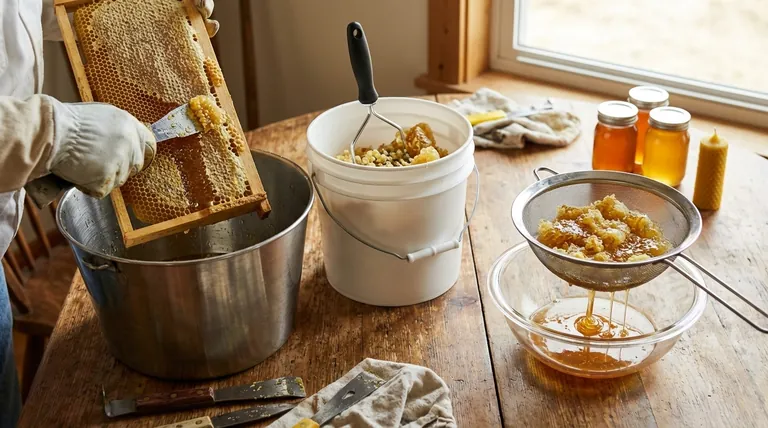
The most direct way to get honey out of a frame is through a simple, low-tech process called the "crush and strain" method. You physically scrape the honeycomb from the frame, crush it to break open the wax cells, and then use gravity to strain the raw honey through a sieve into a clean container. This technique is perfectly suited for beekeepers with just one or two hives.
The crush and strain method is the ideal starting point for new beekeepers as it requires no specialized equipment. However, its simplicity comes at a cost: it destroys the honeycomb, which your bees must then work to rebuild.
The Crush and Strain Method: A Step-by-Step Guide
This process is straightforward and can be done in any clean kitchen space. The key is to be methodical and patient, allowing gravity to do most of the work for you.
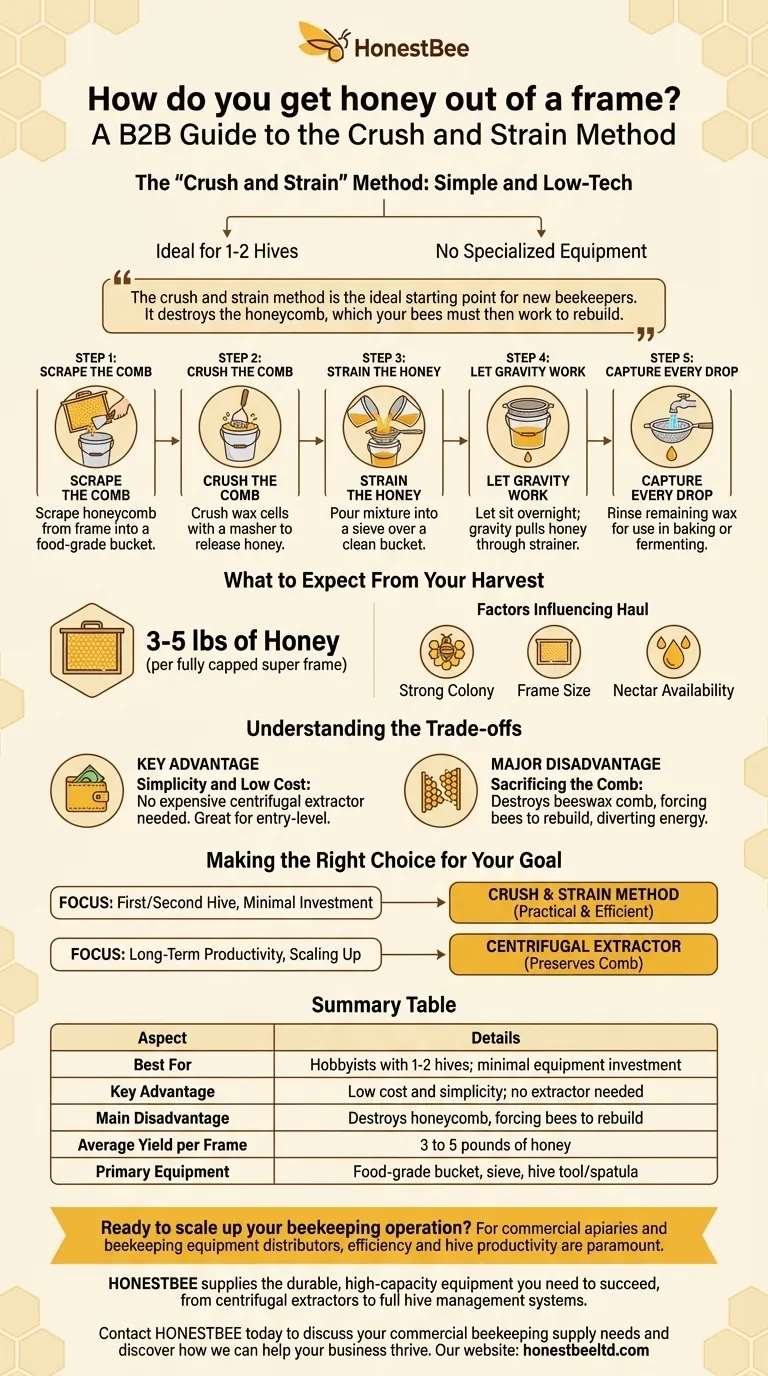
Step 1: Scrape the Comb
First, you need to remove the honeycomb from the wooden frame. Use a clean hive tool, spatula, or large knife to carefully scrape the entire comb off the frame and into a food-grade bucket.
Step 2: Crush the Comb
With the honeycomb in the bucket, use a large spoon or a potato masher to crush the wax. The goal is to break open all the individual wax cells where the honey is stored, releasing it into the bucket.
Step 3: Strain the Honey
Place a sieve or a strainer over a second, clean bucket. Pour the entire mixture of crushed comb and honey into the sieve.
Step 4: Let Gravity Work
Cover the setup with a lid or cloth to keep out dust and debris. Let it sit overnight. Gravity will slowly pull the liquid honey down through the strainer, leaving the beeswax behind.
Step 5: Capture Every Drop
After straining, you can rinse the remaining wax cappings and crushed comb in a small amount of cool water. This will dissolve the last bits of honey, creating a sweet liquid you can use for baking or fermenting.
What to Expect From Your Harvest
Understanding your potential yield helps you prepare the right number of containers and manage expectations for your first harvest.
Typical Honey Yield
A single, fully capped super frame will typically yield between 3 to 5 pounds of honey. This can vary significantly based on several factors.
Factors Influencing Your Haul
The total amount of honey you harvest depends on the strength of your bee colony, the size of your frames, and the availability of nectar during the season. A strong hive during a heavy nectar flow will produce far more than a weaker one.
Understanding the Trade-offs
While the crush and strain method is effective, it's important to understand its primary advantage and its significant disadvantage.
The Key Advantage: Simplicity and Low Cost
This method is incredibly accessible. You do not need to buy an expensive centrifugal extractor, making it the perfect entry point for hobby beekeepers who are just starting out and managing a small number of hives.
The Major Disadvantage: Sacrificing the Comb
The biggest drawback is that this process completely destroys the drawn-out beeswax comb. Bees expend a tremendous amount of energy to build this comb. By destroying it, you force them to rebuild from scratch, diverting energy that could have been used to produce more honey in the next season.
Making the Right Choice for Your Goal
- If your primary focus is harvesting honey from your first or second hive with minimal investment: The crush and strain method is the most practical and efficient way to begin.
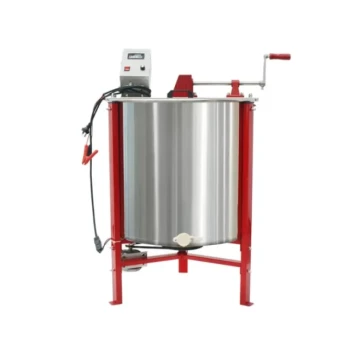
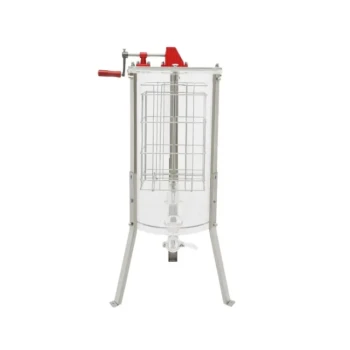
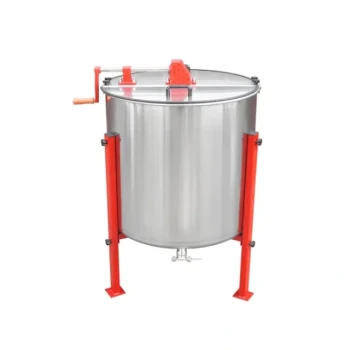
- If your primary focus is long-term hive productivity and scaling up: Consider investing in a centrifugal extractor, which spins honey out while preserving the delicate comb for the bees to reuse.
Ultimately, understanding this fundamental process empowers you to handle your first harvest with confidence.
Summary Table:
| Aspect | Details |
|---|---|
| Best For | Hobbyists with 1-2 hives; minimal equipment investment |
| Key Advantage | Low cost and simplicity; no extractor needed |
| Main Disadvantage | Destroys honeycomb, forcing bees to rebuild |
| Average Yield per Frame | 3 to 5 pounds of honey |
| Primary Equipment | Food-grade bucket, sieve, hive tool/spatula |
Ready to scale up your beekeeping operation?
For commercial apiaries and beekeeping equipment distributors, efficiency and hive productivity are paramount. While the crush and strain method is great for beginners, scaling your operation requires professional equipment that preserves comb and maximizes yield.
HONESTBEE supplies the durable, high-capacity equipment you need to succeed, from centrifugal extractors to full hive management systems. Our wholesale-focused operations are designed to meet the demands of serious beekeepers.
Contact HONESTBEE today to discuss your commercial beekeeping supply needs and discover how we can help your business thrive.
Visual Guide
Related Products
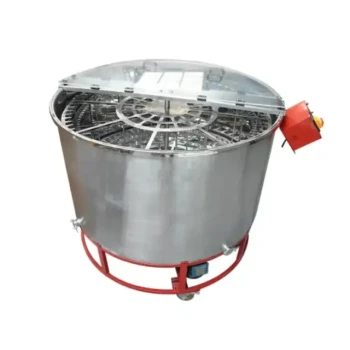
- HONESTBEE 72 Frame Industrial Electric Honey Extractor for Beekeeping
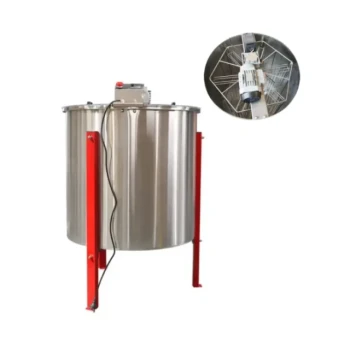
- Commercial Electric 12 Frame Honey Extractor Spinner Motorized Honey Extractor
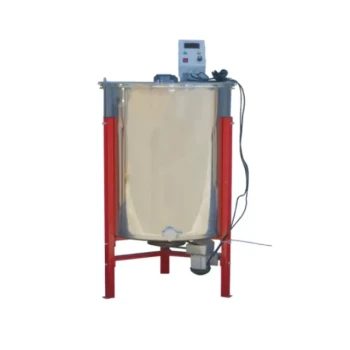
- HONESTBEE 6 Frame Self Reversing Electric Honey Extractor for Beekeeping
- HONESTBEE 3-Frame Manual Acrylic Honey Extractor
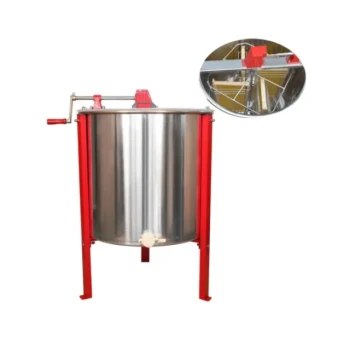
- Stainless Steel Manual 8 Frame Radial Honey Extractor Machine for Beehives
People Also Ask
- What is the importance of balancing honeycomb frames within a honey extractor? Ensure Stability and Protect Machinery
- How is honey separated from the frames after they are uncapped? Efficient Extraction Methods for High Yields
- What are the main benefits of using a honey extractor? Maximize Yields and Protect Your Honeycomb
- What are the recommended methods for removing honey from the honeycomb? Top Extraction Techniques for Maximum Efficiency
- How do manual honey extractors compare to electric honey extractors? Choosing the Right Tool for Your Apiary Growth