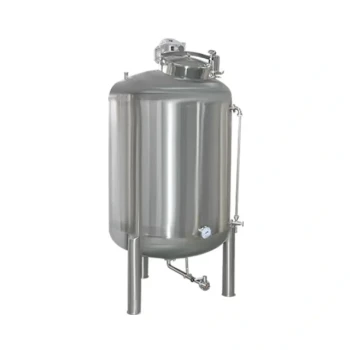
Precise temperature regulation is the primary mechanism by which a honey heating tank preserves quality. By providing gentle and controlled heat, the tank facilitates necessary processing steps—such as viscosity reduction for bottling or settling—while strictly maintaining the honey’s natural flavor, aroma, and nutritional profile. This specifically prevents the degradation of heat-sensitive enzymes that occurs with uneven or unregulated heating methods.
The core value of a honey heating tank lies in its ability to apply thermal energy uniformly without causing thermal shock. By keeping temperatures at an optimal, low level, it allows for commercial handling while protecting the honey's volatile compounds and enzymatic activity from irreversible damage.
The Science of Gentle Heating
To understand the value of a heating tank, one must understand the fragility of honey. It is a biological product containing heat-sensitive components that define its quality.
Protecting Enzymatic Activity
Honey contains beneficial enzymes and compounds that are chemically active. Uncontrolled heat destroys these enzymes, effectively turning raw honey into simple syrup.
A dedicated heating tank mitigates this risk by maintaining a strict temperature ceiling. This ensures the honey remains warm enough to flow but cool enough to keep its biological properties intact.
Preserving Flavor and Aroma
The specific taste and smell of honey come from volatile aromatic oils derived from nectar. High temperatures cause these volatile compounds to evaporate or alter chemically.
By utilizing a gentle heating cycle, the tank preserves the complex flavor profile specific to the floral source. This allows the final product to retain the sensory characteristics expected of high-quality honey.
Enhancing Clarity and Consistency
While the primary reference focuses on chemical preservation, the heating tank also plays a physical role in quality control by preparing the honey for filtration and settling.
Facilitating Impurity Removal
Honey naturally contains air bubbles, wax particles, and fine impurities. A heating tank gently lowers the viscosity (thickness) of the honey.
This increased fluidity allows tiny air bubbles and impurities to rise to the surface more effectively due to buoyancy. This mirrors the function of a maturator or settling tank, ensuring the honey achieves the high transparency required for commercial standards.
Ensuring Standardization
For commercial distribution, honey must be consistent in texture and appearance. Heating tanks ensure the batch is uniform before it is bottled.
This consistency allows the honey to meet the stringent quality requirements for retail distribution and high-end markets without resorting to aggressive processing that strips nutritional value.
Understanding the Trade-offs
While heating tanks are essential for commercial processing, they must be used with a clear understanding of their limitations to avoid diminishing product quality.
The Risk of Cumulative Heat
Even gentle heating can be detrimental if applied for too long. Time is just as critical as temperature.
Prolonged exposure to heat, even at safe temperatures, can slowly increase Hydroxymethylfurfural (HMF) levels, which is an indicator of honey degradation.
Moisture Management Limitations
A standard heating tank is designed to maintain temperature, not necessarily to remove moisture.
If you are dealing with honey that has high moisture content (such as stingless bee honey), simple heating may not prevent fermentation. In these cases, specialized dehydration equipment or sealed, moisture-proof storage is required to prevent spoilage.
Making the Right Choice for Your Goal
Selecting the right processing strategy depends heavily on your end-product requirements.
- If your primary focus is Raw Enzyme Preservation: Use the heating tank at the lowest possible temperature required to facilitate bottling, minimizing thermal exposure time.
- If your primary focus is Commercial Clarity: Utilize the tank's warmth to lower viscosity, allowing sufficient time for air bubbles and fine impurities to float to the surface for removal.
- If your primary focus is Moisture Control: Recognize that a heating tank alone is insufficient; pair it with specialized dehydration equipment or professional sealed storage to inhibit fermentation.
True quality preservation requires balancing the physical need for flow with the chemical necessity of stability.
Summary Table:
| Feature | Quality Preservation Benefit | Impact on Final Product |
|---|---|---|
| Precise Temp Control | Prevents enzymatic degradation | Maintains "Raw" nutritional status |
| Uniform Heating | Avoids hot spots and thermal shock | Preserves natural flavor and aroma |
| Viscosity Reduction | Facilitates impurity settling | Ensures high clarity and transparency |
| Controlled Fluidity | Smooth air bubble removal | Uniform texture for retail bottling |
| HMF Monitoring | Prevents chemical degradation | Ensures compliance with quality standards |
Elevate Your Honey Quality with HONESTBEE
Maximize your apiary's potential with HONESTBEE's professional-grade honey processing solutions. As a leading partner for commercial apiaries and distributors, we provide the precision tools you need to protect your honey’s biological value while meeting retail standards.
From high-accuracy honey heating and filling machines to a full spectrum of beekeeping equipment and specialized consumables, our portfolio is designed to scale your business and enhance product consistency.
Ready to upgrade your production line? Contact us today to discover how HONESTBEE’s wholesale machinery and equipment can drive efficiency and quality for your brand.
Related Products
- Stainless Steel Heated Honey Tank Warming Heating Tank
- Honey Tank Heater Drum Heating Blanket for Honey Barrel
- Heavy Duty Stainless Steel Honey Processing Machine Decrystallizing Tank
- Stainless Steel Honey Storage Tank with Lid for Honey
- Professional Honey Storage Tank with Agitation System
People Also Ask
- What are the benefits of precise temperature control in honey heating tanks? Preserve Quality and Efficiency
- How do honey heating tanks offer scalability for growing beekeeping operations? Strategic Equipment Growth Solutions
- What features of a honey heating tank contribute to hygiene? Ensure Purity with Stainless Steel & Sanitary Design
- What is the primary role of a honey heating tank? Enhance Your Honey Processing Flow and Quality
- What is the purpose of using heating tanks or constant temperature water baths in honey dehydration? Optimize Purity & Flow