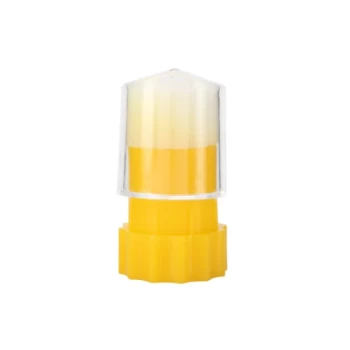
A marked queen acts as a definitive visual anchor for the colony's identity, allowing you to track population movements with precision. If you discover a swarm nearby and subsequently inspect your hives, finding an unmarked queen in a colony that previously hosted a marked one is strong evidence that the original queen has departed with the swarm.
Core Takeaway
Identifying a swarm is a process of deduction based on the queen's presence or absence. If your records show a marked queen should be present, but you find a new, unmarked queen roughly a week after a swarm event, you can confirm the colony has swarmed and natural replacement has occurred.
Diagnosing the Hive Source
To effectively use a marked queen for swarm identification, you must look at the state of the original colony.
The Inspection Timeline
Timing is critical when verifying a swarm. The primary reference suggests conducting an inspection approximately one week after a swarm is spotted nearby.
This delay allows the colony to settle and gives the remaining bees time to orient themselves around the new dynamic.
Interpreting the Queen's Absence
During this inspection, the absence of the marked queen is your primary data point.
If the marked queen is missing, she has likely left the hive to establish a new colony. In her place, you will typically find a virgin or newly mated queen who has hatched to take over.
The Significance of the Unmarked Successor
Because the new queen was born in the hive to replace the departing mother, she will not have a paint mark.
Finding this unmarked queen confirms that a reproductive split has occurred. It serves as visible proof that the colony logic has shifted from retention to replacement.
Analyzing the Swarm Itself
Marking provides immediate context if you are the one capturing the swarm.
Distinguishing Managed vs. Feral Colonies
When you rescue a swarm from a tree or structure, locating the queen within the cluster provides immediate insight into its origin.
If the queen in the swarm bears a paint mark, the swarm originated from a managed colony rather than a feral one. This helps rule out wild hives as the source and points to a local beekeeper (potentially yourself) as the origin.
Understanding the Trade-offs
While marking is a powerful tool, relying solely on it requires careful interpretation of the context.
Swarming vs. Supersedure
Finding an unmarked queen does not always guarantee the hive swarmed. It serves as evidence of queen replacement, which can happen for two reasons.
The colony may have swarmed, or the bees may have simply killed a failing queen to replace her (supersedure). You must correlate the unmarked queen with a drop in population to confirm a swarm actually took place.
The "Failed Swarm" False Positive
Occasionally, a colony may attempt to swarm but fail, or the old queen may die during the process.
In these instances, you may find an unmarked queen (the successor) or a queen with intact wings (if you practice clipping) without a successful swarm having left. The mark tells you the individual has changed, but you must assess the colony population to know if a swarm left.
Making the Right Choice for Your Goal
Using marked queens effectively requires aligning your observations with your specific management objectives.
- If your primary focus is confirming the source of a specific swarm: Inspect nearby hives one week after the event; the hive with a new, unmarked queen is the likely originator.
- If your primary focus is recovering your own stock: Look for your specific paint color or mark on the queen within a captured swarm to verify ownership and genetics.
By maintaining a marked queen, you transform a guessing game into a verifiable logical process.
Summary Table:
| Observation Point | Colony Status: Swarmed | Colony Status: No Swarm (Supersedure) |
|---|---|---|
| Queen Identity | Unmarked successor found | Unmarked successor found |
| Marked Queen | Absent (departed with swarm) | Absent (replaced/removed) |
| Bee Population | Significant, sudden drop | Stable population levels |
| Inspection Timing | ~1 week after swarm event | Any time during season |
| Confirmation | High (Visual + Population) | Low (Individual change only) |
Maximize Your Apiary Productivity with HONESTBEE
Efficient swarm management starts with the right tools. HONESTBEE empowers commercial apiaries and distributors with a complete wholesale range of beekeeping solutions. Whether you need precise queen-marking tools, honey-filling machinery, or specialized hive-making equipment, our portfolio is designed to enhance your operational efficiency.
Why partner with HONESTBEE?
- Comprehensive Supply: From essential consumables to high-end machinery.
- Industry Expertise: Tailored support for large-scale beekeeping operations.
- Wholesale Value: Competitive pricing on hardware and honey-themed merchandise.
Ready to scale your beekeeping business? Contact us today to explore our wholesale catalog!
Related Products
- Queen Bee Marking Pen POSCA Queen Marking Pens for Beekeeping Bee Markers
- Queen Bee Marking Pen UNI Medium Point for Queen and Bee Marking
- Plastic Long Marker Device for Catching and Marking Bees Queen Bee Marking Tube and Cage
- Queen Bee Marking Tube Cage Bottle Catcher Holder with Clear Plastic Plunger Marker
- One Hand Yellow Queen Marking Catcher Tube Cage Beekeeper Tool Accessory for Queen Bee
People Also Ask
- What role do specialized marking pens and color-coding systems play in honeybee tracking? Enhance Research Precision
- Why are specialized marking pens used for stingless bee queens? Essential Tools for Large-Scale Breeding Success
- How should a new paint pen be primed before marking a queen bee? Essential Tips for Safe & Clear Markings
- How should a queen bee marking pen tip be properly primed? Master the Art of Safe Queen Marking
- What specifications are required for a high-quality queen bee marking pen? Ensure Safety and Precision for Your Colony